


The molecular and physiological roles of ABCC6: more than meets the eye
- PMID: 23248644
- PMCID: PMC3520154
- DOI: 10.3389/fgene.2012.00289
The molecular and physiological roles of ABCC6: more than meets the eye
Abstract
Abnormal mineralization occurs in the context of several common conditions, including advanced age, diabetes, hypercholesterolemia, chronic renal failure, and certain genetic conditions. Metabolic, mechanical, infectious, and inflammatory injuries promote ectopic mineralization through overlapping yet distinct molecular mechanisms of initiation and progression. The ABCC6 protein is an ATP-dependent transporter primarily found in the plasma membrane of hepatocytes. ABCC6 exports unknown substrates from the liver presumably for systemic circulation. ABCC6 deficiency is the primary cause for chronic and acute forms of ectopic mineralization described in diseases such as pseudoxanthoma elasticum (PXE), β-thalassemia, and generalized arterial calcification of infancy (GACI) in humans and dystrophic cardiac calcification (DCC) in mice. These pathologies are characterized by mineralization of cardiovascular, ocular, and dermal tissues. PXE and to an extent GACI are caused by inactivating ABCC6 mutations, whereas the mineralization associated with β-thalassemia patients derives from a liver-specific change in ABCC6 expression. DCC is an acquired phenotype resulting from cardiovascular insults (ischemic injury or hyperlipidemia) and secondary to ABCC6 insufficiency. Abcc6-deficient mice develop ectopic calcifications similar to both the human PXE and mouse DCC phenotypes. The precise molecular and cellular mechanism linking deficient hepatic ABCC6 function to distal ectopic mineral deposition is not understood and has captured the attention of many research groups. Our previously published work along with that of others show that ABCC6 influences other modulators of calcification and that it plays a much greater physiological role than originally thought.
Keywords: ABCC6; calcification; ectopic cardiac calcification; generalized arterial calcification of infancy; pseudoxanthoma elasticum; β-thalassemia.
Figures
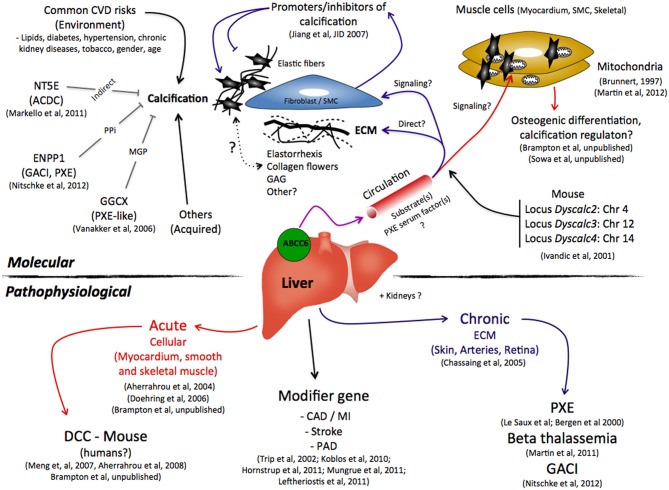
Coronary Artery Diseases
Cardiovascular Diseases
extracellular matrix
Glycoaminoglycans
Matrix Gla Protein
Myocardial Infarction
Peripheral Arterial Disease
pyrophosphate
Smooth Muscle Cells.
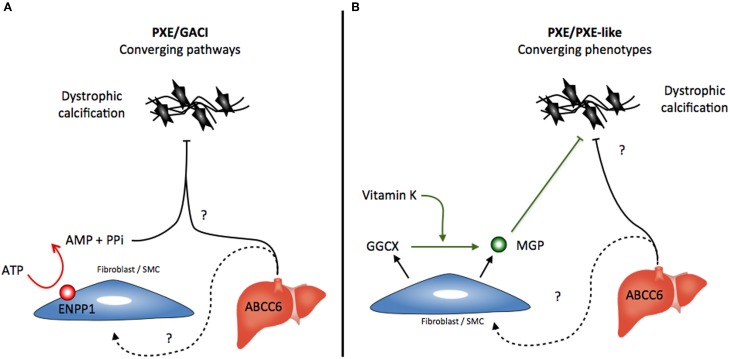
pyrophosphate
Matrix Gla Protein.
References
-
- Aherrahrou Z. (2003). Histological and Molecular Genetic Analysis of Mice With Genetic Predisposition to Dystrophic Cardiac Calcification in Response to Injury. Ph.D. dissertation, Universität zu Lubeck.
Grants and funding
LinkOut - more resources
Full Text Sources
