


A brief review of chronic obstructive pulmonary disease
- PMID: 23248802
- PMCID: PMC3603763
- DOI: 10.1155/2012/496563
A brief review of chronic obstructive pulmonary disease
Abstract
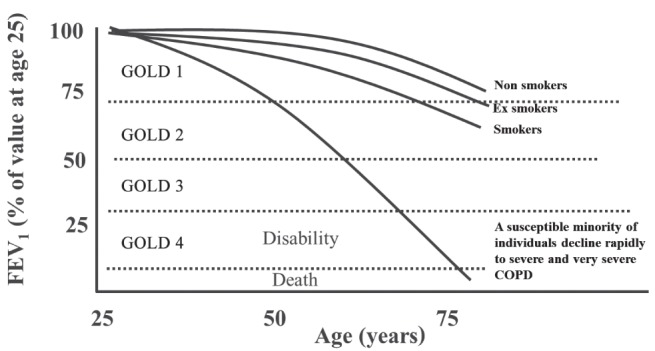
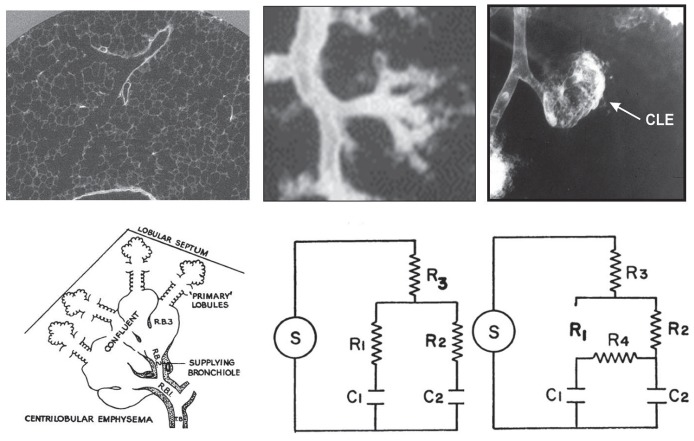
A recent study, based on a combination of multidetector computed tomography scanning of an intact specimen with microcomputed tomography and histological analysis of lung tissue samples, reported that the number of terminal bronchioles were reduced from approximately 44,500/lung pair in control (donor) lungs to approximately 4800/lung pair in lungs donated by individuals with very severe (Global initiative for chronic Obstructive Lung Disease stage 4) chronic obstructive pulmonary disease (COPD) treated by lung transplantation. The present short review discusses the hypothesis that a rapid rate of terminal bronchiolar destruction causes the rapid decline in lung function leading to advanced COPD. With respect to why the terminal bronchioles are targeted for destruction, the postulated mechanisms of this destruction and the possibility that new treatments are able to either prevent or reverse the underlying cause of airway obstruction in COPD are addressed.
Une récente étude, fondée sur une association de tomographie assistée par ordinateur à détecteurs multiples d’un spécimen intact et d’une tomographie assistée par ordinateur avec l’analyse histologique d’échantillons de tissus pulmonaires, a établi que le nombre de bronchioles terminales avait fléchi d’environ 44 500 par paire de poumons chez les sujets témoins (donneurs) à environ 4 800 par paire de poumons chez les personnes ayant une très grave maladie pulmonaire obstructive chronique (MPOC) (phase 4 selon la Global initiative for chronic Obstructive Lung Disease) traitée par greffe pulmonaire. La présente brève analyse porte sur l’hypothèse selon laquelle un taux rapide de destruction des bronchioles terminales provoque le rapide déclin de la fonction pulmonaire, menant à une MPOC avancée. Pour ce qui est des raisons pour lesquelles les bronchioles terminales sont ciblées, les chercheurs exposent les mécanismes postulés de leur destruction et la possibilité que de nouveaux traitements puissent prévenir ou renverser la cause sous-jacente de l’obstruction des voies aériennes en cas de MPOC.
Figures
References
-
- Global Initiative for Chronic Obstructive Lung Disease (GOLD) Global strategy for the diagnosis, management, and prevention of chronic obstructive pulmonary disease (updated 2009) < www.goldcopd.org> (Accessed May 31, 2012). - PubMed
-
- Buist AS, McBurnie MA, Vollmer WM, et al. Bold study of the prevalence of obstructive lung disease International variation in the prevalence of COPD (the BOLD Study): A population-based prevalence study. Lancet. 2007;370:741–50. - PubMed
-
- Weibel ER. Morphometry of the Human Lung. New York: Academic Press Inc; 1963.
-
- Green M. How big are the bronchioles? St Thomas Hospital Gazette. 1965;63:136–9.
Publication types
MeSH terms
LinkOut - more resources
Full Text Sources
Medical
