


Health research funding in Mexico: the need for a long-term agenda
- PMID: 23251451
- PMCID: PMC3519634
- DOI: 10.1371/journal.pone.0051195
Health research funding in Mexico: the need for a long-term agenda
Abstract
Background: The legal framework and funding mechanisms of the national health research system were recently reformed in Mexico. A study of the resource allocation for health research is still missing. We identified the health research areas funded by the National Council on Science and Technology (CONACYT) and examined whether research funding has been aligned to national health problems.
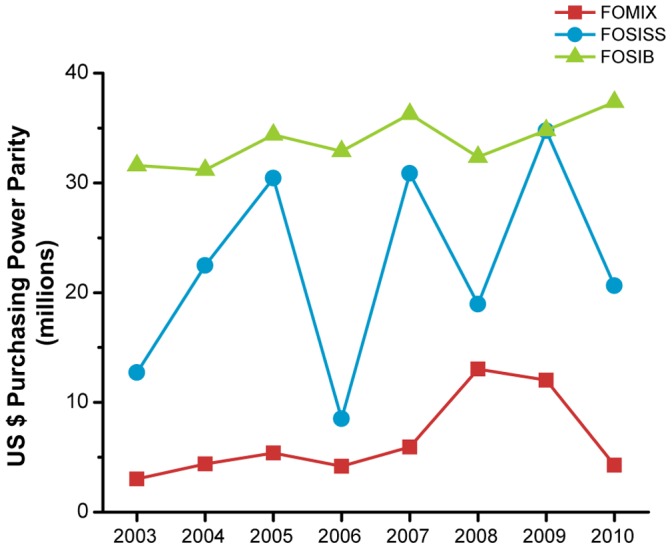
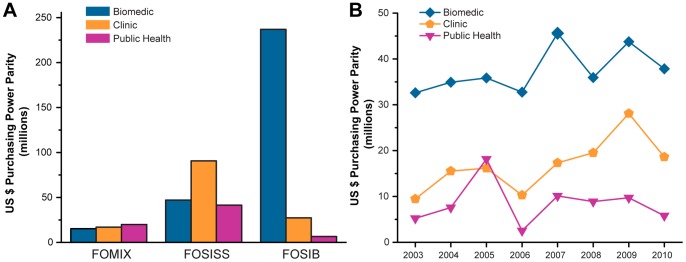
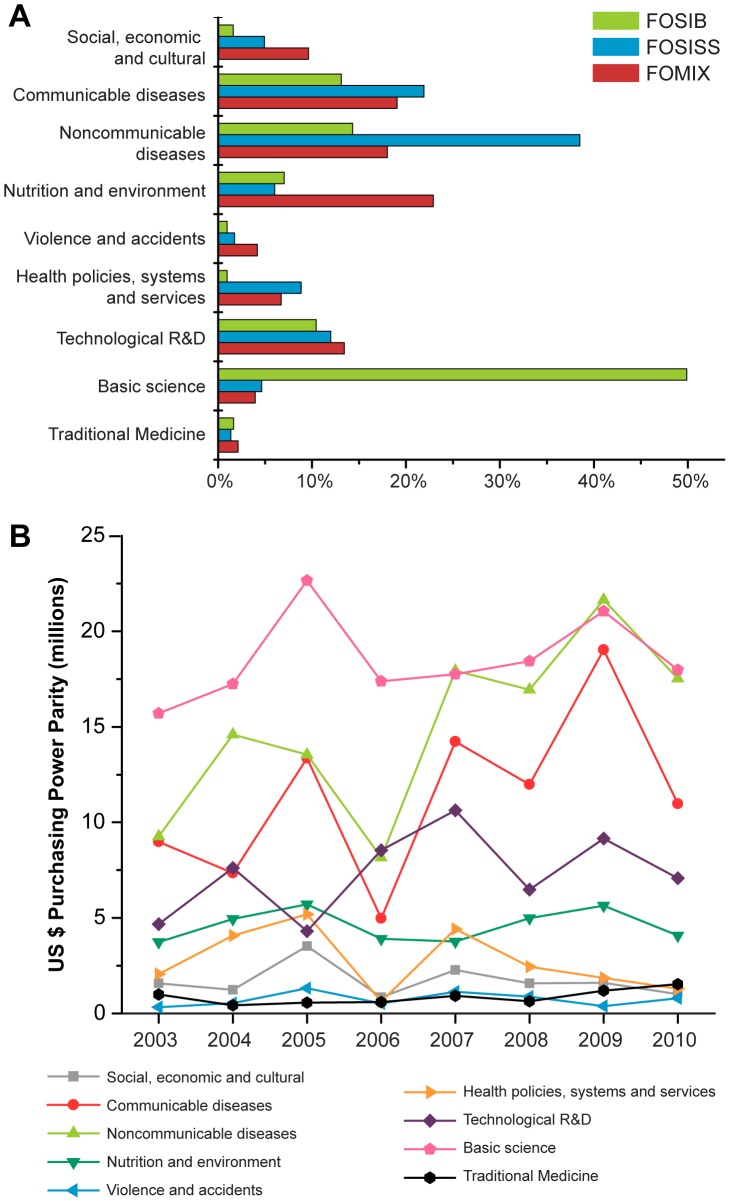
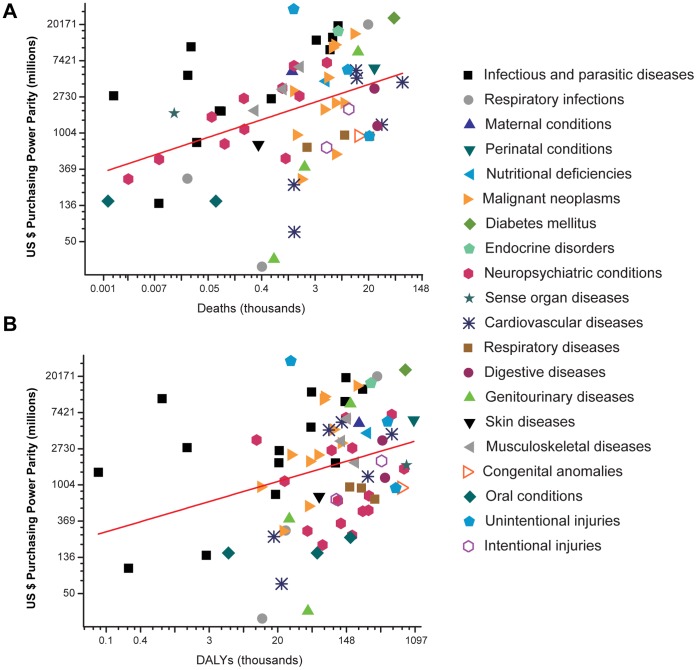
Methods and findings: We collected the information to create a database of research grant projects supported through the three main Sectoral Funds managed by CONACYT between 2003 and 2010. The health-related projects were identified and classified according to their methodological approach and research objective. A correlation analysis was carried out to evaluate the association between disease-specific funding and two indicators of disease burden. From 2003 to 2010, research grant funding increased by 32% at a compound annual growth rate of 3.5%. By research objective, the budget fluctuated annually resulting in modest increments or even decrements during the period under analysis. The basic science category received the largest share of funding (29%) while the less funded category was violence and accidents (1.4%). The number of deaths (ρ = 0.51; P<0.001) and disability-adjusted life years (DALYs; ρ = 0.33; P = 0.004) were weakly correlated with the funding for health research. Considering the two indicators, poisonings and infectious and parasitic diseases were among the most overfunded conditions. In contrast, congenital anomalies, road traffic accidents, cerebrovascular disease, and chronic obstructive pulmonary disease were the most underfunded conditions.
Conclusions: Although the health research funding has grown since the creation of CONACYT sectoral funds, the financial effort is still low in comparison to other Latin American countries with similar development. Furthermore, the great diversity of the funded topics compromises the efficacy of the investment. Better mechanisms of research priority-setting are required to adjust the research portfolio to the new health panorama of Mexican population.
Conflict of interest statement
Figures
References
-
- Global Forum for Health Research (2002) The 10/90 report on health research, 2001–2002. Geneva, Switzerland: Global Forum for Health Research. 224 p.
-
- Alger J, Becerra-Posada F, Kennedy A, Martinelli E, Cuervo LG (2009) National health research systems in Latin America: a 14-country review. Rev Panam Salud Publica 26: 447–457. - PubMed
-
- Becerra-Posada F (2009) New possibilities for the development of national systems for the health investigation in America. Salud Publica Mex 51: 86–89.
-
- Frenk J, Sepúlveda J, Gómez-Dantés O, Knaul F (2003) Evidence-based health policy: three generations of reform in Mexico. Lancet 362: 1667–1671. - PubMed
MeSH terms
LinkOut - more resources
Full Text Sources
