. 2012;7(12):e52054.
doi: 10.1371/journal.pone.0052054. Epub 2012 Dec 14.

Autoreactive effector/memory CD4+ and CD8+ T cells infiltrating grafted and endogenous islets in diabetic NOD mice exhibit similar T cell receptor usage

Affiliations

Autoreactive effector/memory CD4+ and CD8+ T cells infiltrating grafted and endogenous islets in diabetic NOD mice exhibit similar T cell receptor usage

Ramiro Diz et al. PLoS One. 2012.

Abstract

Islet transplantation provides a "cure" for type 1 diabetes but is limited in part by recurrent autoimmunity mediated by β cell-specific CD4(+) and CD8(+) T cells. Insight into the T cell receptor (TCR) repertoire of effector T cells driving recurrent autoimmunity would aid the development of immunotherapies to prevent islet graft rejection. Accordingly, we used a multi-parameter flow cytometry strategy to assess the TCR variable β (Vβ) chain repertoires of T cell subsets involved in autoimmune-mediated rejection of islet grafts in diabetic NOD mouse recipients. Naïve CD4(+) and CD8(+) T cells exhibited a diverse TCR repertoire, which was similar in all tissues examined in NOD recipients including the pancreas and islet grafts. On the other hand, the effector/memory CD8(+) T cell repertoire in the islet graft was dominated by one to four TCR Vβ chains, and specific TCR Vβ chain usage varied from recipient to recipient. Similarly, islet graft- infiltrating effector/memory CD4(+) T cells expressed a limited number of prevalent TCR Vβ chains, although generally TCR repertoire diversity was increased compared to effector/memory CD8(+) T cells. Strikingly, the majority of NOD recipients showed an increase in TCR Vβ12-bearing effector/memory CD4(+) T cells in the islet graft, most of which were proliferating, indicating clonal expansion. Importantly, TCR Vβ usage by effector/memory CD4(+) and CD8(+) T cells infiltrating the islet graft exhibited greater similarity to the repertoire found in the pancreas as opposed to the draining renal lymph node, pancreatic lymph node, or spleen. Together these results demonstrate that effector/memory CD4(+) and CD8(+) T cells mediating autoimmune rejection of islet grafts are characterized by restricted TCR Vβ chain usage, and are similar to T cells that drive destruction of the endogenous islets.


Conflict of interest statement

Competing Interests: The authors have declared that no competing interests exist.

Figures

Figure 1
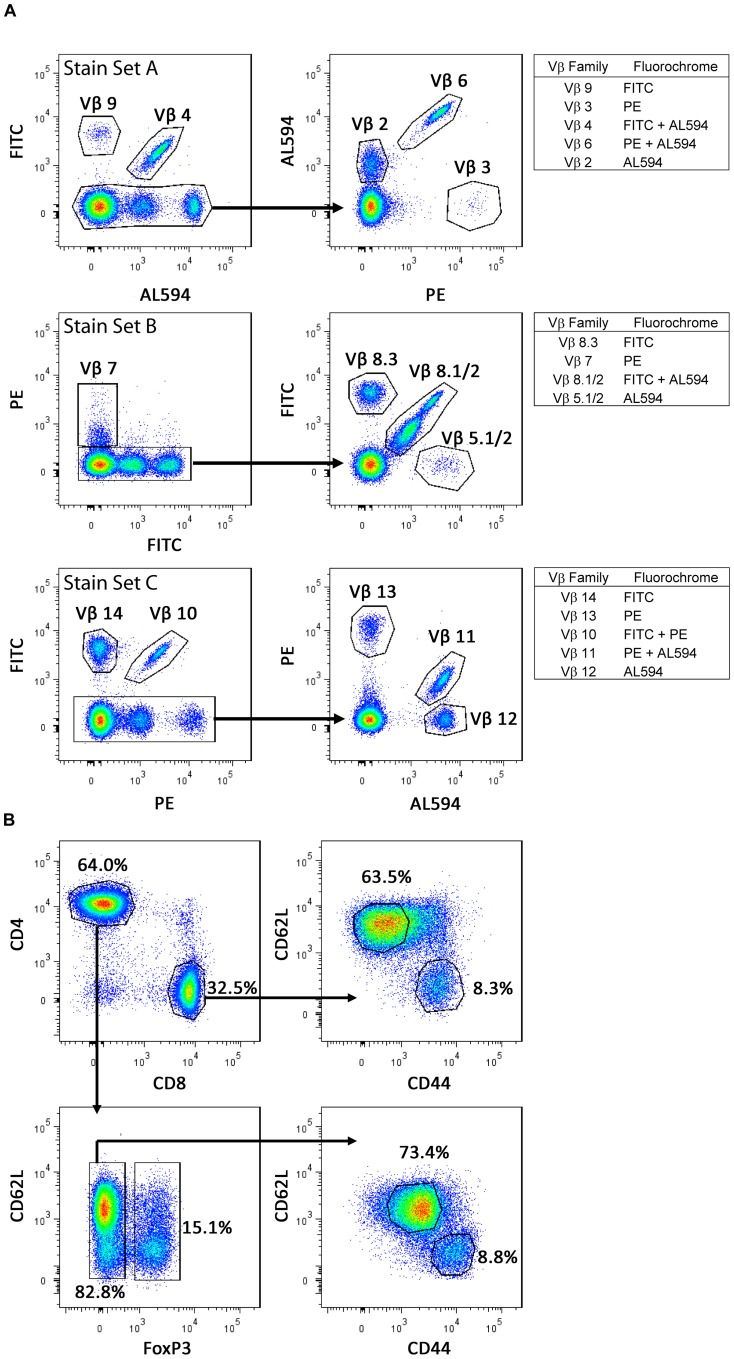
Figure 1. Multiple TCRs can be examined in a pool of T cells.
(A) TCR Vβ usage was determined with 3 different stain sets (A, B and C) (see Materials and Methods). Three colors were used – FITC, PE, and streptavidin Alexa594, to visualize up to 6 different TCR Vβ chains per sample. (B) Representative gating scheme in which splenic CD4+ and CD8+ T cells (CD90.2+) were divided into naïve (CD62LhiCD44lo) and Teff/mem (CD62LloCD44hi) subsets. CD4+ T cells were further defined based on FoxP3-expression.
Figure 2
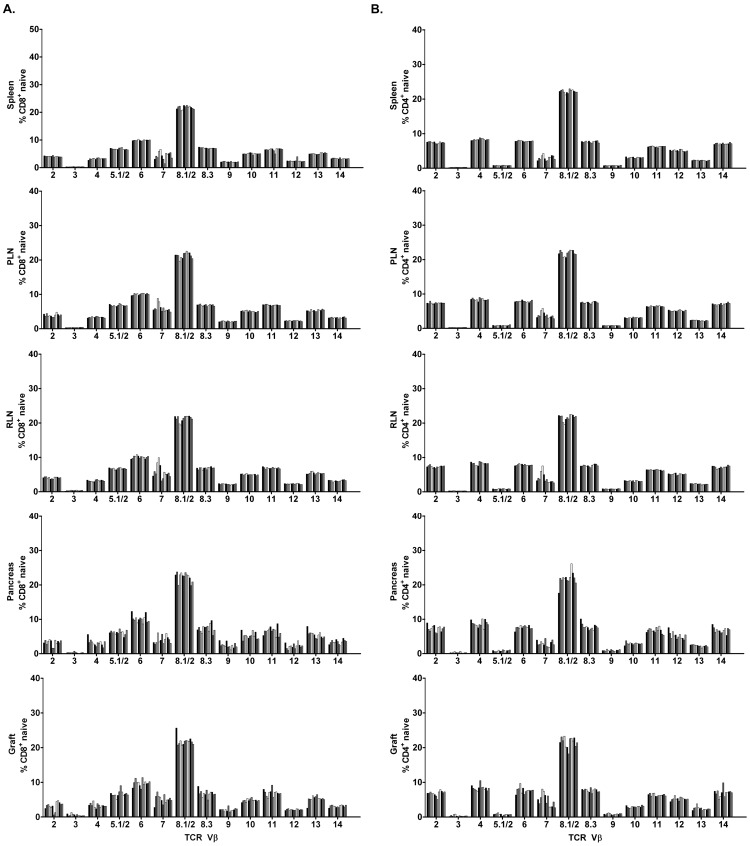
Figure 2. Analyses of TCR Vβ chain usage by naïve CD4+ and CD8+ T cells in islet graft NOD recipients.
Frequency of TCR Vβ chains expressed by naïve CD8+ (A) and CD4+ (B) T cells in the spleen, PLN, RLN, pancreas, and islet graft of individual NOD recipients (n = 13).
Figure 3
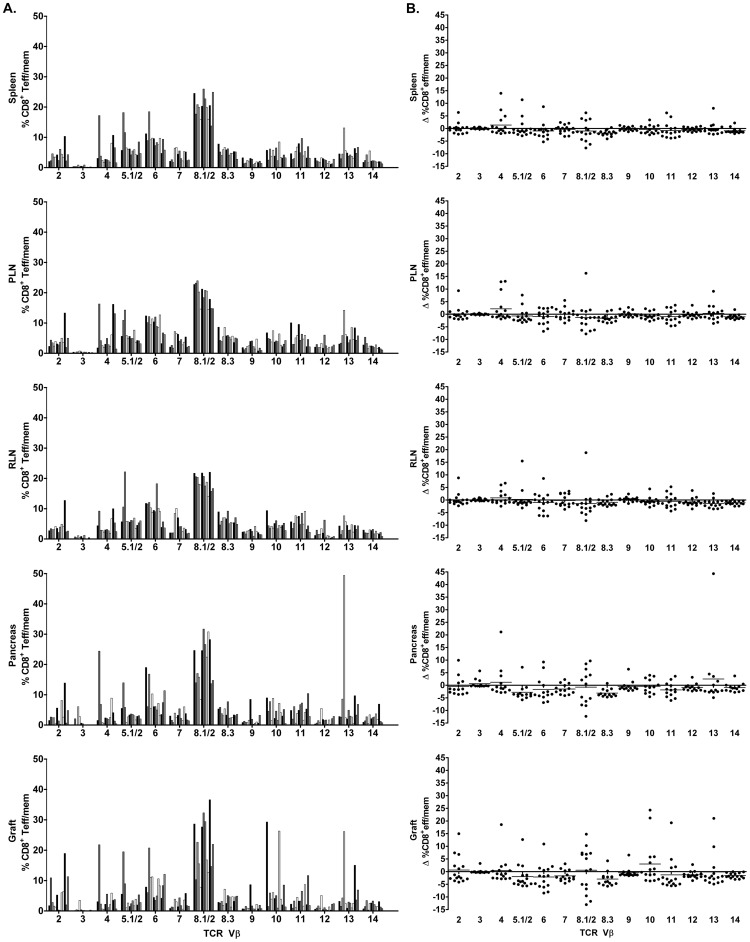
Figure 3. Analyses of TCR Vβ chain usage by CD8+ Teff/mem in islet graft NOD recipients.
(A) Percentage of CD8+ Teff/mem expressing specific TCR Vβ chains in spleen, PLN, RLN, pancreas, and islet graft of individual NOD mice (n = 13). (B) The frequency of TCR Vβ chain usage by CD8+ Teff/mem was normalized by subtracting the frequency of the corresponding TCR Vβ chain expressed by splenic, naïve CD8+ T cells for a given NOD recipient.
Figure 4
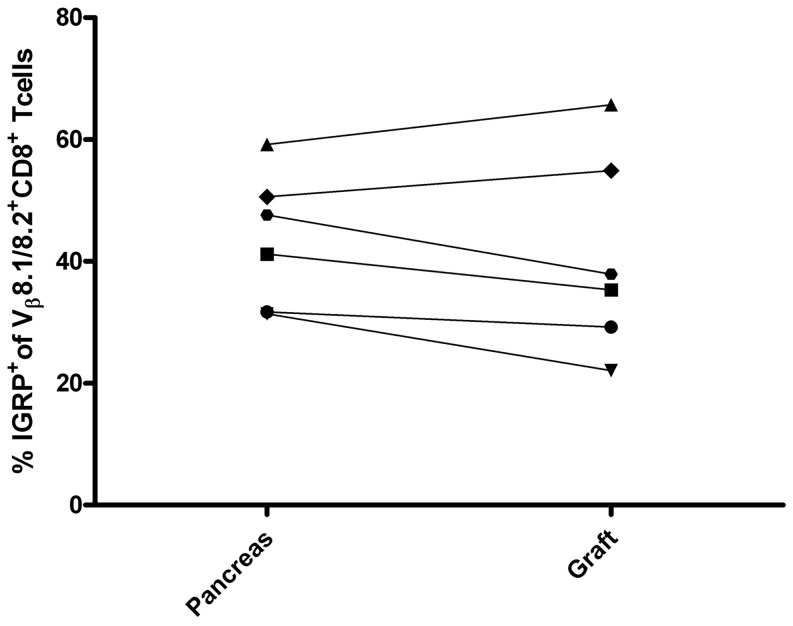
Figure 4. The frequency of H2Kd-IGRP206–214 binding by TCR Vβ8.1/2-expressing CD8+ Teff/mem in grafted and endogenous islets in NOD recipients.
The frequency of islet graft and pancreas-infiltrating TCR Vβ8.1/2 CD8+ T cells binding H2Kd-IGRP206–214 tetramer was determined for an individual NOD recipient (n = 6).
Figure 5
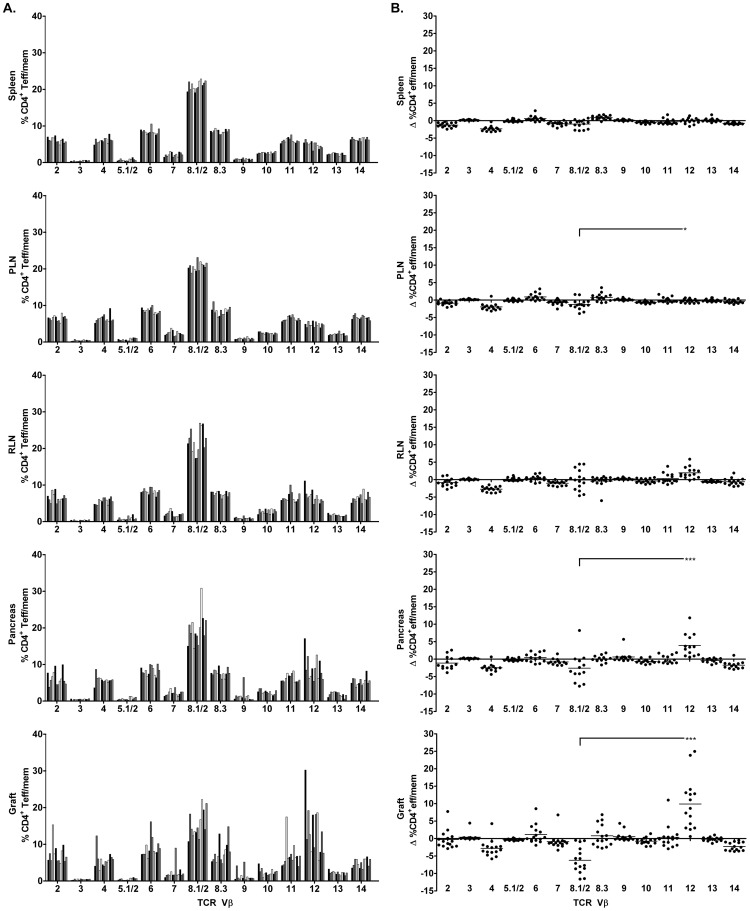
Figure 5. Analyses of TCR Vβ chain usage by CD4+ Teff/mem in islet graft NOD recipients.
(A) Percentage of CD4+ Teff/mem expressing specific TCR Vβ chains in spleen, PLN, RLN, pancreas, and islet graft of individual NOD mice (n = 13). (B) TCR Vβ chain usage by CD4+ Teff/mem was normalized by subtracting the frequency of the corresponding TCR Vβ chain expressed by splenic, naïve CD4+ T cells for a given NOD recipient. ***p<0.001, *p<0.05; One way ANOVA with Dunn’s post-test.
Figure 6
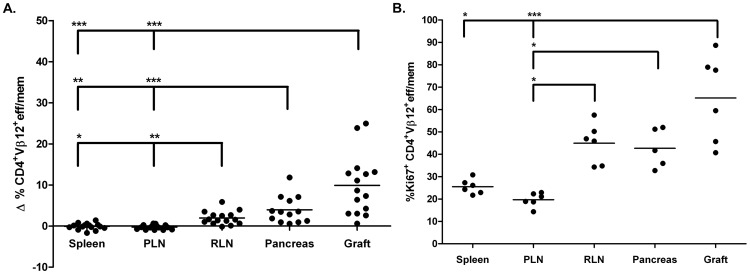
Figure 6. Tissue distribution and proliferation of TCR Vβ12-expressing CD4+ Teff/mem in NOD islet graft recipients.
(A) Comparison among tissues of the change in frequency of TCR Vβ12-expressing CD4+ Teff/mem normalized by subtracting the percentage of TCR Vβ12-expressing splenic, naïve CD4+ T cells for a given NOD recipient (n = 13). (B) The tissue distribution of TCR Vβ12-expressing CD4+ Teff/mem staining for Ki67. ***p<0.001, **p<0.01, *p<0.05; Kruskal-Wallis test with two-sided Dunn's post-test.
Figure 7
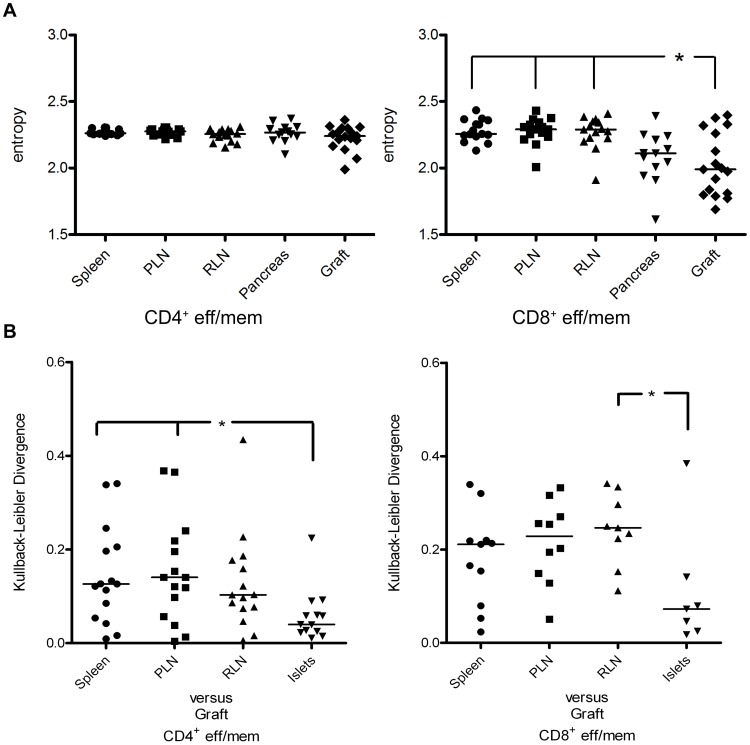
Figure 7. Tissue-specific TCR Vβ chain diversity and distribution for CD4+ and CD8+ Teff/mem in NOD islet graft recipients.
The diversity (A) and distribution (B) of Vβ chain usage by tissue-specific CD4+ and CD8+ Teff/mem in NOD islet graft recipients (n = 13) was determined by Shannon entropy and Kullback-Leibler divergence, respectively. For the latter, the X axis represents comparisons of the respective tissues to the islet graft of a given NOD recipient. *p<0.05; Kruskal-Wallis test with two-sided Dunn's post-test.

References

    1. Anderson MS, Bluestone JA (2005) The NOD mouse: a model of immune dysregulation. Annu Rev Immunol 23: 447–485. - PubMed
    1. Bach JF (1994) Insulin-dependent diabetes mellitus as an autoimmune disease. Endocr Rev 15: 516–542. - PubMed
    1. Bluestone JA, Herold K, Eisenbarth G (2010) Genetics, pathogenesis and clinical interventions in type 1 diabetes. Nature 464: 1293–1300. - PMC - PubMed
    1. Tisch R, McDevitt H (1996) Insulin-dependent diabetes mellitus. Cell 85: 291–297. - PubMed
    1. van Belle TL, Coppieters KT, von Herrath MG (2011) Type 1 diabetes: etiology, immunology, and therapeutic strategies. Physiol Rev 91: 79–118. - PubMed

Publication types

MeSH terms

Substances