


A Wt1-Dmrt1 transgene restores DMRT1 to sertoli cells of Dmrt1(-/-) testes: a novel model of DMRT1-deficient germ cells
- PMID: 23255335
- PMCID: PMC3589237
- DOI: 10.1095/biolreprod.112.103135
A Wt1-Dmrt1 transgene restores DMRT1 to sertoli cells of Dmrt1(-/-) testes: a novel model of DMRT1-deficient germ cells
Abstract
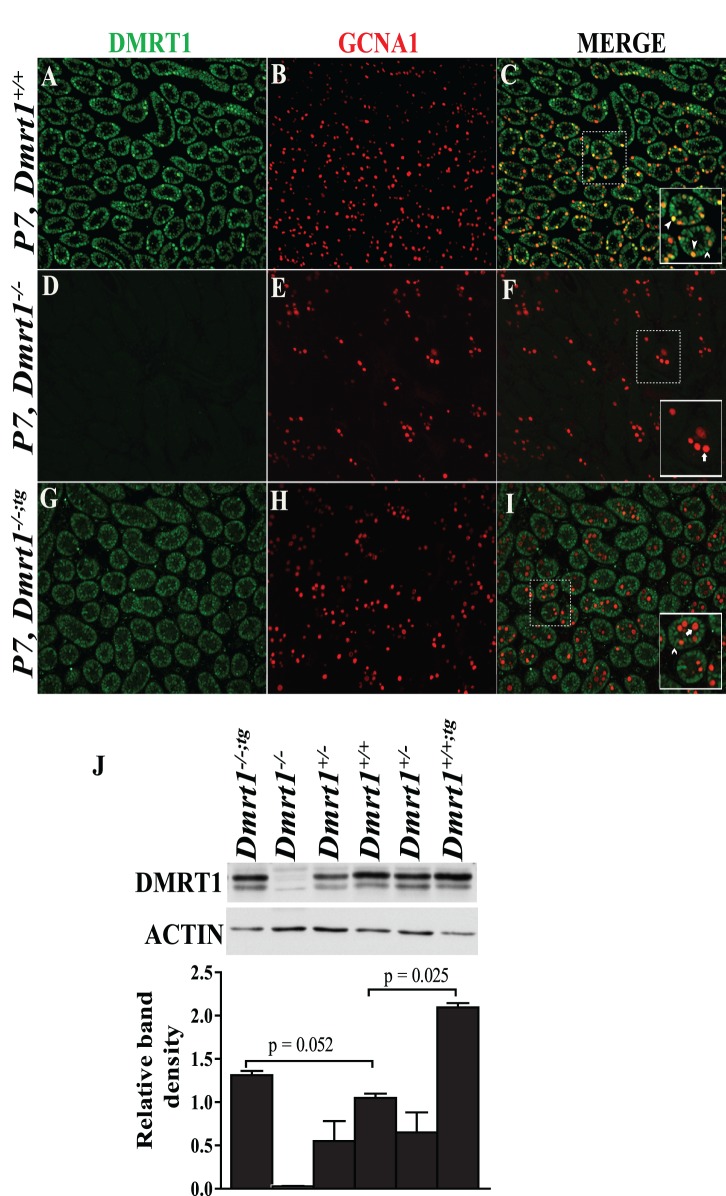
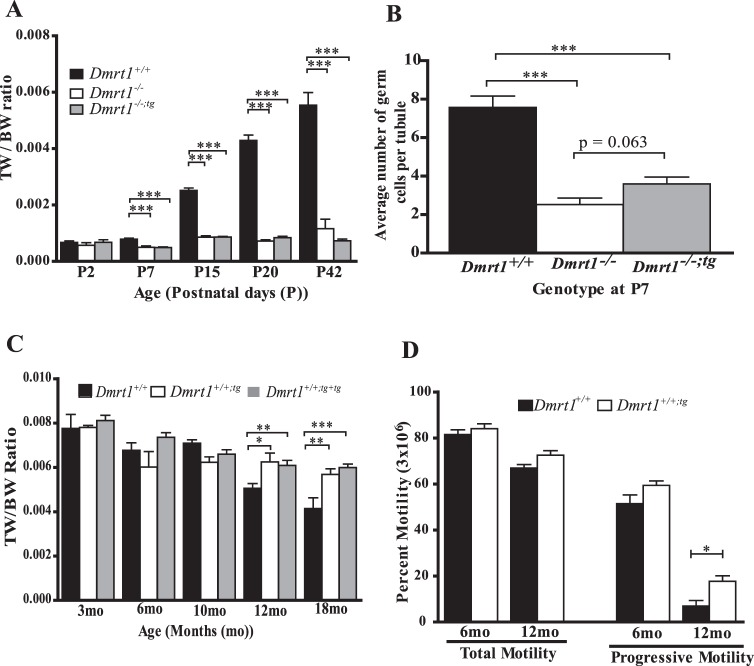
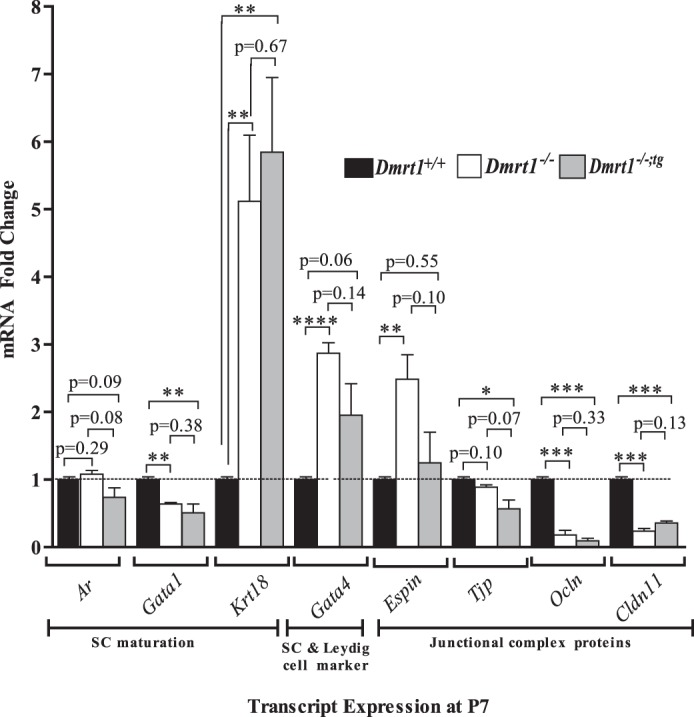
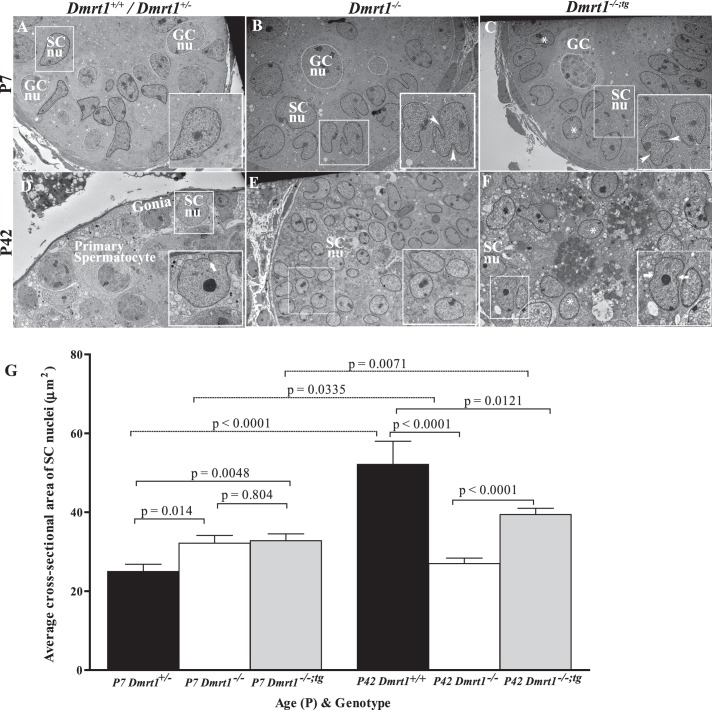
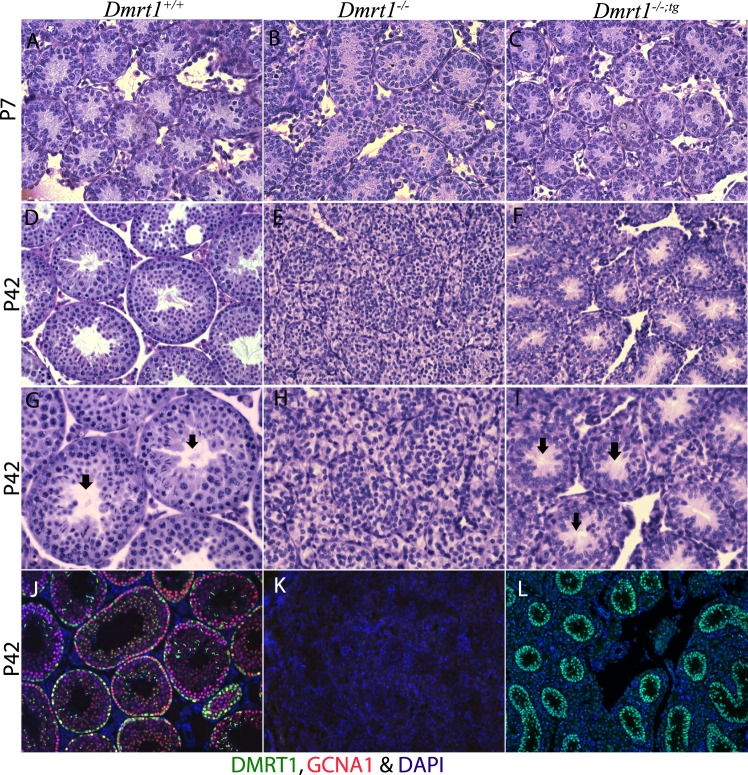
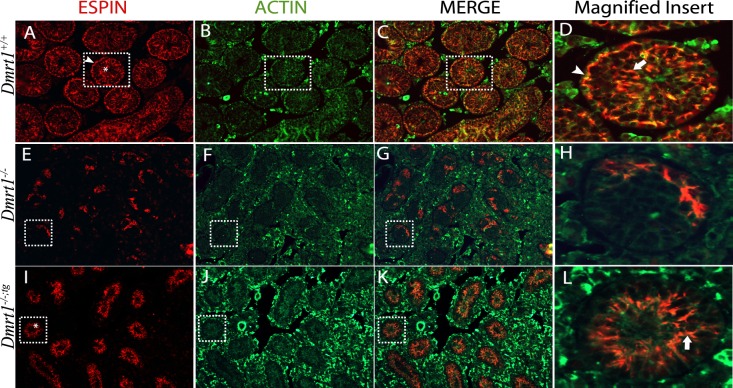
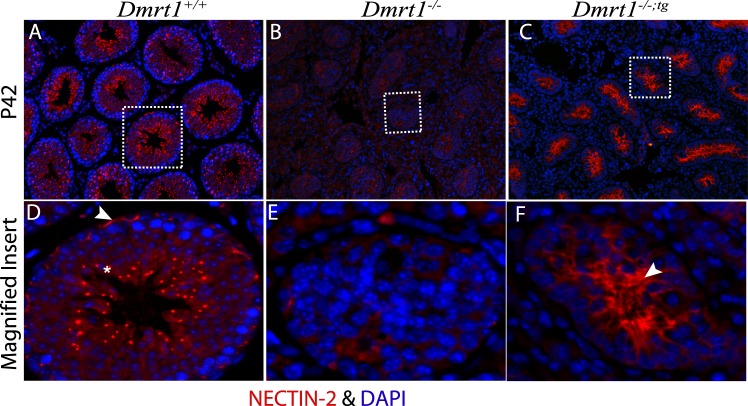
DMRT1 is an evolutionarily conserved transcriptional factor expressed only in the postnatal testis, where it is produced in Sertoli cells and germ cells. While deletion of Dmrt1 in mice demonstrated it is required for postnatal testis development and fertility, much is still unknown about its temporal- and cell-specific functions. This study characterized a novel mouse model of DMRT1-deficient germ cells that was generated by breeding Dmrt1-null (Dmrt1(-/-)) mice with Wt1-Dmrt1 transgenic (Dmrt1(+/-;tg)) mice, which express a rat Dmrt1 cDNA in gonadal supporting cells by directing it from the Wilms tumor 1 locus in a yeast artificial chromosome transgene. Like Dmrt1(-/-) mice, male Dmrt1(-/-) transgenic mice (Dmrt1(-/-;tg)) were infertile, while female mice were fertile. Immunohistochemistry and Western blot analysis showed transgenic DMRT1 expressed in supporting cells of the newborn gonads of both sex and in Sertoli cells of the testis afterbirth. Sertoli cells were evaluated by electron microscopy, revealing that maturation of Dmrt1(-/-;tg) Sertoli cells was incomplete. Morphological analysis of testes from 42-day-old mice showed that, compared to Dmrt1(-/-) mice, Dmrt1(-/-;tg) mice have improved seminiferous tubule structure, with lumens present in many. Immunohistochemistry of the polarity markers ESPIN and NECTIN-2 showed that DMRT1 in Sertoli cells is required for NECTIN-2 expression and influences organization of ectoplasmic specializations. Further functional analyses of the transgene on a Dmrt1(-/-) background showed that it did not rescue the decrease in Dmrt1(-/-) testis size, but when expressed on a wild-type background, exogenous DMRT1 prevented the normal age-related decline in testis size and enhanced sperm progressive motility. The studies suggest that DMRT1 in Sertoli cells regulates tubule morphology, spermatogenesis, and sperm function via its effects on Sertoli cell maturation and polarity. Furthermore, expression and function of transgenic DMRT1 in Sertoli cells establishes a novel mouse model of DMRT1-deficient germ cells generated by breeding Dmrt1-null mice with Wt1-Dmrt1 transgenic mice (rescue; Dmrt1(-/-;tg)).
Figures

Comment in
-
DMRT1 owner's manual: synchronized installation required to operate.Biol Reprod. 2013 Feb 28;88(2):50. doi: 10.1095/biolreprod.113.107839. Print 2013 Feb. Biol Reprod. 2013. PMID: 23349232 Free PMC article.
References
-
- Ferguson-Smith M. The evolution of sex chromosomes and sex determination in vertebrates and the key role of DMRT1. Sex Dev 2007; 1: 2 11 - PubMed
-
- Krentz AD, Murphy MW, Kim S, Cook MS, Capel B, Zhu R, Matin A, Sarver AL, Parker KL, Griswold MD, Looijenga LH, Bardwell VJ. et al. The DM domain protein DMRT1 is a dose-sensitive regulator of fetal germ cell proliferation and pluripotency. Proc Natl Acad Sci U S A 2009; 106: 22323 22328 - PMC - PubMed
-
- Marchand O, Govoroun M, D'Cotta H, McMeel O, Lareyre J, Bernot A, Laudet V, Guiguen Y. DMRT1 expression during gonadal differentiation and spermatogenesis in the rainbow trout, Oncorhynchus mykiss. Biochim Biophys Acta 2000; 1493: 180 187 - PubMed
Publication types
MeSH terms
Substances
Grants and funding
LinkOut - more resources
Full Text Sources
Other Literature Sources
Molecular Biology Databases
Miscellaneous
