


Novel actions of oxazolidinones: in vitro screening of a triazolyloxazolidinone for anticonvulsant activity
- PMID: 23257573
- PMCID: PMC5586748
- DOI: 10.1159/000346005
Novel actions of oxazolidinones: in vitro screening of a triazolyloxazolidinone for anticonvulsant activity
Abstract
Objective: To test the hypothesis that a triazolyloxazolidinone (PH084) has anticonvulsant activity by examining its effects on in vitro seizure models in the rat hippocampus.
Materials and methods: Whole-cell synaptic currents, action potentials and extracellular population spikes (PS) were recorded in the cell body area of rat hippocampal CA1 region in acutely prepared slices. Chemical [picrotoxin (100 µM) and zero magnesium] and electrical seizures were induced and the effect of PH084 (10 µM) was tested on cellular responses, multiple spikes and spontaneous bursting frequencies.
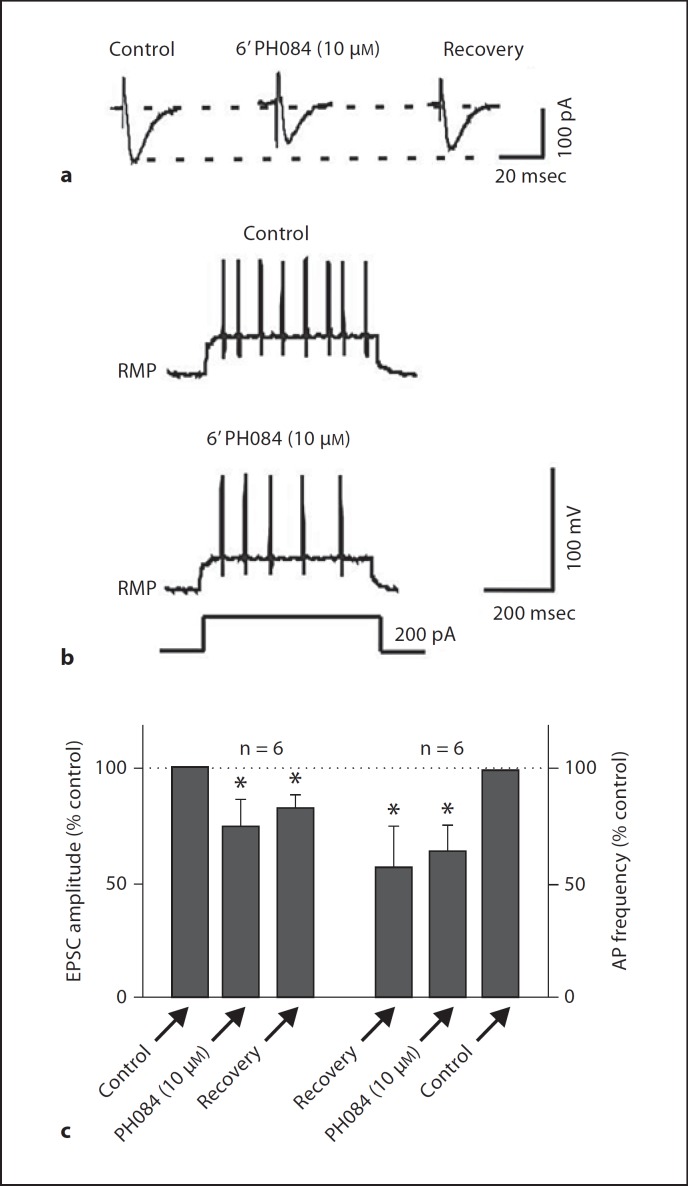
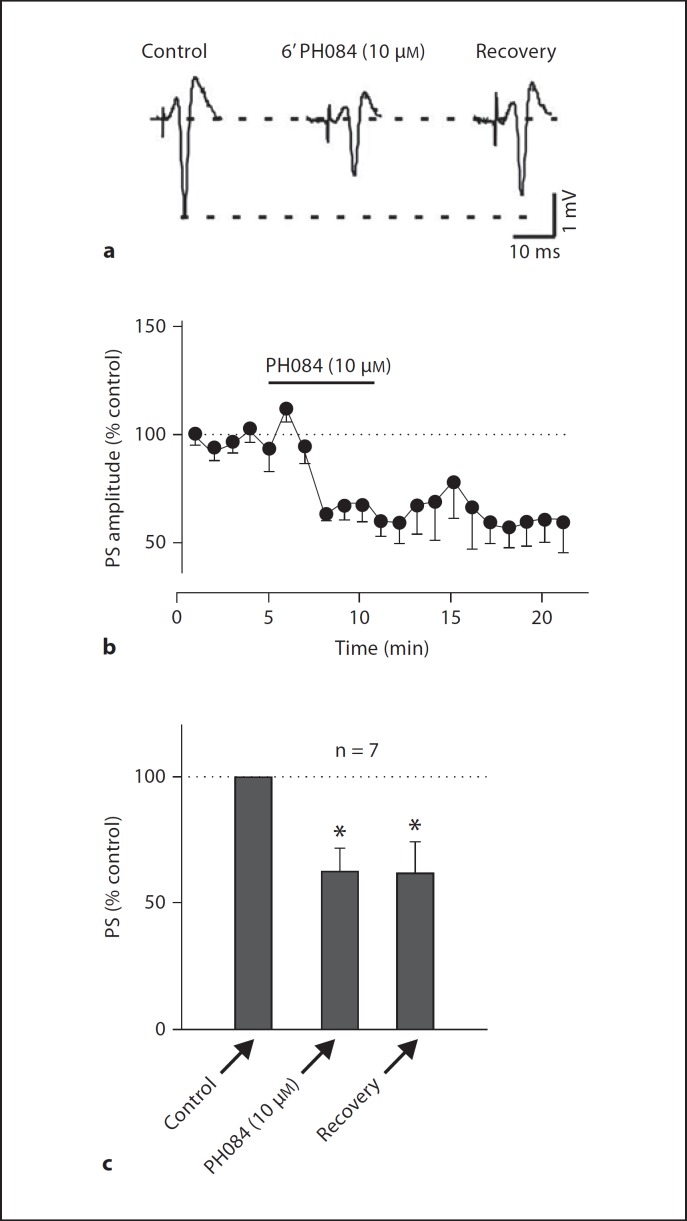
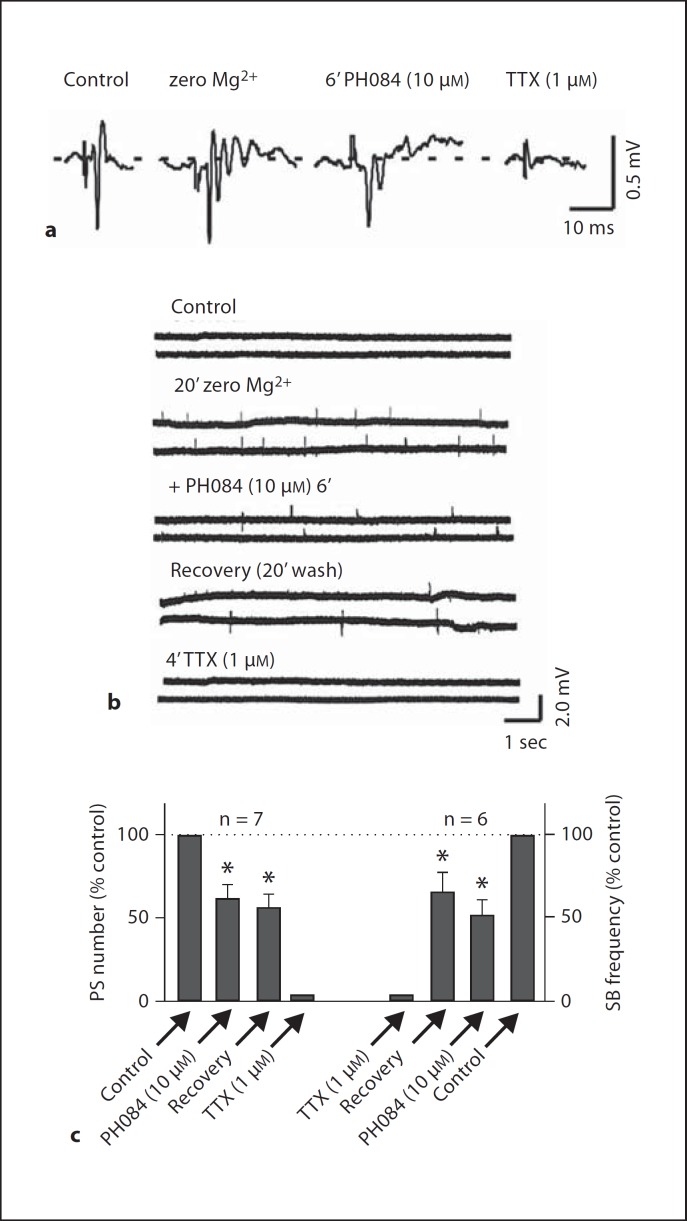
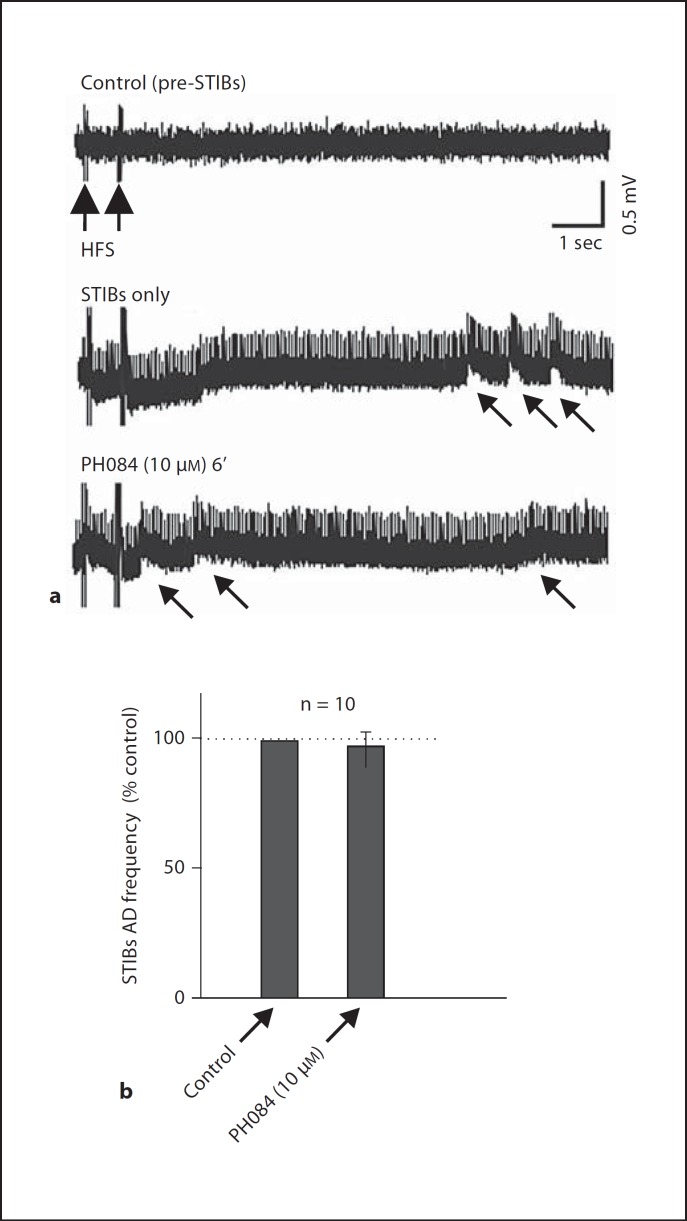
Results: PH084 depressed evoked excitatory postsynaptic currents, action potential firing frequency and PS amplitude. All of these responses did not recover to baseline after 15-20 min washout of PH084. Perfusion with zero magnesium ion (Mg(2+))-containing buffer converted a single PS to multiple PS (mPS) accompanied by spontaneous burst. PH084 suppressed the mPS and the spontaneous burst frequency and it also suppressed the picrotoxin-induced mPS number. However, it did not affect the frequency of stimulus train-induced after discharge or bursts. Furthermore, 8-10 min pretreatment with PH084 did not affect the ability of zero Mg(2+) buffer, picrotoxin or stimulus train to induce epileptiform activity.
Conclusions: Thus, while PH084 may have potential for anticonvulsant activity against chemically induced seizures, it has little or no potential against electrically induced seizures or in preventing epileptiform discharge.
Copyright © 2012 S. Karger AG, Basel.
Figures
References
-
- Loscher W. Current status and future directions in the pharmacotherapy of epilepsy. Trends Pharmacol Sci. 2002;23:113–118. - PubMed
-
- McNamara JO. Emerging insights into the genesis of epilepsy. Nature. 1999;399:A15–A22. - PubMed
-
- Kwan P, Brodie MJ. Early identification of refractory epilepsy. N Engl J Med. 2000;342:314–319. - PubMed
-
- Brodie MJ. Do we need any more new antiepileptic drugs? Epilepsy Res. 2001;45:3–6. - PubMed
-
- Pollard JR, French J. Antiepileptic drugs in development. Lancet Neurol. 2006;5:1064–1067. - PubMed
Publication types
MeSH terms
Substances
LinkOut - more resources
Full Text Sources
Other Literature Sources
Medical
Miscellaneous
