


Donor human milk largely replaces formula-feeding of preterm infants in two urban hospitals
- PMID: 23258498
- PMCID: PMC3810409
- DOI: 10.1038/jp.2012.153
Donor human milk largely replaces formula-feeding of preterm infants in two urban hospitals
Abstract
Objective: To determine acceptance of donor human milk (DM) for feeding preterm infants and whether offering DM, alters mothers' milk (MM) feeding.
Study design: Infant feeding data were collected from medical records of 650 very preterm infants enrolled between 2006-2011 in two hospital level III neonatal intensive care units (NICUs) in Cincinnati, Ohio. The study was conducted during the implementation of a program offering 14 days of DM.
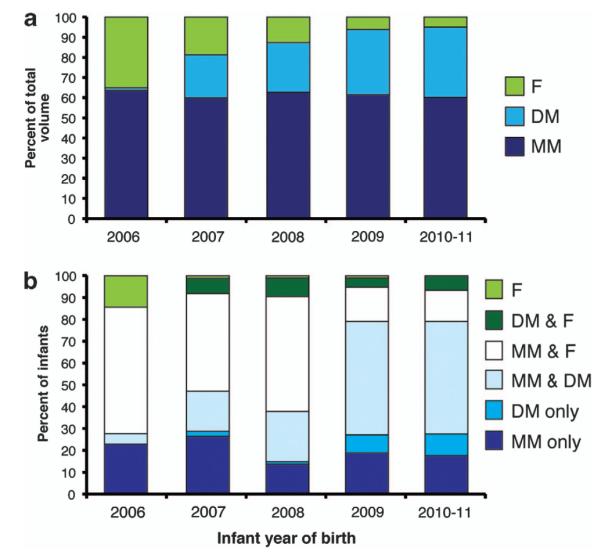
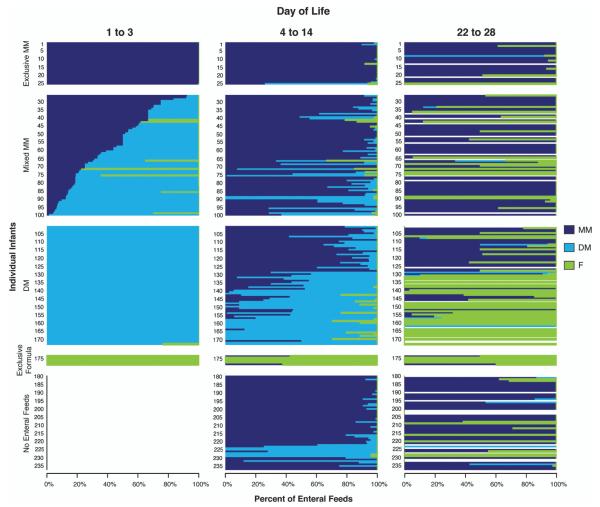
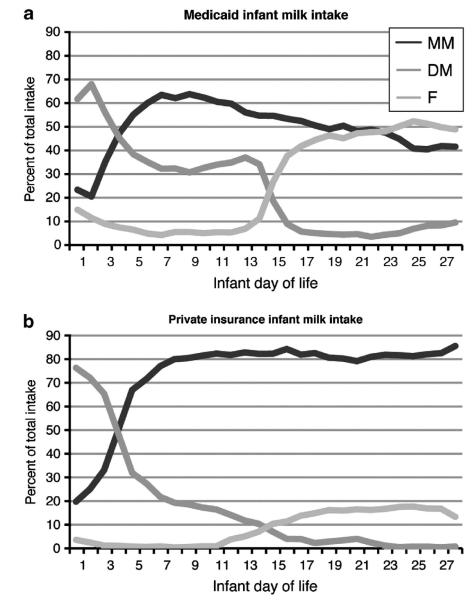
Result: From 2006-2011, any DM use increased from 8 to 77% of infants, largely replacing formula for the first 2 weeks of life; provision of MM did not change. DM was more likely to be given in the first 2 weeks of life, if infants never received MM or were >1000 g birth weight, but DM use did not differ by sociodemographic factors.
Conclusion: Offering DM dramatically increased human milk feeding and decreased formula use, but did not alter MM feeding in hospital.
Figures
References
-
- AAP Breastfeeding and the use of human milk. American Academy of Pediatrics. Work group on breastfeeding. Pediatrics. 1997;100:1035–1039. - PubMed
-
- Quigley MA, Henderson G, Anthony MY, McGuire W. Formula milk versus donor breast milk for feeding preterm or low birth weight infants. Cochrane Database Syst Rev. 2007;17:CD002971. - PubMed
-
- Schanler RJ. Mother’s own milk, donor human milk, and preterm formulas in the feeding of extremely premature infants. J Pediatr Gastroenterol Nutr. 2007;45:S175–S177. - PubMed
-
- Schanler RJ, Shulman RJ, Lau C. Feeding strategies for premature infants: beneficial outcomes of feeding fortified human milk versus preterm formula. Pediatrics. 1999;103:1150–1157. - PubMed
-
- Sullivan S, Schanler RJ, Kim JH, Patel AL, Trawöger R, Kiechl-Kohlendorfer U, et al. An exclusively human milk-based diet is associated with a lower rate of necrotizing enterocolitis than a diet of human milk and bovine milk-based products. J Pediatr. 2010;156:562–567. e561. - PubMed
