


Syntrophin proteins as Santa Claus: role(s) in cell signal transduction
- PMID: 23263165
- PMCID: PMC11113789
- DOI: 10.1007/s00018-012-1233-9
Syntrophin proteins as Santa Claus: role(s) in cell signal transduction
Abstract
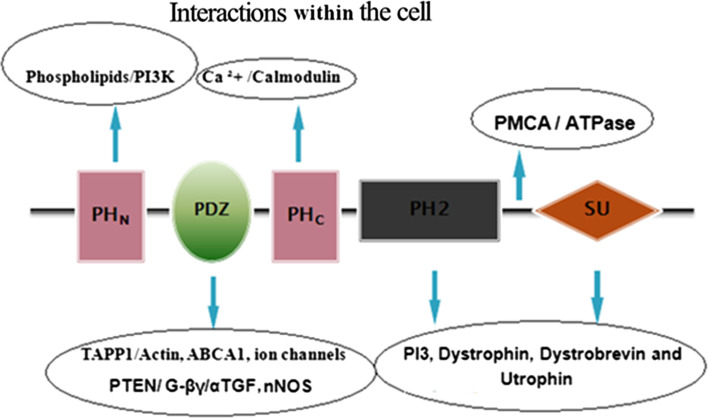
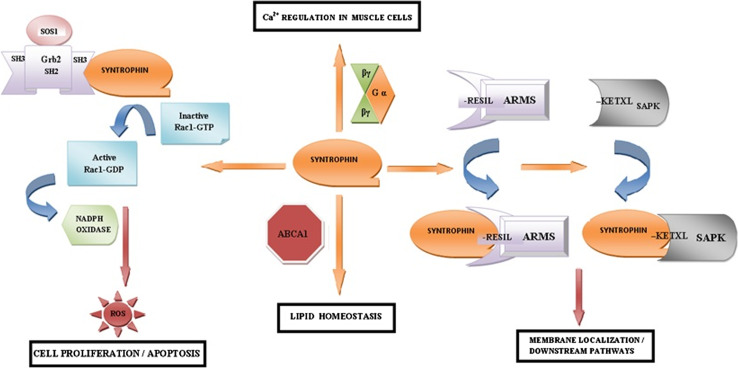
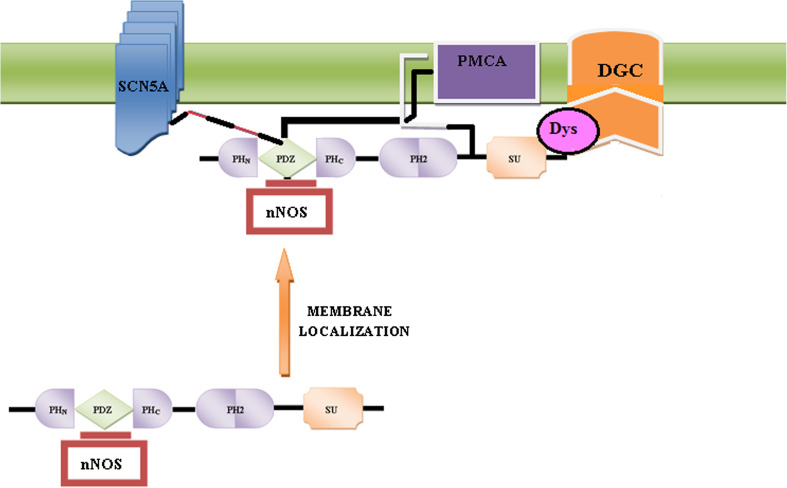
Syntrophins are a family of cytoplasmic membrane-associated adaptor proteins, characterized by the presence of a unique domain organization comprised of a C-terminal syntrophin unique (SU) domain and an N-terminal pleckstrin homology (PH) domain that is split by insertion of a PDZ domain. Syntrophins have been recognized as an important component of many signaling events, and they seem to function more like the cell's own personal 'Santa Claus' that serves to 'gift' various signaling complexes with precise proteins that they 'wish for', and at the same time care enough for the spatial, temporal control of these signaling events, maintaining overall smooth functioning and general happiness of the cell. Syntrophins not only associate various ion channels and signaling proteins to the dystrophin-associated protein complex (DAPC), via a direct interaction with dystrophin protein but also serve as a link between the extracellular matrix and the intracellular downstream targets and cell cytoskeleton by interacting with F-actin. They play an important role in regulating the postsynaptic signal transduction, sarcolemmal localization of nNOS, EphA4 signaling at the neuromuscular junction, and G-protein mediated signaling. In our previous work, we reported a differential expression pattern of alpha-1-syntrophin (SNTA1) protein in esophageal and breast carcinomas. Implicated in several other pathologies, like cardiac dys-functioning, muscular dystrophies, diabetes, etc., these proteins provide a lot of scope for further studies. The present review focuses on the role of syntrophins in membrane targeting and regulation of cellular proteins, while highlighting their relevance in possible development and/or progression of pathologies including cancer which we have recently demonstrated.
Figures

References
-
- Froehner SC, Adams ME, Peters MF, Gee SH. Syntrophins: modular adapter proteins at the neuromuscular junction and the sarcolemma. Soc Gen Physiol Ser. 1997;52:197–207. - PubMed
Publication types
MeSH terms
Substances
LinkOut - more resources
Full Text Sources
Miscellaneous
