


doi: 10.1002/ejoc.200900560.
Epub 2009 Oct 8.
Divalent and Multivalent Activation in Phosphate Triesters: A Versatile Method for the Synthesis of Advanced Polyol Synthons
Affiliations
- PMID: 23264750
- PMCID: PMC3526009
- DOI: 10.1002/ejoc.200900560
Item in Clipboard
Divalent and Multivalent Activation in Phosphate Triesters: A Versatile Method for the Synthesis of Advanced Polyol Synthons
European J Org Chem.
2009 Nov.
Abstract
The construction of mono- and bicyclic phosphate trimesters possessing divalent and multivalent activation and their subsequent use in the production of advanced polyol synthons is presented. The method highlights efforts to employ phosphate tethers as removable, functionally active tethers capable of multipositional activation and their subsequent role as leaving groups in selective cleavage reactions. The development of phosphate tethers represents an integrated platform for a new and versatile tether for natural product synthesis and sheds light on new approaches to the facile construction of small molecules.
Figures

Hydrolysis half-life of trimethyl- and dimethylsodium phosphate.
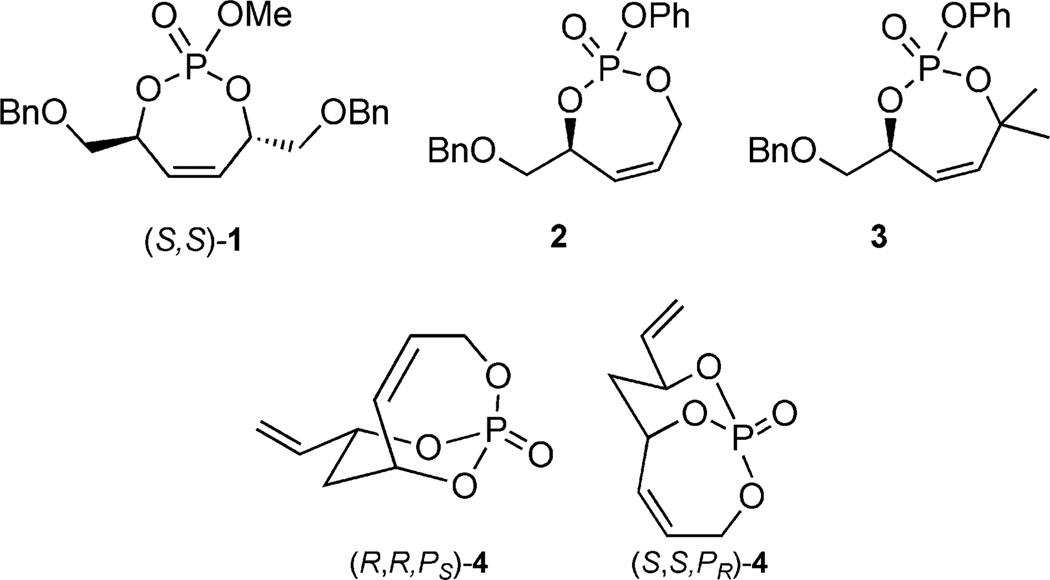
Monocyclic and bicyclic phosphates.

Seminal report of cuprate addition to allylic phosphates.
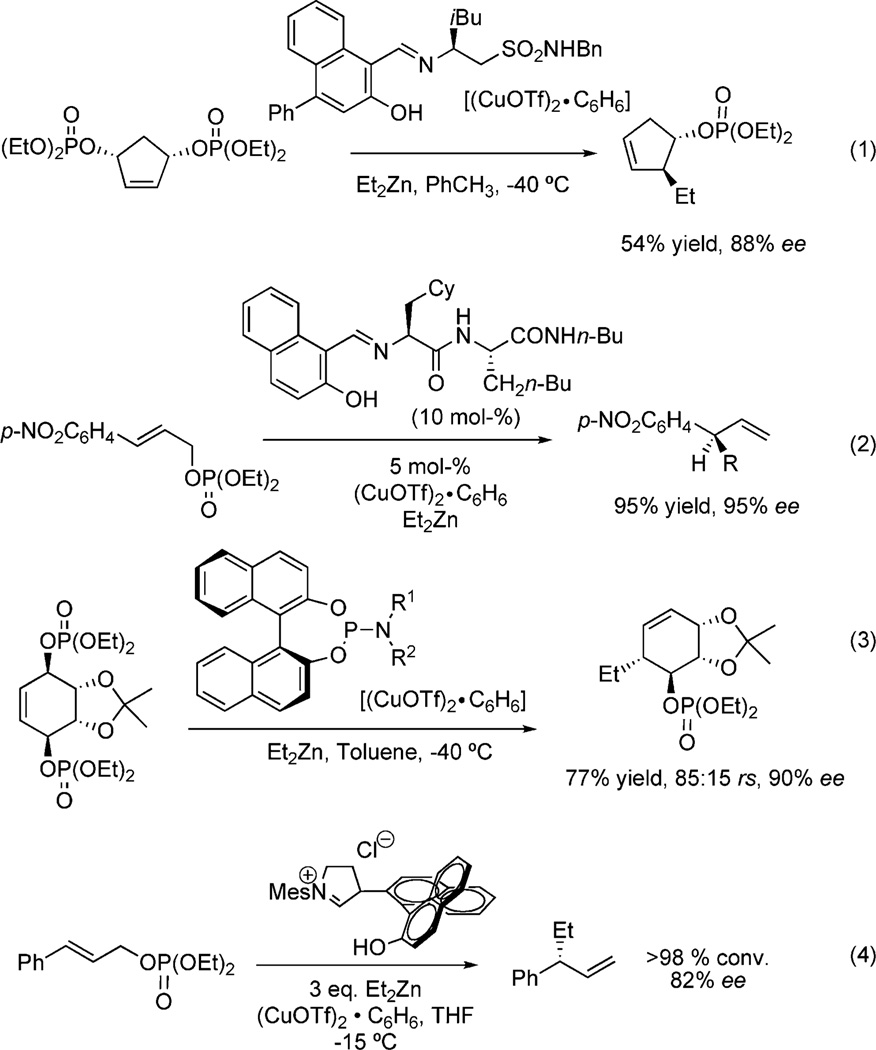
Examples of allylic phosphate displacements using cuprates.
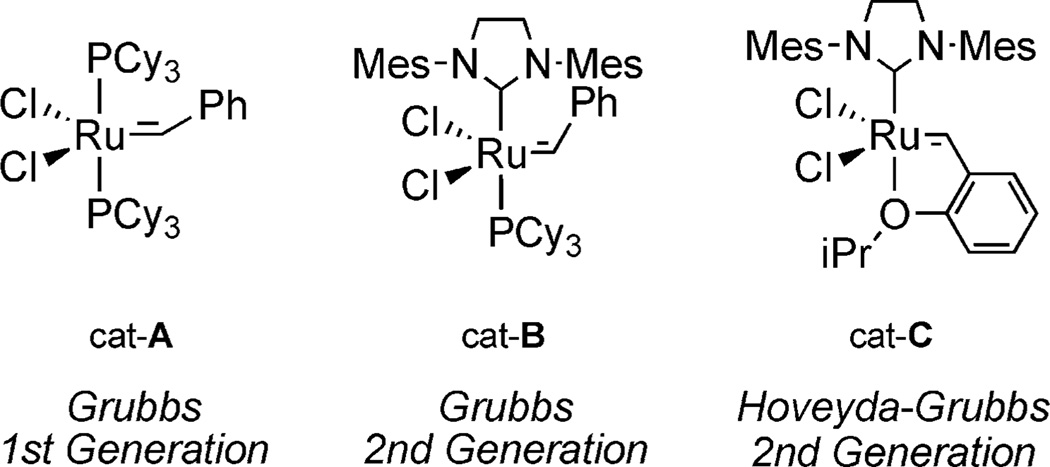
Olefin metathesis catalysts.
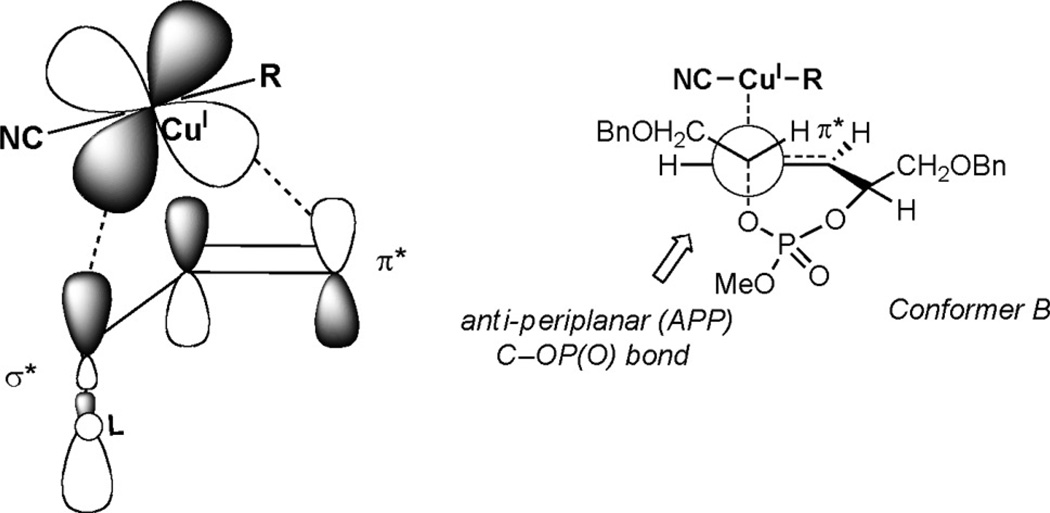
Corey model for rationalizing stereoselectivity.
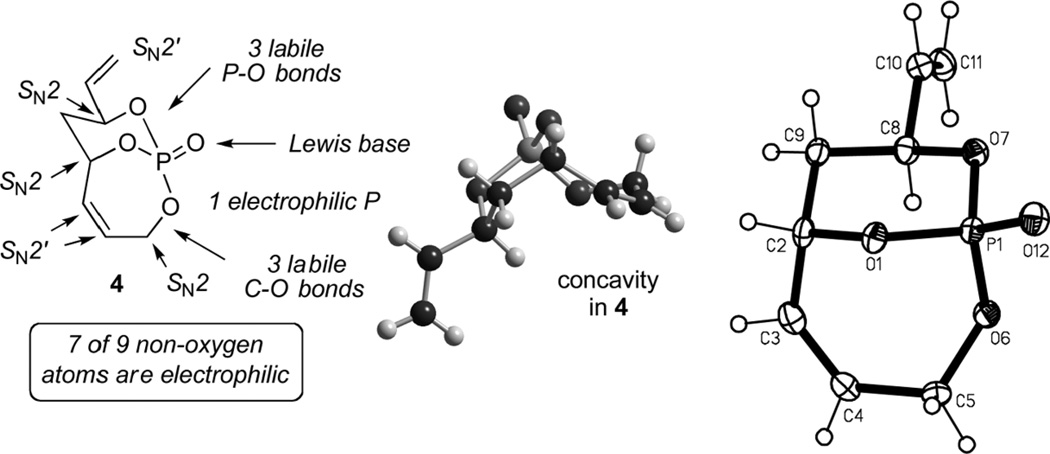
Features of P-chiral bicyclo[4.3.1]phosphate 4.
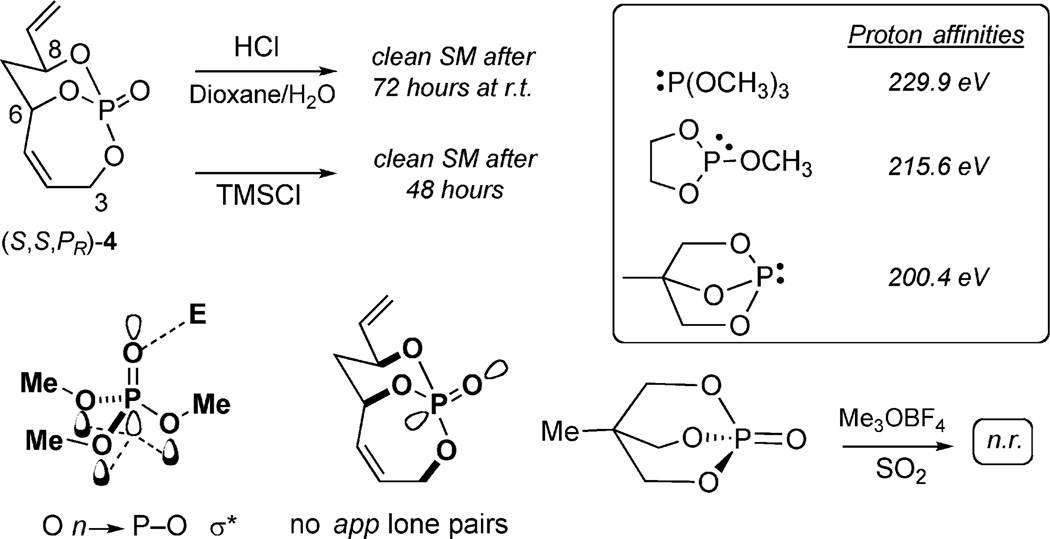
Stability of 4 toward acidic conditions.
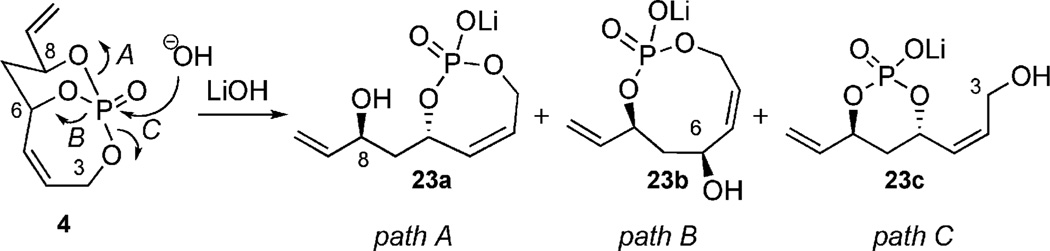
Possible hydrolysis products from 4.
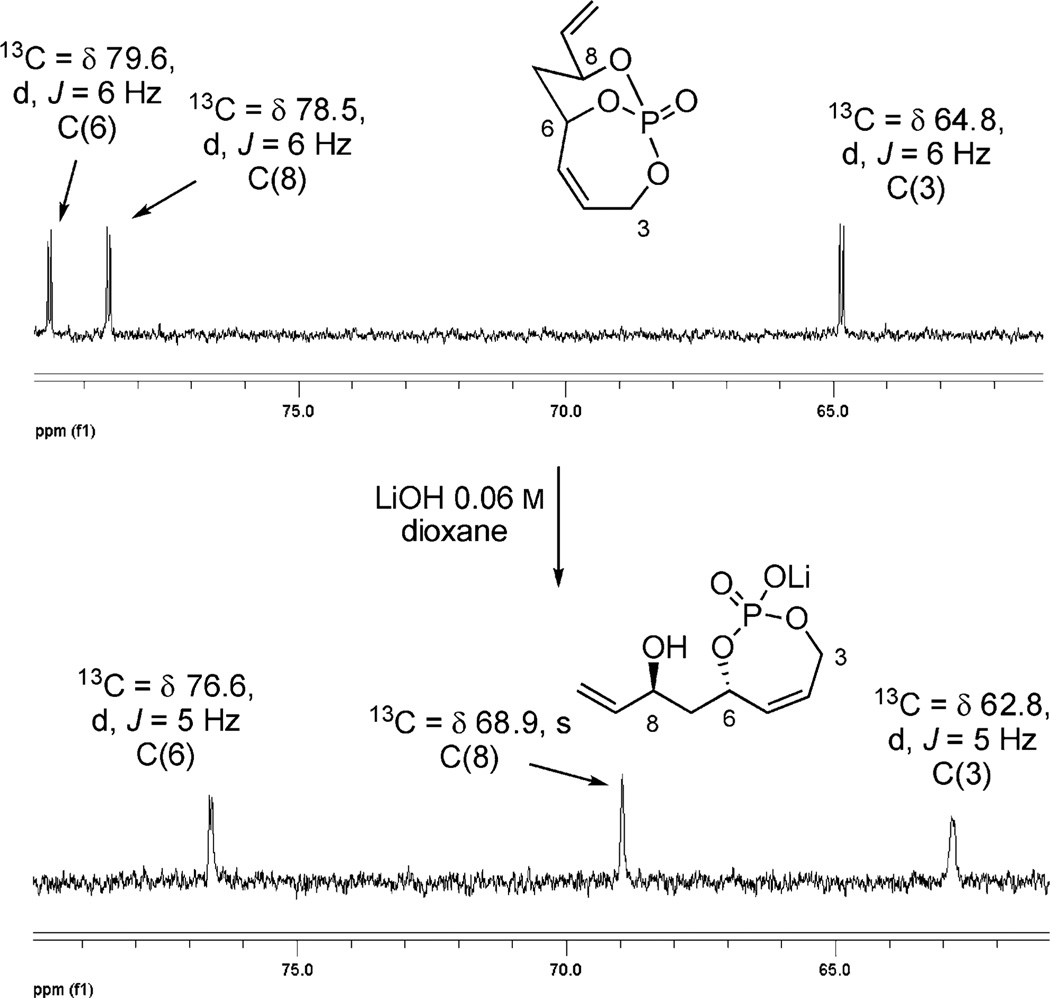
13C analysis of basic hydrolysis of 4.

Synthesis of monocyclic phosphate 1.
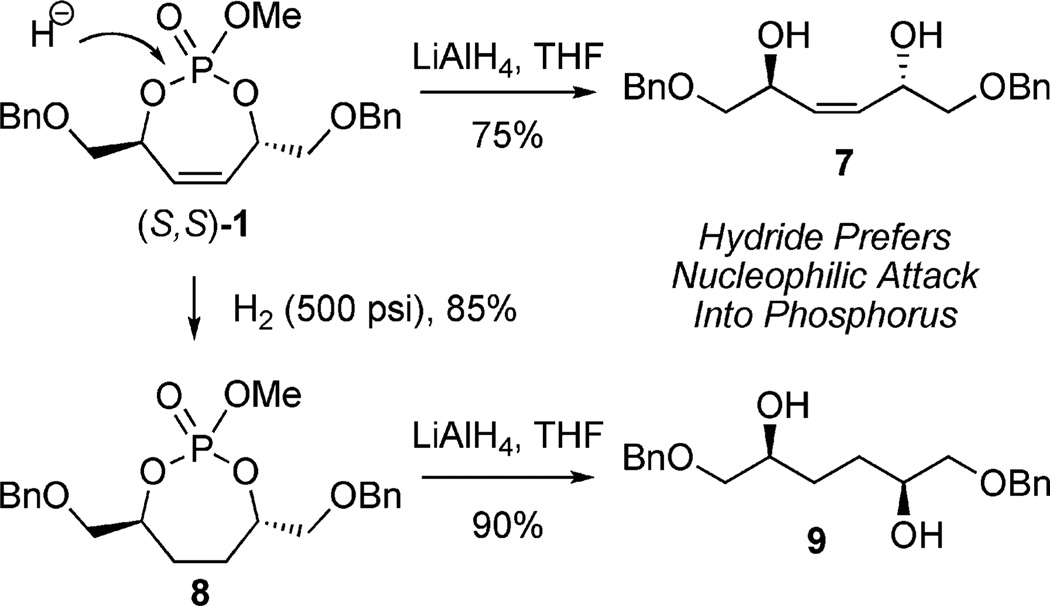
Preparation of 1,4-diols via phosphate cleavage.
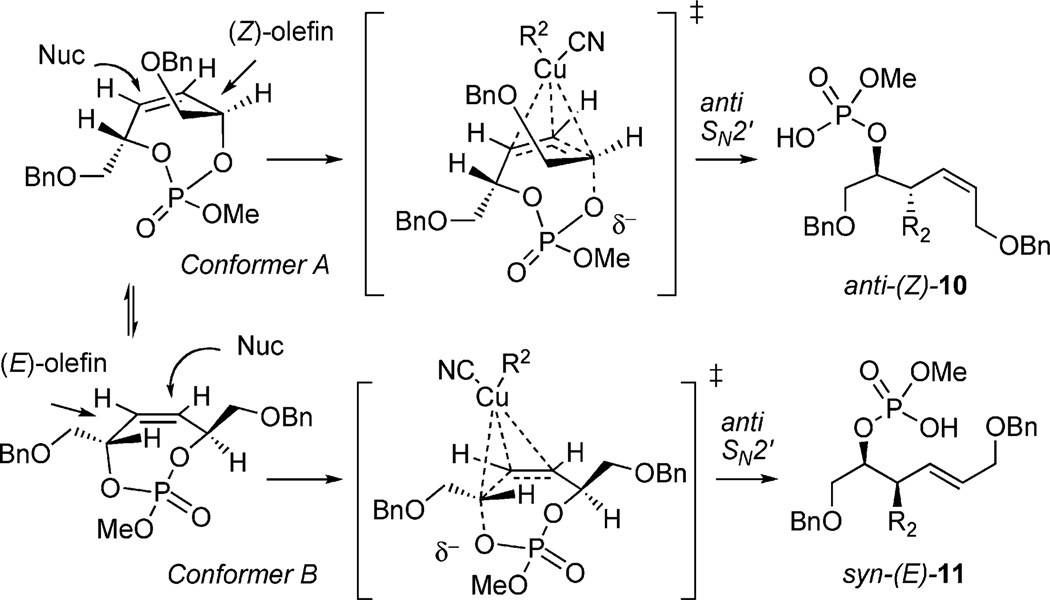
Possible modes for cuprate addition.
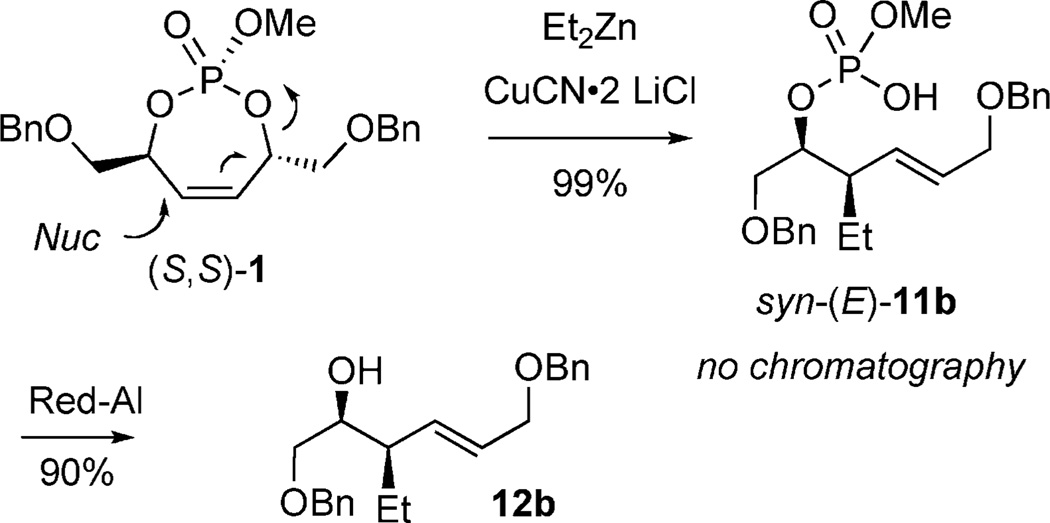
Cuprate addition/phosphate acid cleavage sequence.
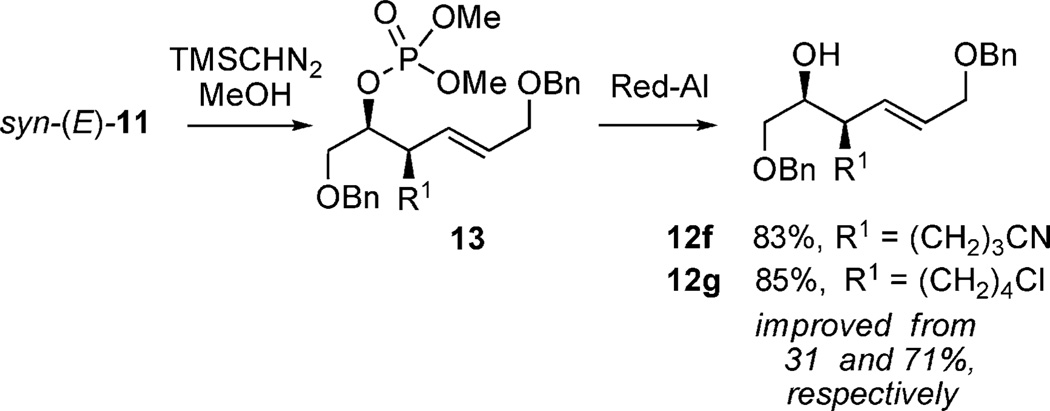
Methylation/phosphate cleavage.
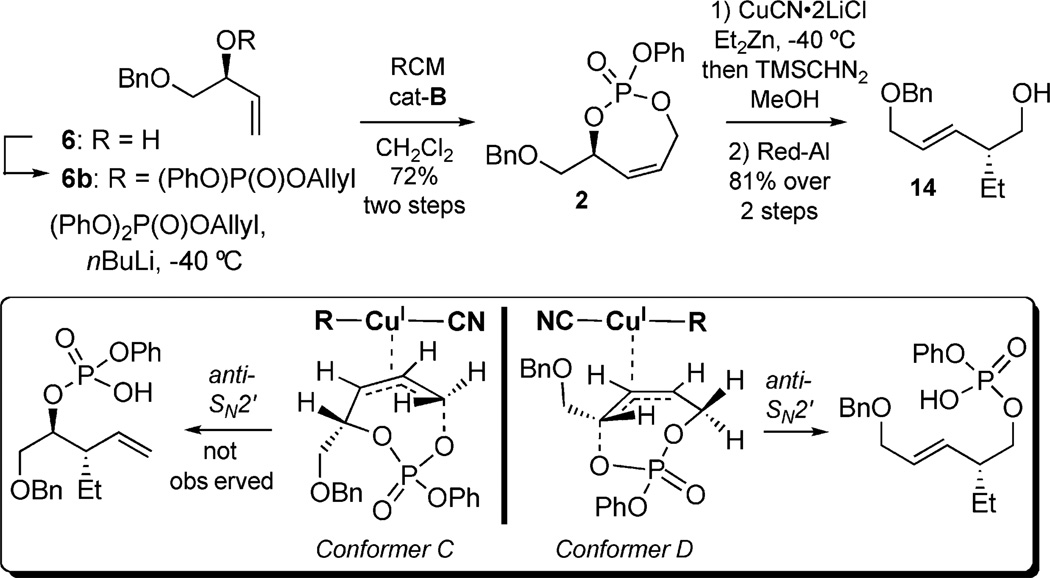
Unsymmetric monocyclic phosphates.
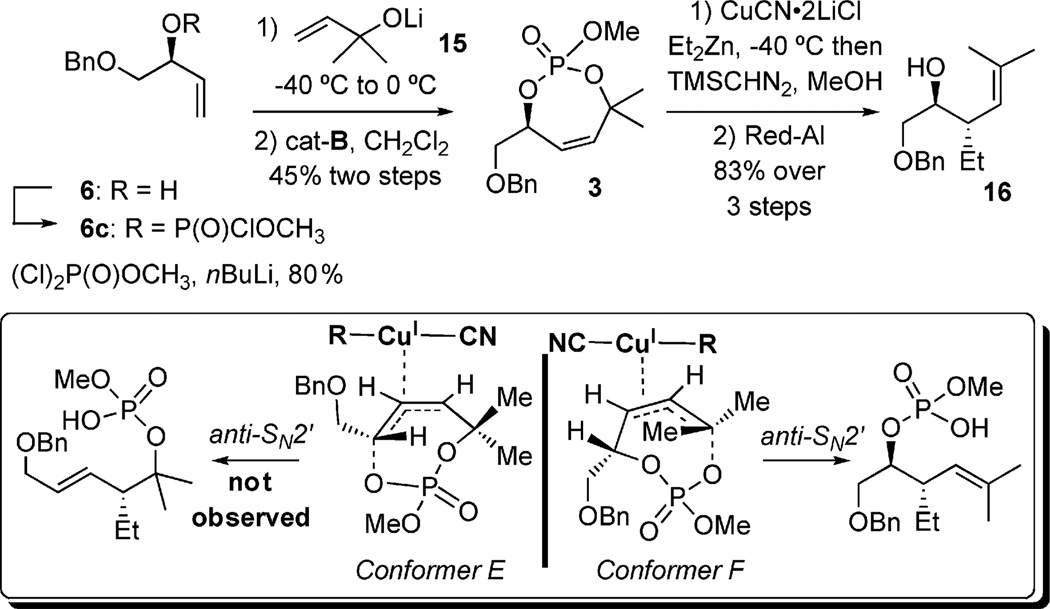
Secondary vs. tertiary allylic phosphate leaving groups.
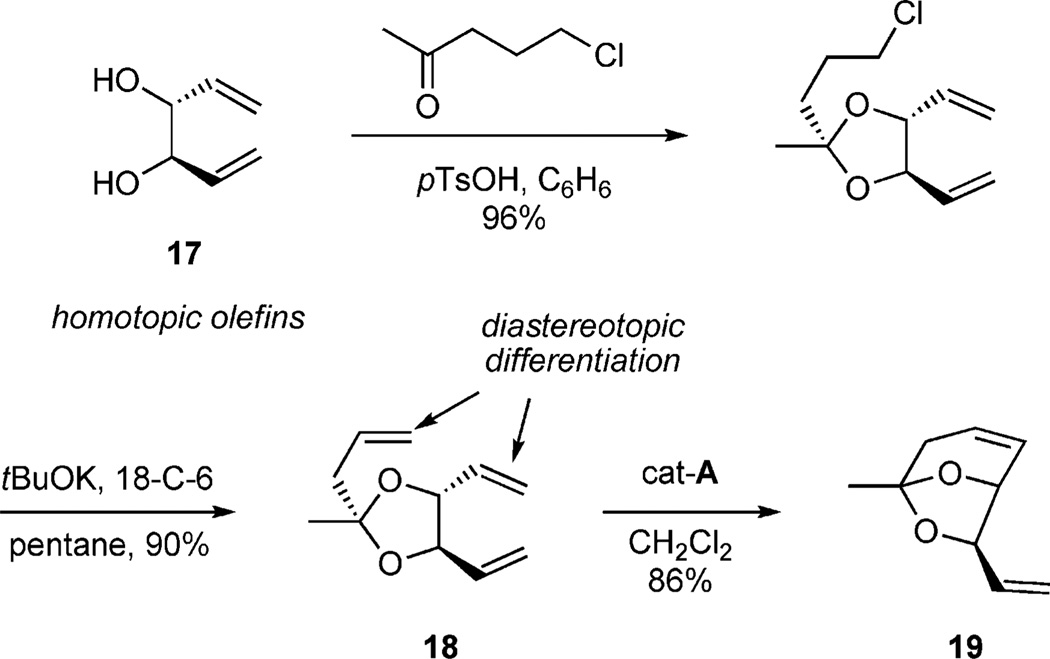
Burke method of desymmetrization.
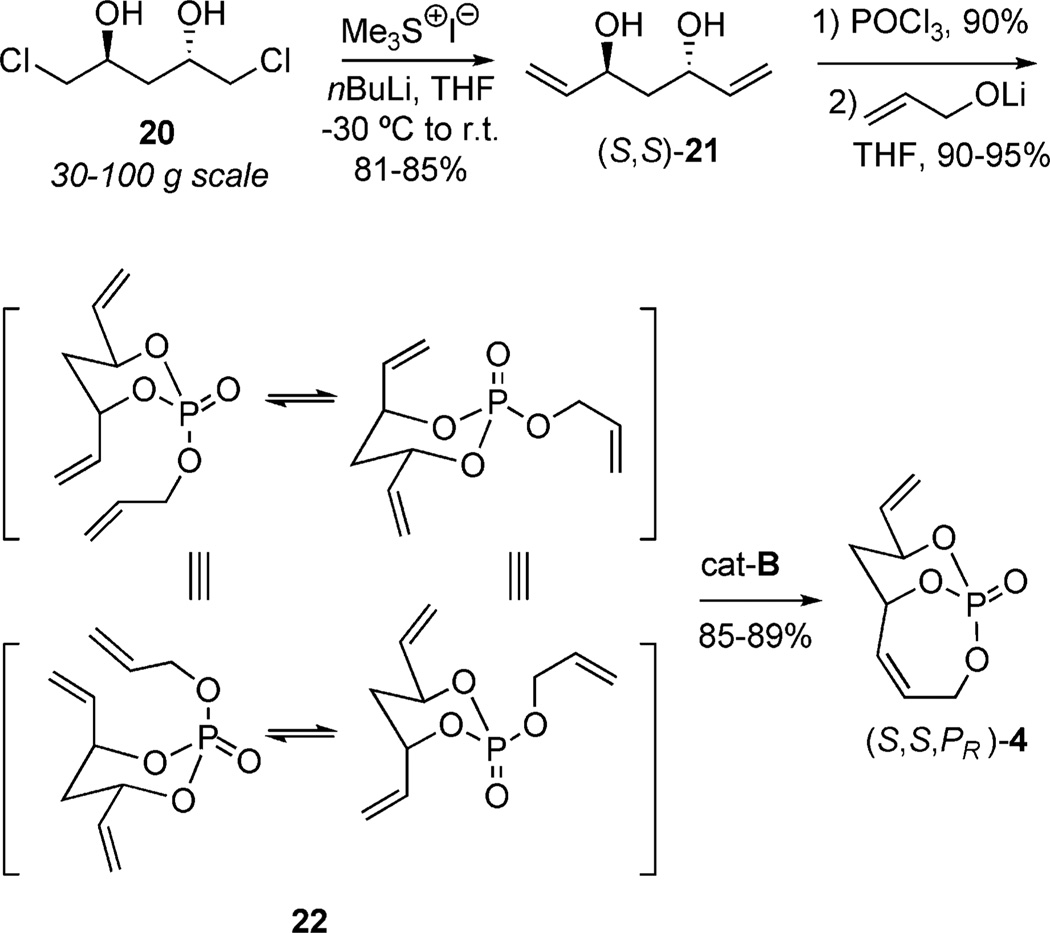
Use of RCM in the construction of the P-chiral, bicy-clo[4.3.1]phosphate (S,S,PR)-4.
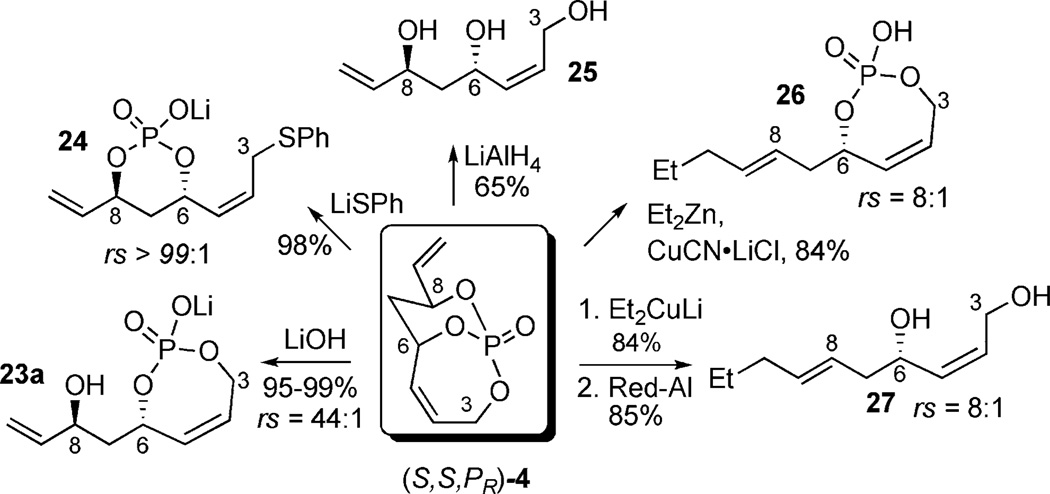
Regio- and diastereoselective reactivity of 4.
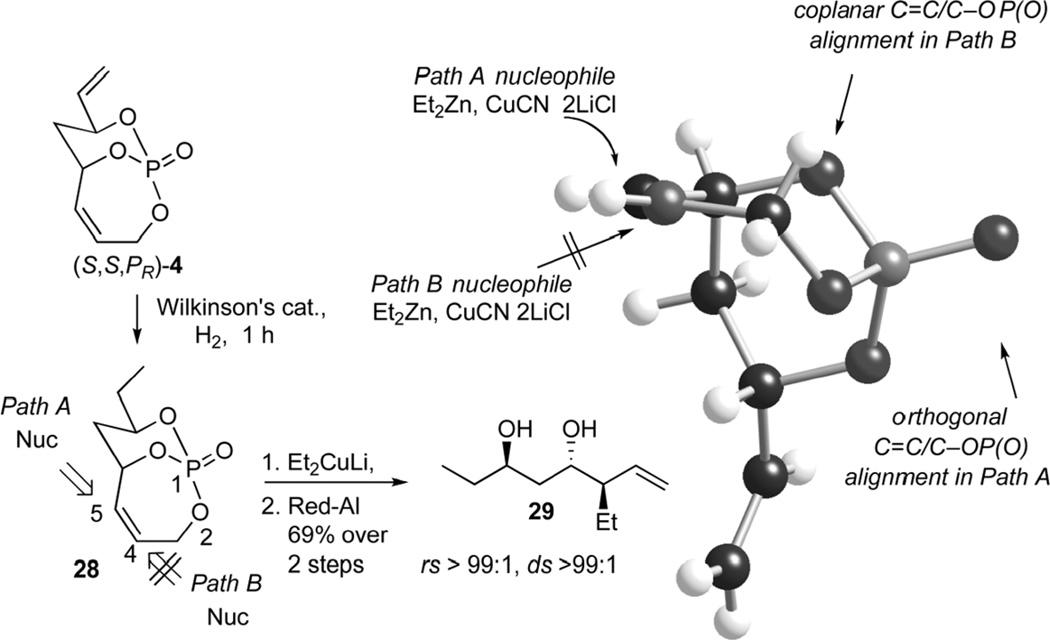
Cuprate selectivity on endocyclic olefin of 4.
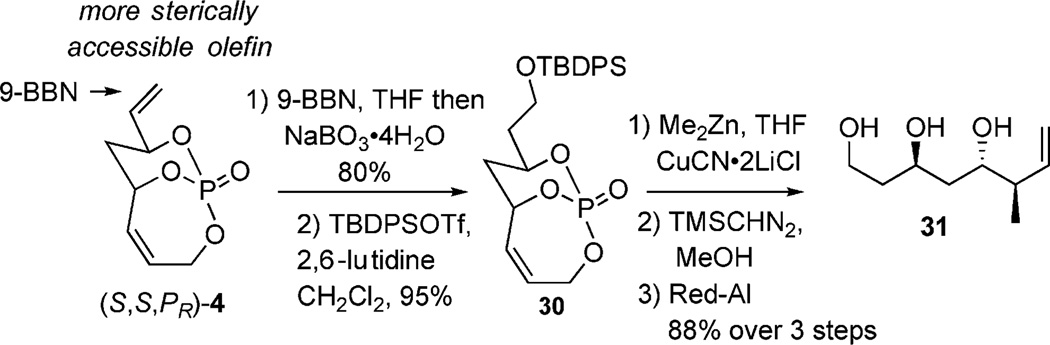
Hydroboration/cuprate/cleavage sequence of 4.
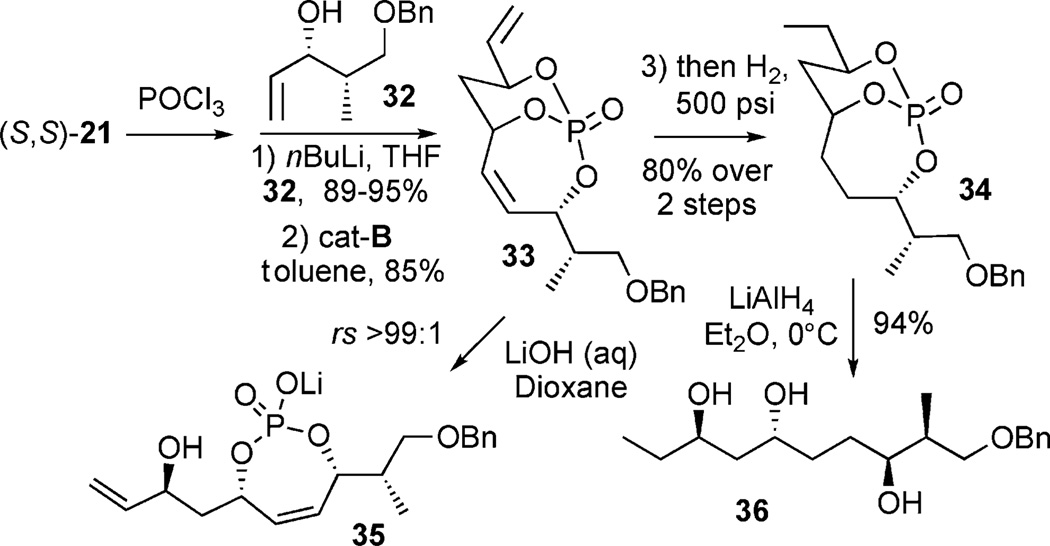
Construction of complex differentiated polyol subunits from 4.
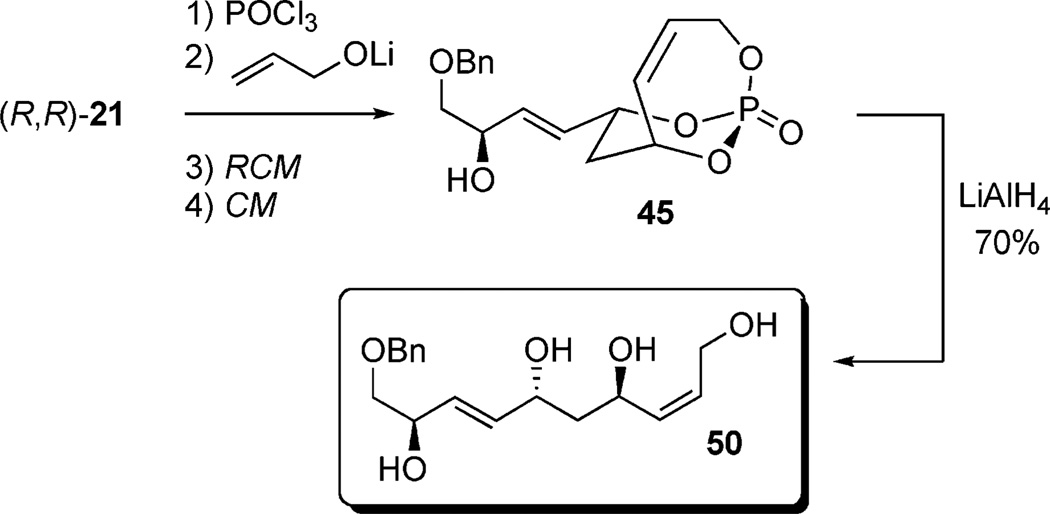
Five-step protocol from (R,R)-21 to polyol 50.
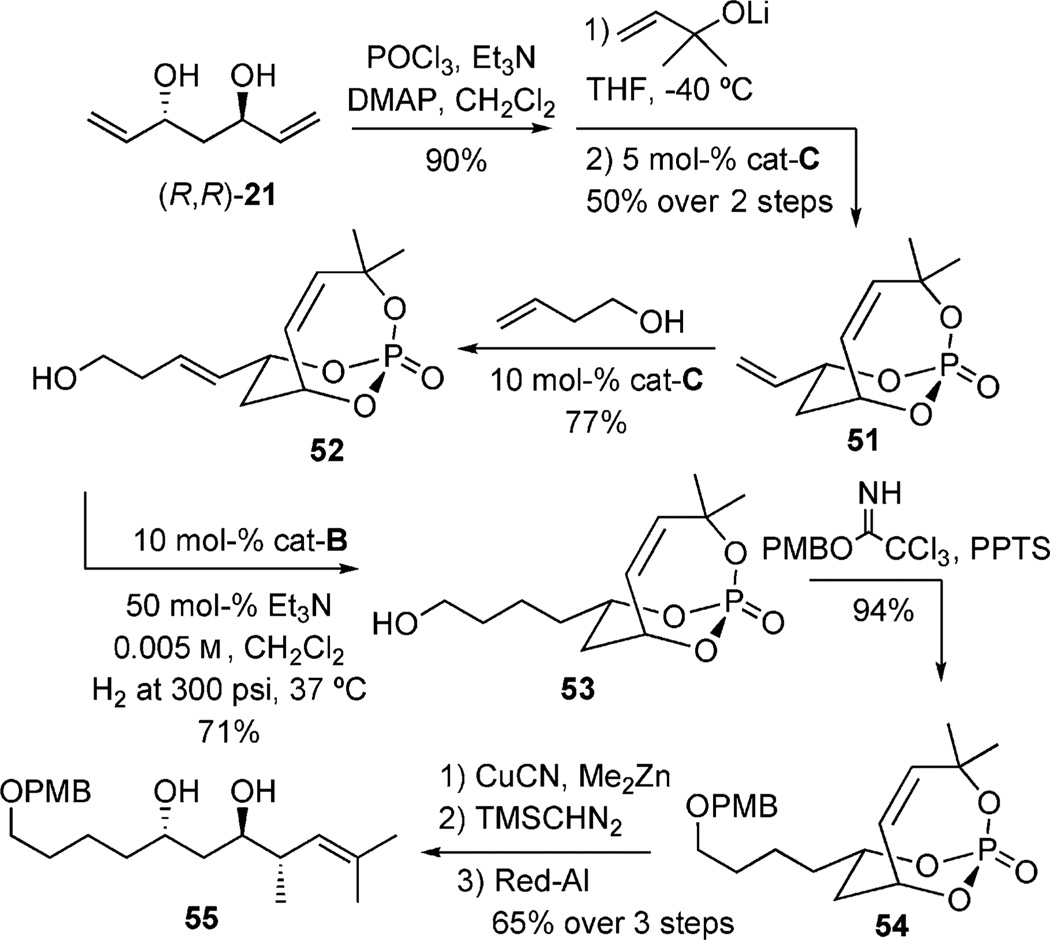
CM/hydrogenation/cuprate sequence.
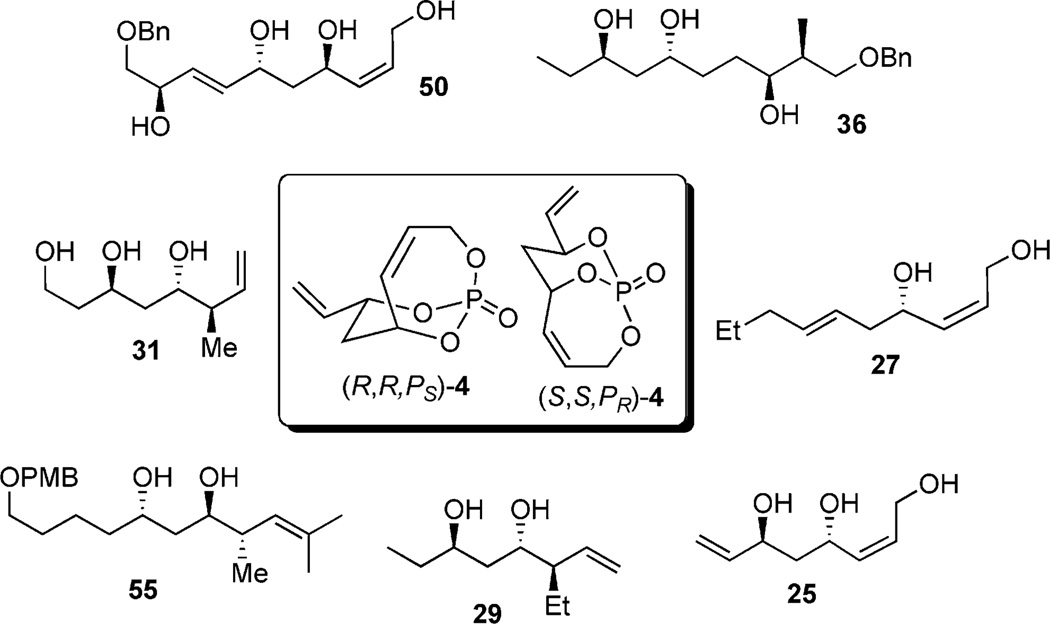
Differentiated polyol subunits accessed from 4.
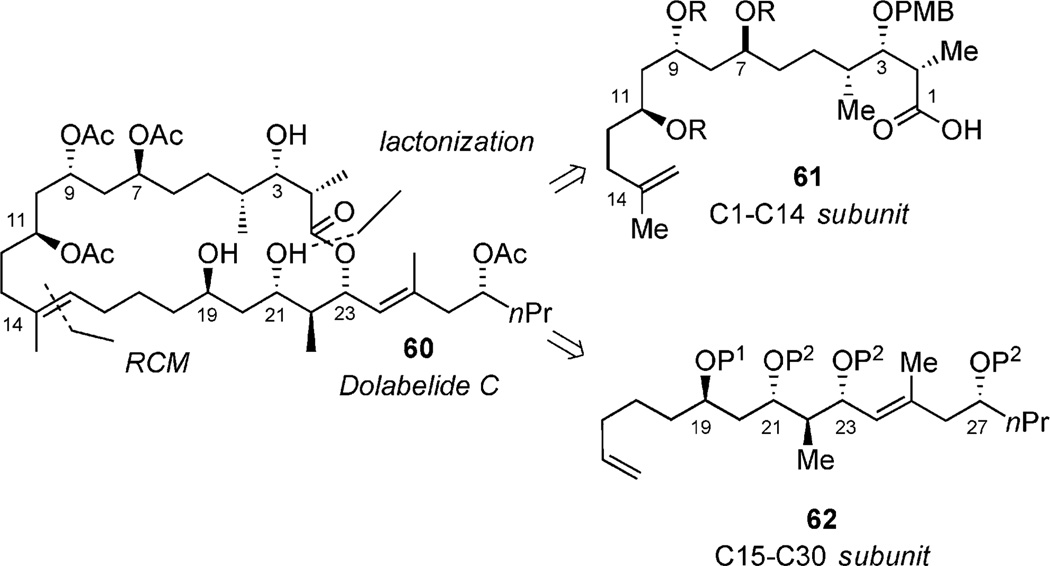
Retrosynthetic analysis of dolabelide C.
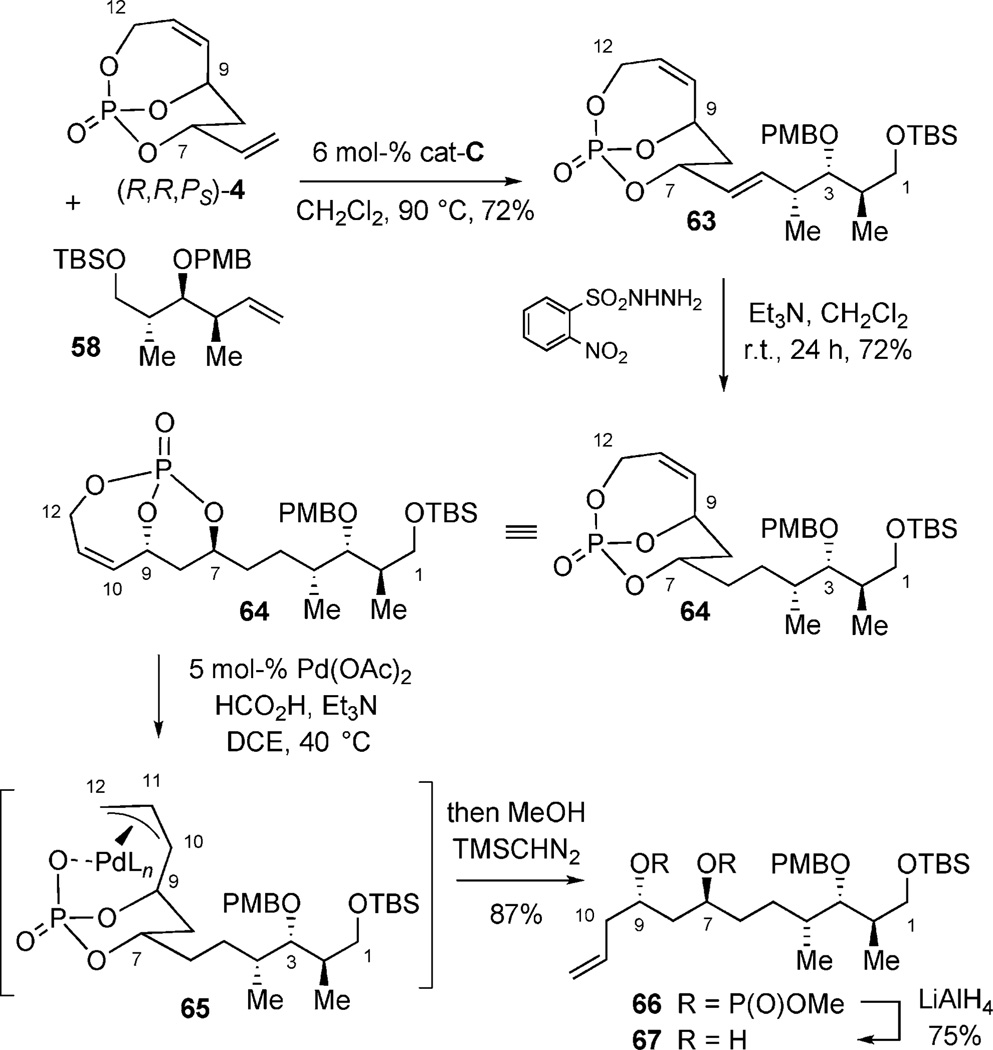
Phosphate-mediated construction of C1–C11 subunit.
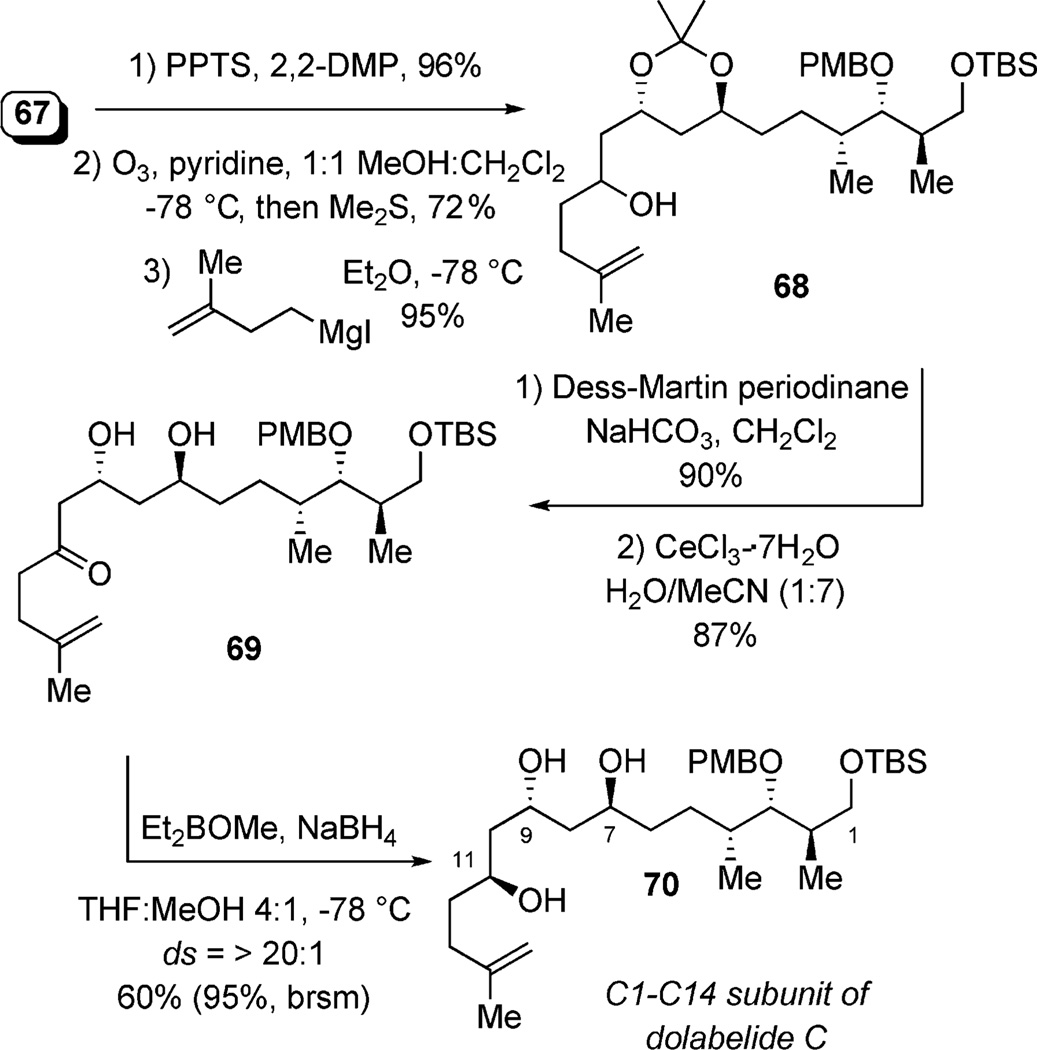
Final steps to C1–C14 subunit.
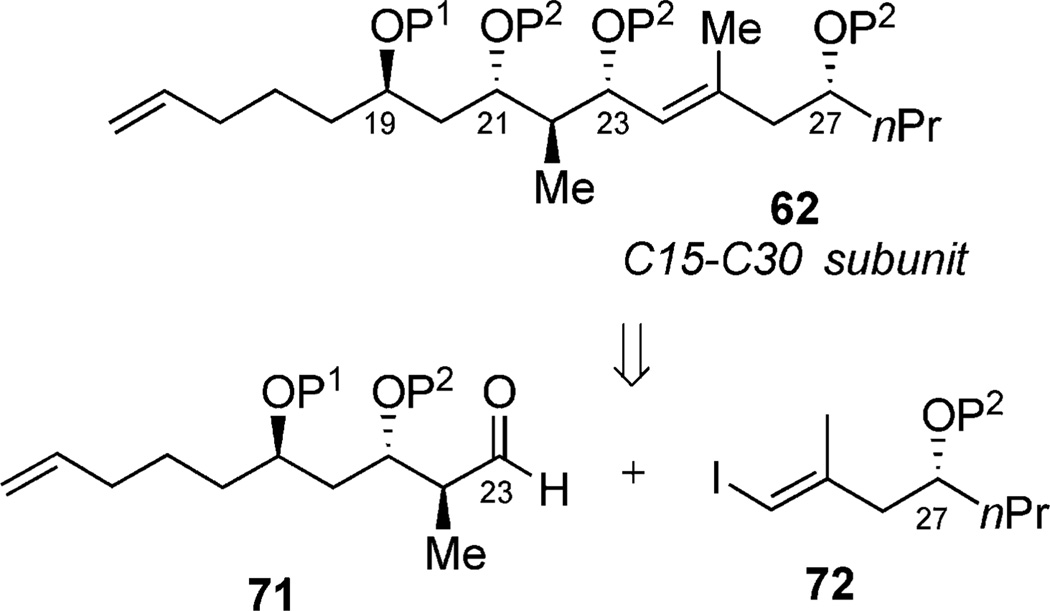
Retrosynthetic analysis of the C15–C30 subunit.
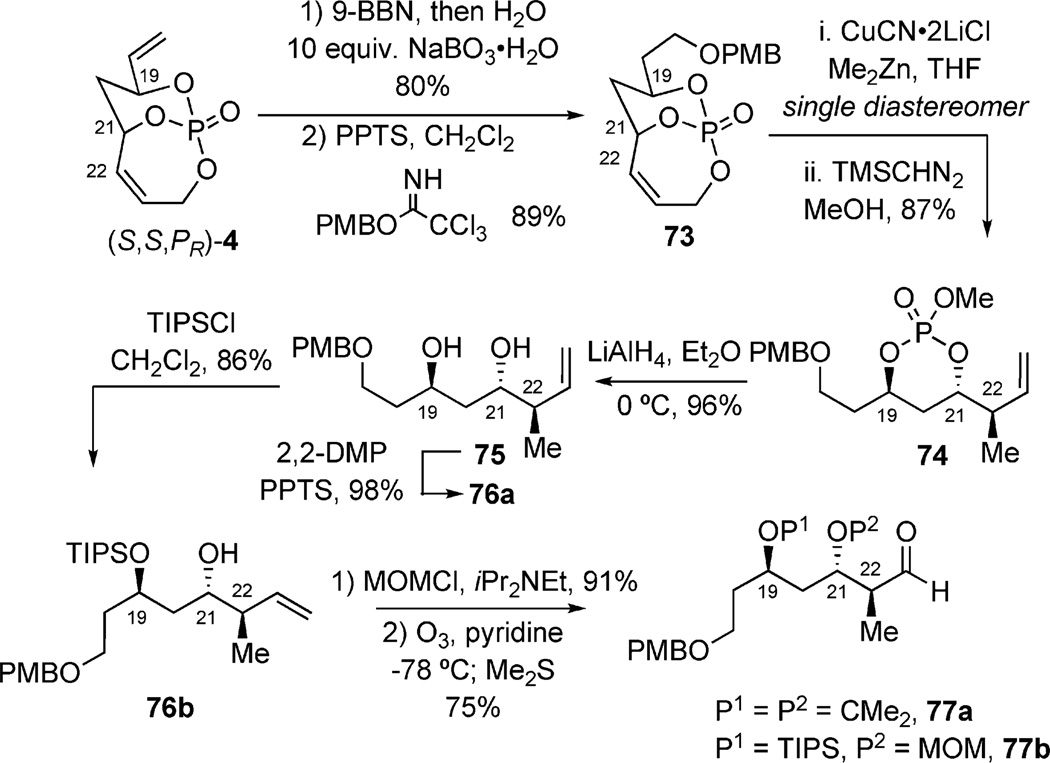
Phosphate-mediated approach to aldehydes 76a and 76b.
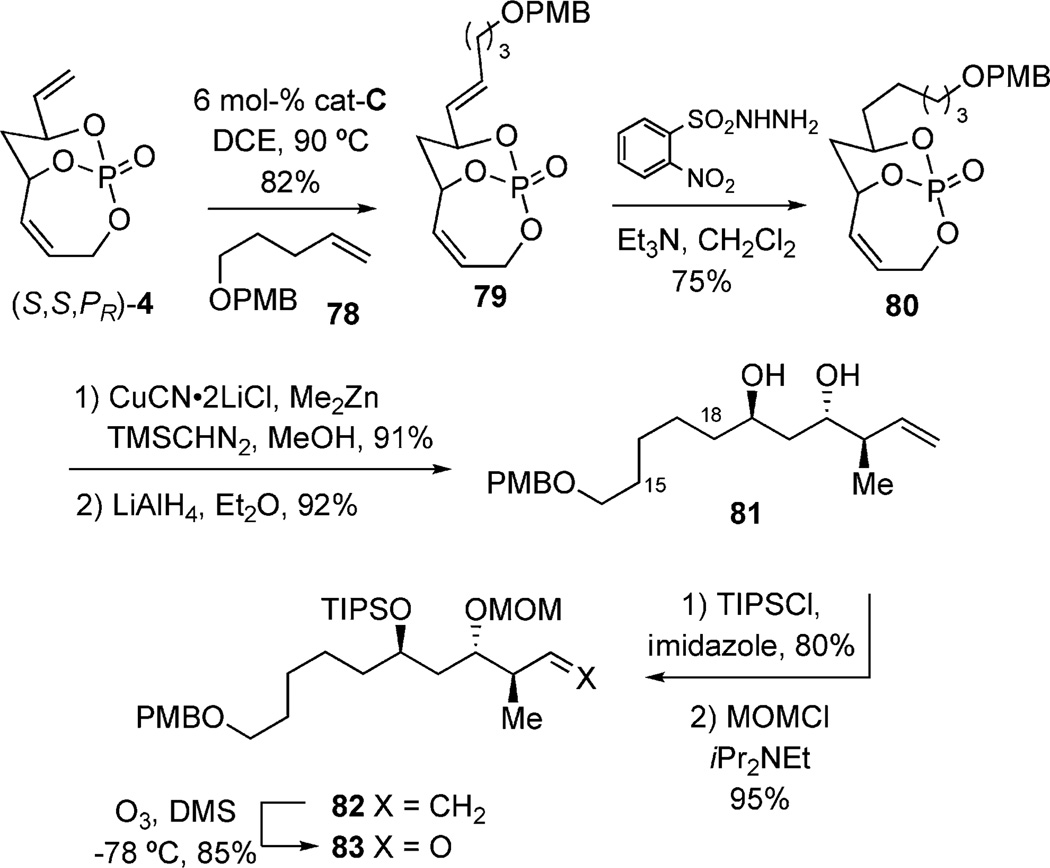
Alternative approach to C15–C30 subunit.
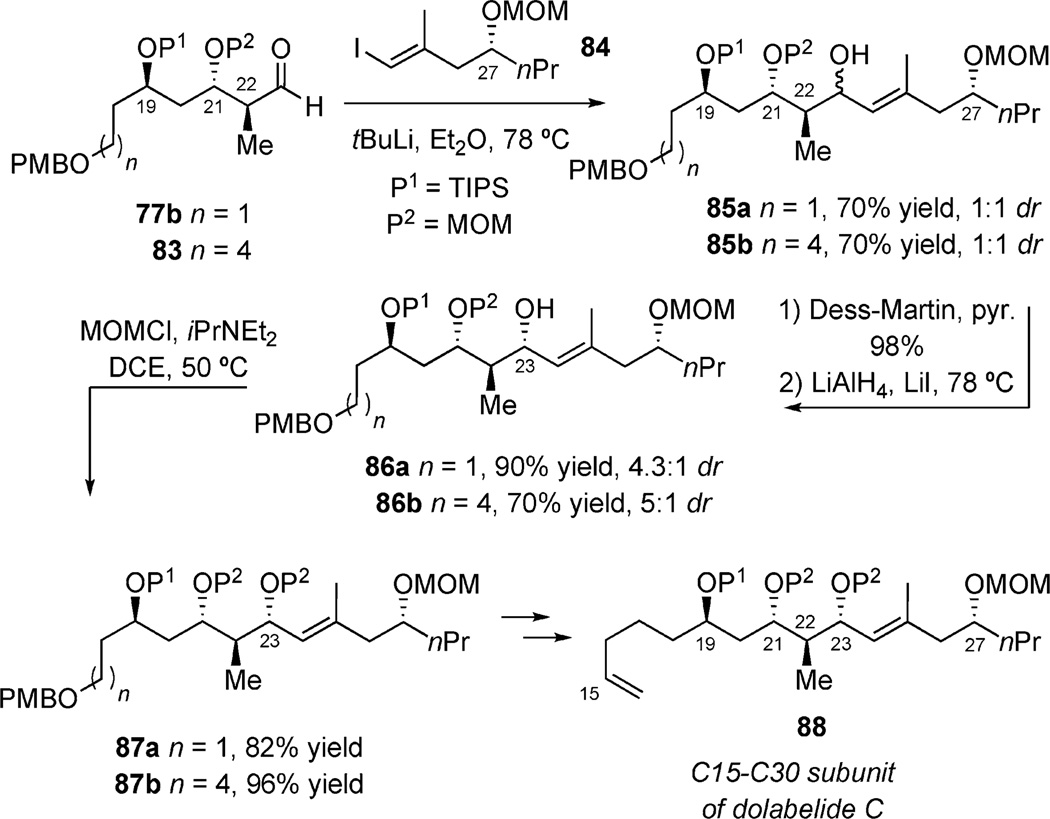
Final steps to the C15–C30 subunit of dolabelide C.
References
-
- Fensterbank L, Malacria M, Sieburth S. Synthesis. 1997:813–854.
- Gauthier DR, Zandi KS, Shea KJ. Tetrahedron. 1998;54:2289–2338.
-
- White JD, Carter RG. In: Science of Synthesis: Houben-Weyl, Methods of Molecular Transformations. Fleming I, editor. vol. 4. Stuttgart, New York: Thieme; 2001. pp. 371–412. and references cited therein.
- Evans PA, Cui J, Gharpure SJ, Polosukhin A, Zhang HR. J. Am. Chem. Soc. 2003;125:14702–14703. - PMC - PubMed
- Cox LR, Ley SV. In: Templated Organic Synthesis. Diederich F, Stang PJ, editors. Weinheim: Wiley-VCH; 2000. pp. 275–395.
-
- Corey EJ, Boaz NW. Tetrahedron Lett. 1984;25:3063–3066.
- Yanagisawa A, Noritake Y, Yamamoto N, Nomura H. Synlett. 1991:251–253.
- Lipshutz B. Synlett. 1990:119–128.
- Magid RM. Tetrahedron. 1980;36:1901–1930.
-
- Takai K, Oshima K, Nozaki H. Tetrahedron Lett. 1980;21:2531–2534.
- Sato M, Takai K, Oshima K, Nozaki H. Tetrahedron Lett. 1981;22:1609–1612.
- Fugami K, Oshima K, Utimoto K. Chem. Lett. 1987:2203–2206.
- Nicolaou KC, Namoto K. Chem. Commun. 1998:1757–1758. - PubMed
- Lepifre F, Clavier S, Bouyssou P, Coudert G. Tetrahedron. 2001;57:6969–6975.
- Kadota I, Takamura H, Sato K, Yamamoto Y. Tetrahedron Lett. 2001;42:4729–4731.
-
- Morin MD, Rychnovsky SD. Org. Lett. 2006;8:2051–2053. - PubMed
Grants and funding
LinkOut - more resources
Full Text Sources