


Relevance of long-lived CD8(+) T effector memory cells for protective immunity elicited by heterologous prime-boost vaccination
- PMID: 23264773
- PMCID: PMC3525016
- DOI: 10.3389/fimmu.2012.00358
Relevance of long-lived CD8(+) T effector memory cells for protective immunity elicited by heterologous prime-boost vaccination
Abstract
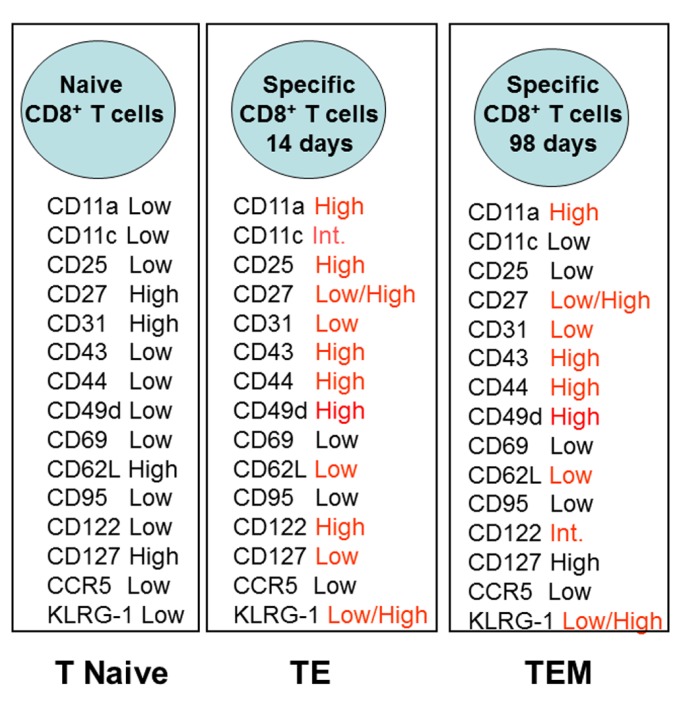
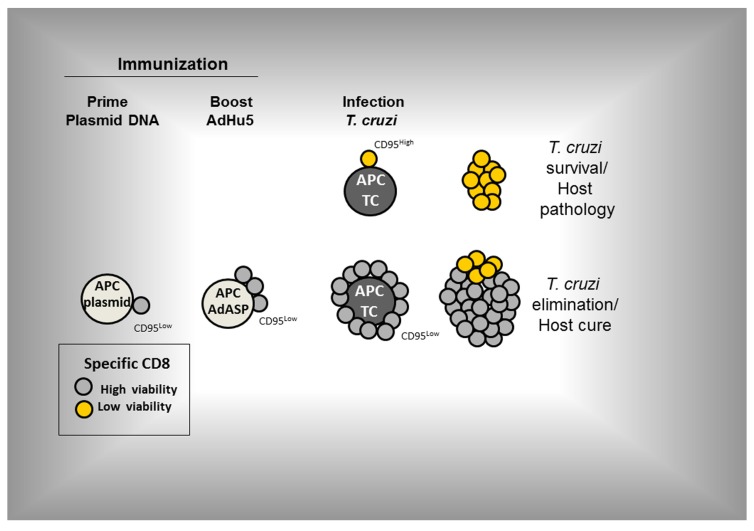
Owing to the importance of major histocompatibility complex class Ia-restricted CD8(+) T cells for host survival following viral, bacterial, fungal, or parasitic infection, it has become largely accepted that these cells should be considered in the design of a new generation of vaccines. For the past 20 years, solid evidence has been provided that the heterologous prime-boost regimen achieves the best results in terms of induction of long-lived protective CD8(+) T cells against a variety of experimental infections. Although this regimen has often been used experimentally, as is the case for many vaccines, the mechanism behind the efficacy of this vaccination regimen is still largely unknown. The main purpose of this review is to examine the characteristics of the protective CD8(+) T cells generated by this vaccination regimen. Part of its efficacy certainly relies on the generation and maintenance of large numbers of specific lymphocytes. Other specific characteristics may also be important, and studies on this direction have only recently been initiated. So far, the characterization of these protective, long-lived T cell populations suggests that there is a high frequency of polyfunctional T cells; these cells cover a large breadth and display a T effector memory (TEM) phenotype. These TEM cells are capable of proliferating after an infectious challenge and are highly refractory to apoptosis due to a control of the expression of pro-apoptotic receptors such as CD95. Also, they do not undergo significant long-term immunological erosion. Understanding the mechanisms that control the generation and maintenance of the protective activity of these long-lived TEM cells will certainly provide important insights into the physiology of CD8(+) T cells and pave the way for the design of new or improved vaccines.
Keywords: CD8; adenovirus; memory; vaccines.
Figures

References
-
- Acierno P. M., Schmitz J. E., Gorgone D. A., Sun Y., Santra S., Seaman M. S., et al. (2006). Preservation of functional virus-specific memory CD8+ T lymphocytes in vaccinated, simian human immunodeficiency virus-infected rhesus monkeys. J. Immunol. 176 5338–5345 - PubMed
-
- Ahmed R., Akondy R. S. (2011). Insights into human CD8+ cell memory using the yellow fever and smallpox vaccines. Immunol. Cell Biol. 89 340–345 - PubMed
-
- Aidoo M., Otten R. A., Rodriguez V., Sariol C. A., Martinez M., Kraiselburd E., et al. (2007). Absence of SHIV infection in gut and lymph node tissues in rhesus monkeys after repeated rectal challenges following HIV-1 DNA/MVA immunizations. Vaccine 25 6474–6481 - PubMed
-
- Akram A., Inman R. D. (2012). Immunodominance: a pivotal principle in host response to viral infections. Clin. Immunol. 143 99–115 - PubMed
-
- Amara R. R., Villinger F., Altman J. D., Lydy S. L., O’Neil S. P., Staprans S. L., et al. (2001). Control of a mucosal challenge and prevention of AIDS by a multiprotein DNA/MVA vaccine. Science 292 69–74 - PubMed
LinkOut - more resources
Full Text Sources
Research Materials
Miscellaneous
