


Single domain antibodies for the detection of ricin using silicon photonic microring resonator arrays
- PMID: 23268548
- PMCID: PMC3546499
- DOI: 10.1021/ac3030416
Single domain antibodies for the detection of ricin using silicon photonic microring resonator arrays
Abstract
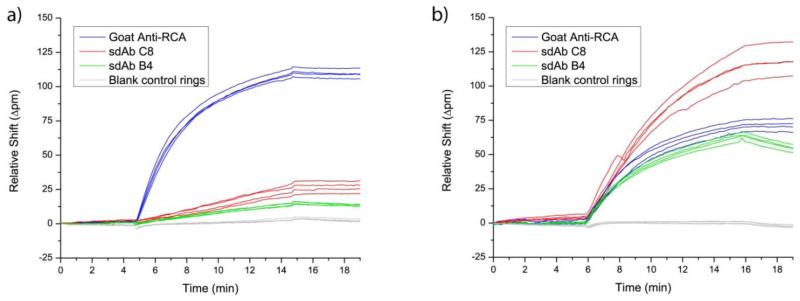
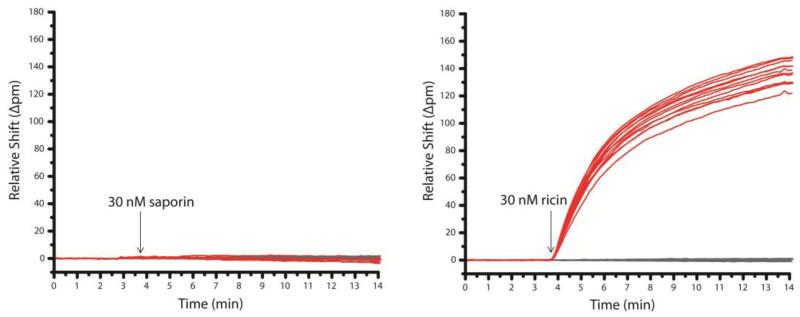
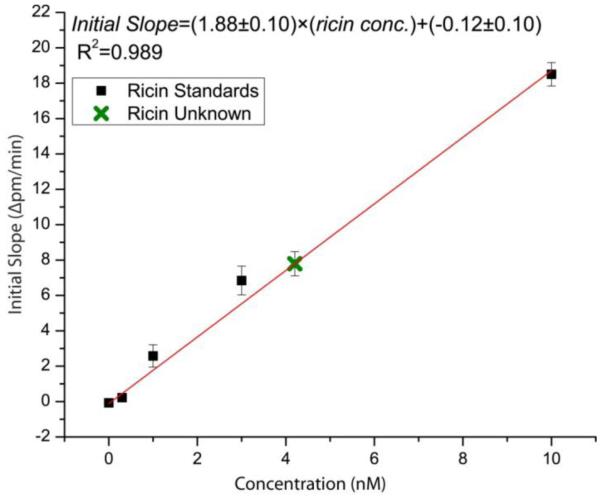
Ricin is a lethal protein toxin derived from the castor bean plant. Given its notorious history as a biowarfare agent and homicidal weapon, ricin has been classified as a category B bioterrorism agent. Current ricin detection methods based on immunoassays lack the required sensitivity and specificity for many homeland security surveillance applications. Importantly, many conventional antibody-based methodologies are unable to distinguish ricin from RCA 120, a nontoxic protein also found in the castor bean plant. Single domain antibodies (sdAbs), which are recombinantly derived from immunized llamas, are known to have high affinities for ricin A or B chains and low cross-reactivity with RCA 120. Herein, we demonstrate the use of silicon photonic microring resonators for antibody affinity profiling and one-step ricin detection at concentrations down to 300 pM using a 15 min, label-free assay format. These sdAbs were also simultaneously compared with a commercial anti-RCA IgG antibody in a multicapture agent, single target immunoassay using arrays of microrings, which allowed direct comparison of sensitivity and specificity. A selected sdAb was also found to exhibit outstanding specificity against another biotoxin, saporin, which has mechanism of action similar to ricin. Given the rapidity, scalability, and multiplexing capability of this silicon-based technology, this work represents a step toward using microring resonator arrays for the sensitive and specific detection of biowarfare agents.
Figures

References
-
- Bhalla DK, Warheit DB. Toxicology and Applied Pharmacology. 2004;199:71–84. - PubMed
-
- Olsnes S. Toxicon. 2004;44:361–370. - PubMed
-
- Audi J, Belson M, Patel M, Schier J, Osterloh J. JAMA: The Journal of the American Medical Association. 2005;294:2342–2351. - PubMed
-
- Ler SG, Lee FK, Gopalakrishnakone P. Journal of Chromatography A. 2006;1133:1–12. - PubMed
-
- Leshin J, Danielsen M, Credle JJ, Weeks A, O’Connell KP, Dretchen K. Toxicon. 2009;55:658–661. - PubMed
Publication types
MeSH terms
Substances
Grants and funding
LinkOut - more resources
Full Text Sources
Other Literature Sources
Molecular Biology Databases
