


Nationwide study of candidemia, antifungal use, and antifungal drug resistance in Iceland, 2000 to 2011
- PMID: 23269738
- PMCID: PMC3592045
- DOI: 10.1128/JCM.02566-12
Nationwide study of candidemia, antifungal use, and antifungal drug resistance in Iceland, 2000 to 2011
Abstract
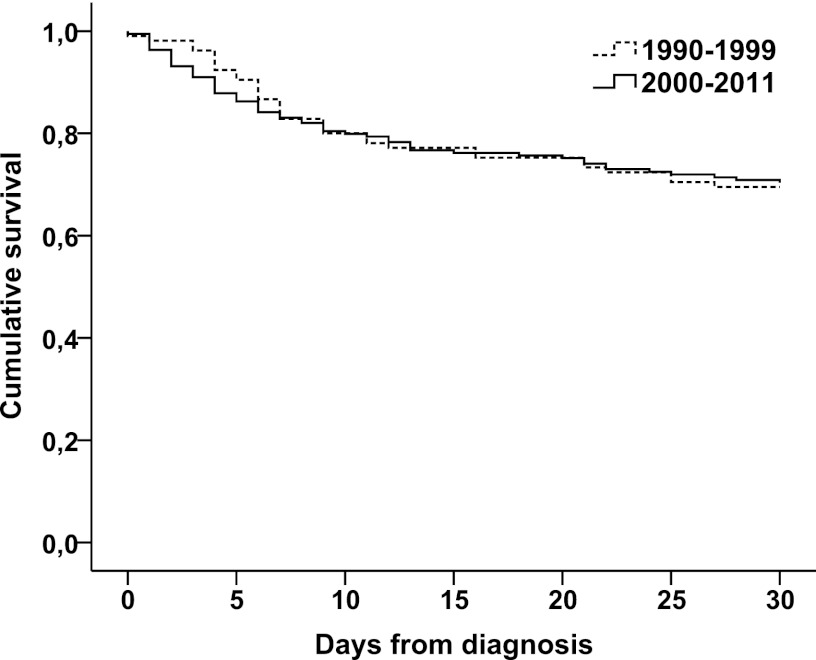
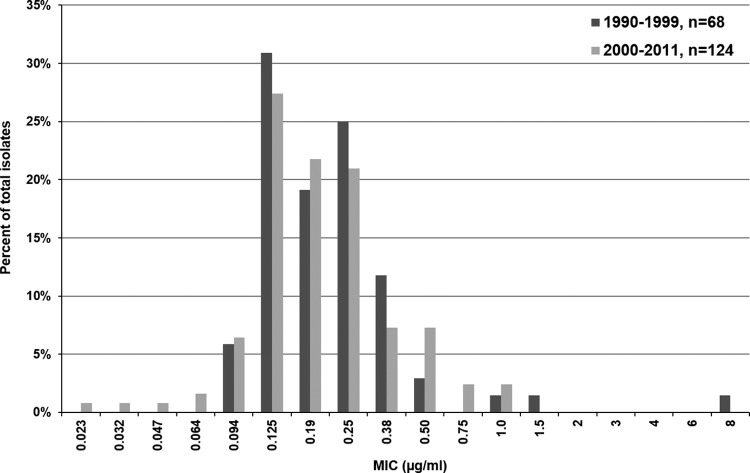
Candidemia is often a life-threatening infection, with highly variable incidence among countries. We conducted a nationwide study of candidemia in Iceland from 2000 to 2011, in order to determine recent trends in incidence rates, fungal species distribution, antifungal susceptibility patterns, and concurrent antifungal consumption. A total of 208 infection episodes in 199 patients were identified. The average incidence during the 12 years was 5.7 cases/100,000 population/year, which was significantly higher than that from 1990 to 1999 (4.3/100,000/year; P = 0.02). A significant reduction in the use of blood cultures was noted in the last 3 years of the study, coinciding with the economic crisis in the country (P < 0.001). Age-specific incidence rates were highest among patients at the extremes of age, 20.7/100,000 for <1 year of age and 18.1/100,000 for >60 years, and varied by gender. Age-specific incidence among males >80 years old was 28.6/100,000/year, and it was 8.3/100,000/year for females in this age group (P = 0.028). The 30-day survival rate among adult patients remained unchanged compared to that from 1990 to 1999 (70.4% versus 69.5%, P = 0.97). Candida albicans was the predominant species (56%), followed by C. glabrata (16%) and C. tropicalis (13%). The species distribution remained stable compared to that from previous decades. Fluconazole use increased 2.4-fold from 2000 to 2011, with no increase in resistance. In summary, the incidence of candidemia in Iceland has continued to increase but may have reached a steady state, and no increase in antifungal drug resistance has been noted. Decreased use of blood cultures toward the end of the study may have influenced detection rates.
Figures

References
-
- Gudlaugsson O, Gillespie S, Lee K, Vande Berg J, Hu J, Messer S, Herwaldt L, Pfaller M, Diekema D. 2003. Attributable mortality of nosocomial candidemia, revisited. Clin. Infect. Dis. 37:1172–1177 - PubMed
-
- Morgan J, Meltzer MI, Plikaytis BD, Sofair AN, Huie-White S, Wilcox S, Harrison LH, Seaberg EC, Hajjeh RA, Teutsch SM. 2005. Excess mortality, hospital stay, and cost due to candidemia: a case-control study using data from population-based candidemia surveillance. Infect. Control Hosp. Epidemiol. 26:540–547 - PubMed
-
- Cleveland AA, Farley MM, Harrison LH, Stein B, Hollick R, Lockhart SR, Magill SS, Derado G, Park BJ, Chiller TM. 2012. Changes in incidence and antifungal drug resistance in candidemia: results from population-based laboratory surveillance in Atlanta and Baltimore, 2008–2011. Clin. Infect. Dis. 55:1352–1361 - PMC - PubMed
Publication types
MeSH terms
Substances
LinkOut - more resources
Full Text Sources
