


Effectiveness of continuous glucose monitoring during diabetic pregnancy (GlucoMOMS trial); a randomised controlled trial
- PMID: 23270328
- PMCID: PMC3582540
- DOI: 10.1186/1471-2393-12-164
Effectiveness of continuous glucose monitoring during diabetic pregnancy (GlucoMOMS trial); a randomised controlled trial
Abstract
Background: Hyperglycemia in pregnancy is associated with poor perinatal outcome. Even if pregnant women with diabetes are monitored according to current guidelines, they do much worse than their normoglycaemic counterparts, marked by increased risks of pre-eclampsia, macrosomia, and caesarean section amongst others. Continuous Glucose Monitoring (CGM) is a new method providing detailed information on daily fluctuations, used to optimize glucose control. Whether this tool improves pregnancy outcome remains unclear. In the present protocol, we aim to assess the effect of CGM use in diabetic pregnancies on pregnancy outcome.
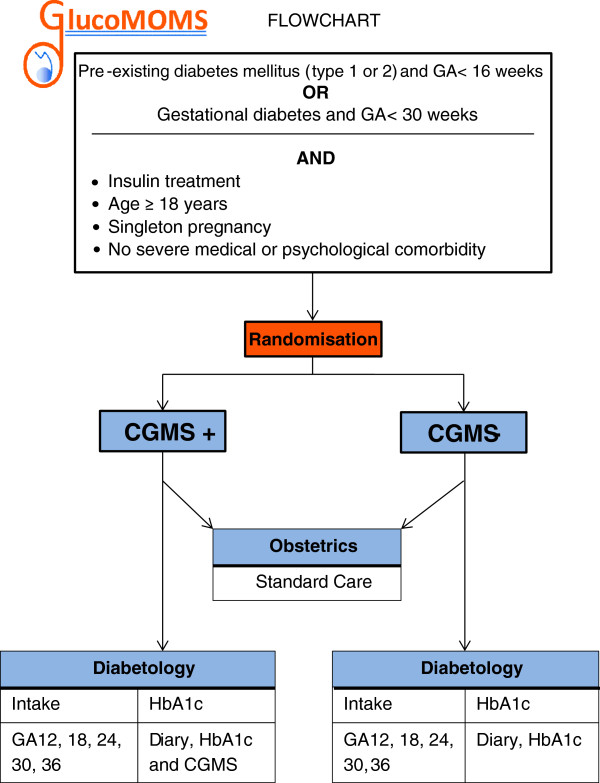
Methods/design: The GlucoMOMS trial is a multicenter open label randomized clinical trial with a decision and cost-effectiveness study alongside. Pregnant women aged 18 and over with either diabetes mellitus type 1 or 2 on insulin therapy or with gestational diabetes requiring insulin therapy before 30 weeks of gestation will be asked to participate. Consenting women will be randomly allocated to either usual care or complementary CGM. All women will determine their glycaemic control by self-monitoring of blood glucose levels and HbA1c. In addition, women allocated to CGM will use it for 5-7 days every six weeks. Based on their CGM profiles they receive dietary advice and insulin therapy adjustments if necessary. The primary outcome measure is rate of macrosomia, defined as a birth weight above the 90th centile. Secondary outcome measures will be birth weight, composite neonatal morbidity, maternal outcome and costs. The analyses will be according to the intention to treat principle.
Discussion: With this trial we aim at clarifying whether the CGM improves pregnancy outcome when used during diabetic pregnancies.
Trial registration: Nederlands Trial Register: NTR2996.
References
-
- Gabbe SG. Management of diabetes mellitus in pregnancy. Am J Obstet Gynecol. 1985;153:824–828. - PubMed
-
- Evers IM, de Valk HW, Visser GH. Risk of complications of pregnancy in women with type 1 diabetes: nationwide prospective study in the Netherlands. BMJ. 2004;328:915. doi: 10.1136/bmj.38043.583160.EE. - DOI - PMC - PubMed
Publication types
MeSH terms
Substances
LinkOut - more resources
Full Text Sources
Medical
