


Delirium in postoperative nonventilated intensive care patients: risk factors and outcomes
- PMID: 23272945
- PMCID: PMC3544687
- DOI: 10.1186/2110-5820-2-51
Delirium in postoperative nonventilated intensive care patients: risk factors and outcomes
Abstract
Background: Delirium features can vary greatly depending on the postoperative population studied; however, most studies focus only on high-risk patients. Describing the impact of delirium and risk factors in mixed populations can help in the development of preventive actions.
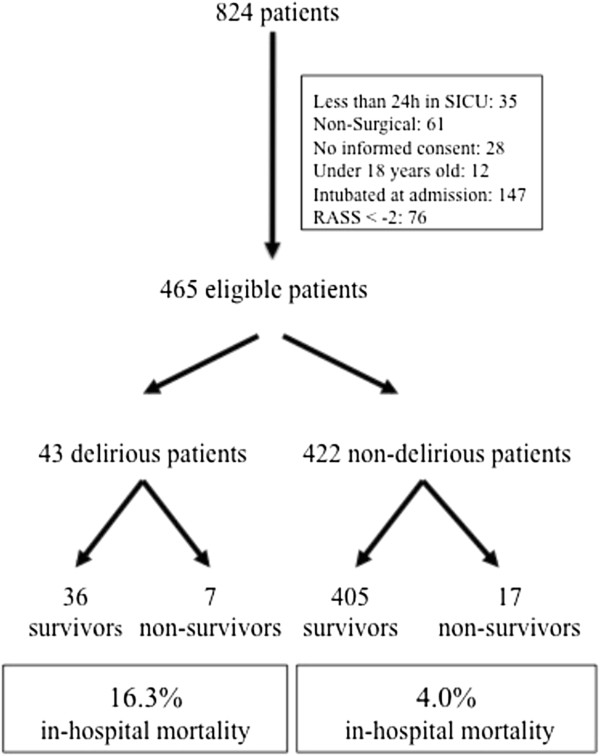
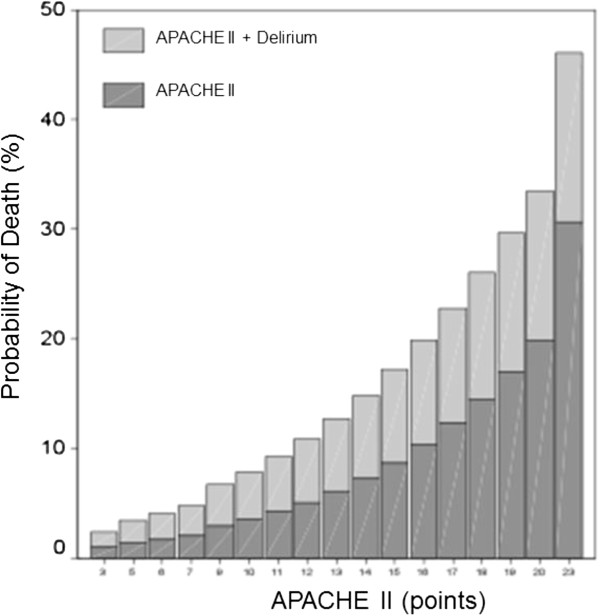
Methods: The occurrence of delirium was evaluated prospectively in 465 consecutive nonventilated postoperative patients admitted to a surgical intensive care unit (SICU) using the confusion assessment method (CAM). Patients with and without delirium were compared. A multiple logistic regression was performed to identify the main risk factors for delirium in the first 24 h of admission to the SICU and the main predictors of outcomes.
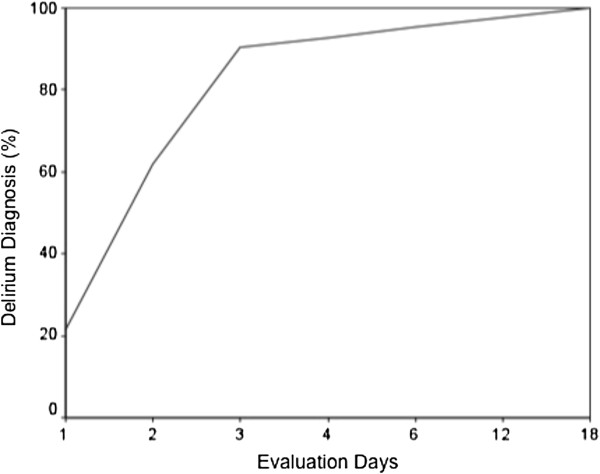
Results: Delirium was diagnosed in 43 (9.2%) individuals and was more frequent on the second and third days of admission. The presence of delirium resulted in longer lengths of SICU and hospital stays [6 days (3-13) vs. 2 days (1-3), p < 0.001 and 26 days (12-39) vs. 6 days (3-13), p <0.001, respectively], as well as higher hospital and SICU mortality rates [16.3% vs. 4.0%, p = 0.004 and 6.5% vs. 1.7%, p = 0.042, respectively]. The risk factors for delirium were age (odds ratio (OR), 1.04 [1.02-1.07]), Acute Physiologic Score (APS; OR, 1.11 [1.04-1.2]), emergency surgery (OR, 8.05 [3.58-18.06]), the use of benzodiazepines (OR, 2.28 [1.04-5.00]), and trauma (OR, 6.16 [4.1-6.5]).
Conclusions: Delirium negatively impacts postoperative nonventilated patients. Risk factors can be used to detect high-risk patients in a mixed population of SICU patients.
Figures
References
-
- Girard TD, Jackson JC, Pandharipande PP, Pun BT, Thompson JL, Shintani AK, Gordon SM, Canonico AE, Dittus RS, Bernard GR, Ely EW. Delirium as a predictor of long-term cognitive impairment in survivors of critical illness. Crit Care Med. 2010;38:1513–1520. doi: 10.1097/CCM.0b013e3181e47be1. - DOI - PMC - PubMed
LinkOut - more resources
Full Text Sources
Miscellaneous
