


A thalamocorticostriatal dopamine network for psychostimulant-enhanced human cognitive flexibility
- PMID: 23273721
- PMCID: PMC3615042
- DOI: 10.1016/j.biopsych.2012.10.032
A thalamocorticostriatal dopamine network for psychostimulant-enhanced human cognitive flexibility
Abstract
Background: Everyday life demands continuous flexibility in thought and behavior. We examined whether individual differences in dopamine function are related to variability in the effects of amphetamine on one aspect of flexibility: task switching.
Methods: Forty healthy human participants performed a task-switching paradigm following placebo and oral amphetamine administration. [(18)F]fallypride was used to measure D2/D3 baseline receptor availability and amphetamine-stimulated dopamine release.
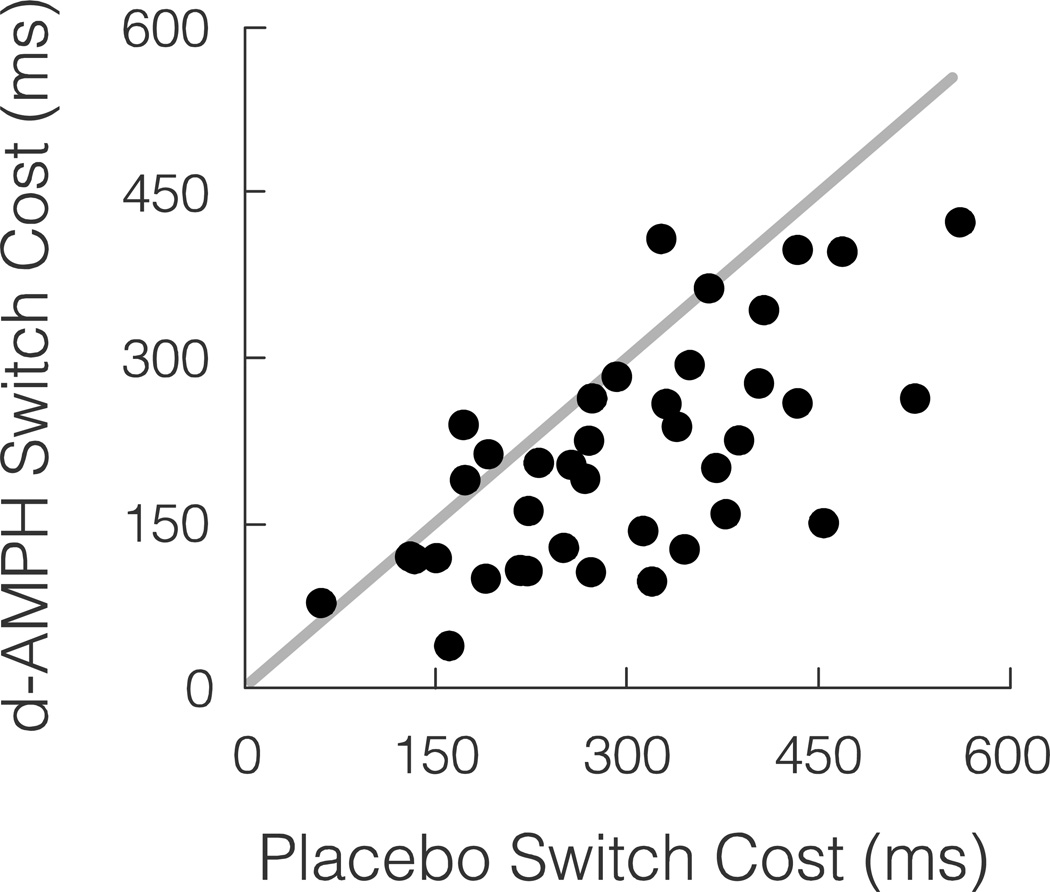
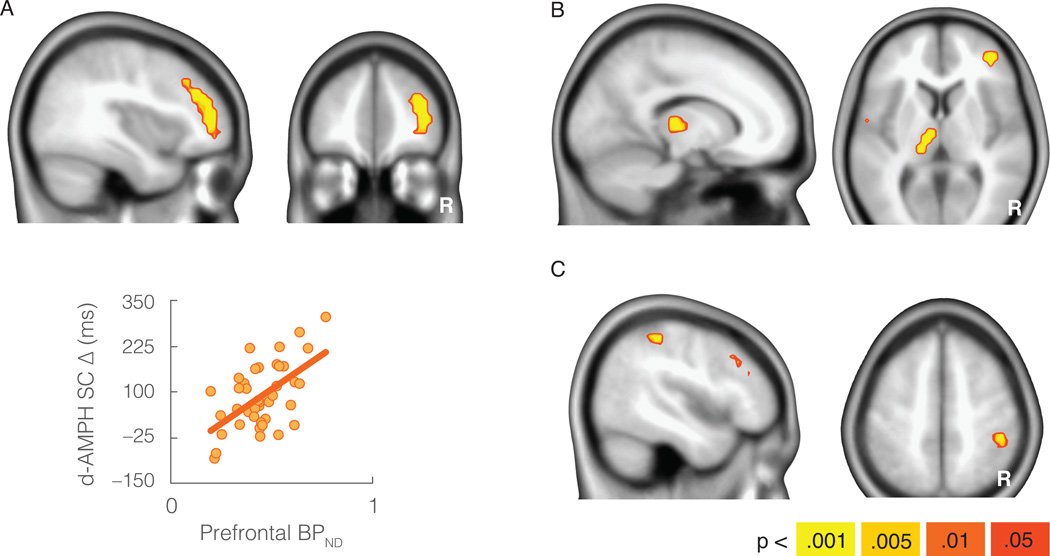
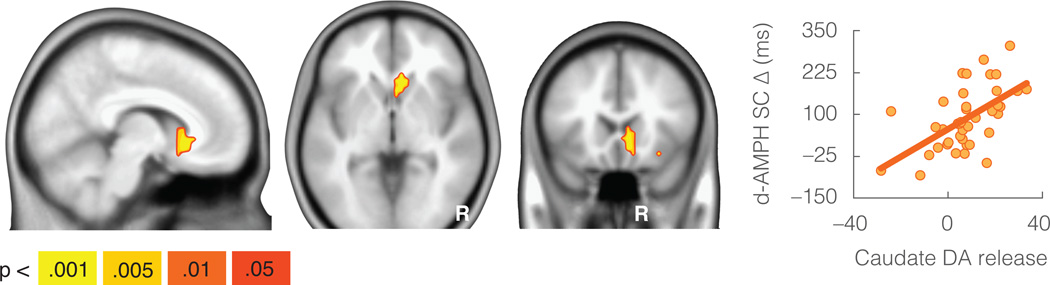
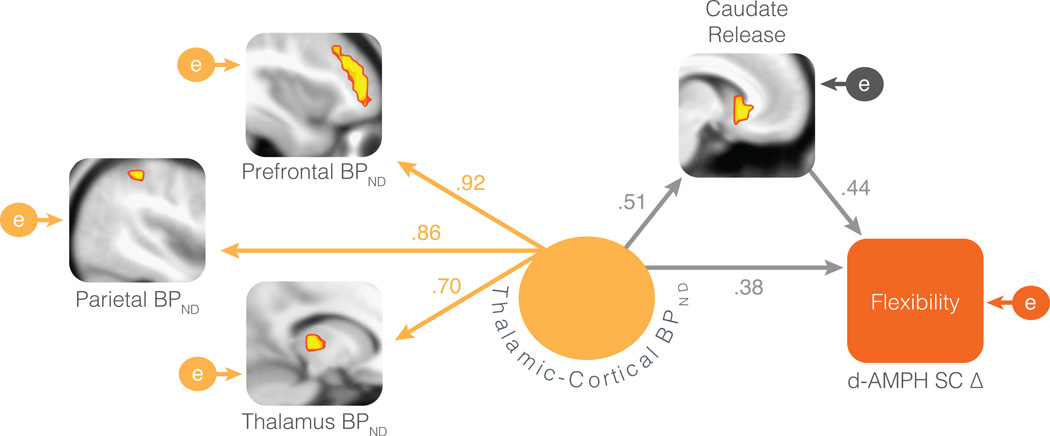
Results: The majority of the participants showed amphetamine-induced benefits through reductions in switch costs. However, such benefits were variable. Individuals with higher baseline thalamic and cortical receptor availability and striatal dopamine release showed greater reductions in switch costs following amphetamine than individuals with lower levels. The relationship between dopamine receptors and stimulant-enhanced flexibility was partially mediated by striatal dopamine release.
Conclusions: These data indicate that the impact of the psychostimulant on cognitive flexibility is influenced by the status of dopamine within a thalamocorticostriatal network. Beyond demonstrating a link between this dopaminergic network and the enhancement in task switching, these neural measures accounted for unique variance in predicting the psychostimulant-induced cognitive enhancement. These results suggest that there may be measurable aspects of variability in the dopamine system that predispose certain individuals to benefit from and hence use psychostimulants for cognitive enhancement.
Copyright © 2013 Society of Biological Psychiatry. Published by Elsevier Inc. All rights reserved.
Conflict of interest statement
All authors report no biomedical financial interest or potential conflicts of interest.
Figures
Comment in
-
Individual differences in cognitive flexibility.Biol Psychiatry. 2013 Jul 15;74(2):78-9. doi: 10.1016/j.biopsych.2013.05.012. Biol Psychiatry. 2013. PMID: 23809259 No abstract available.
References
-
- Kimberg DY, Aguirre GK, D'Esposito M. Modulation of task-related neural activity in task-switching: an fMRI study. Brain Res Cogn Brain Res. 2000;10:189–196. - PubMed
-
- Aron AR, Monsell S, Sahakian BJ, Robbins TW. A componential analysis of task-switching deficits associated with lesions of left and right frontal cortex. Brain. 2004;127:1561–1573. - PubMed
-
- Cools R, Ivry RB, D'Esposito M. The human striatum is necessary for responding to changes in stimulus relevance. J Cogn Neurosci. 2006;18:1973–1983. - PubMed
Publication types
MeSH terms
Substances
Grants and funding
LinkOut - more resources
Full Text Sources
Other Literature Sources
