


Fecal microbiota composition differs between children with β-cell autoimmunity and those without
- PMID: 23274889
- PMCID: PMC3609581
- DOI: 10.2337/db12-0526
Fecal microbiota composition differs between children with β-cell autoimmunity and those without
Abstract
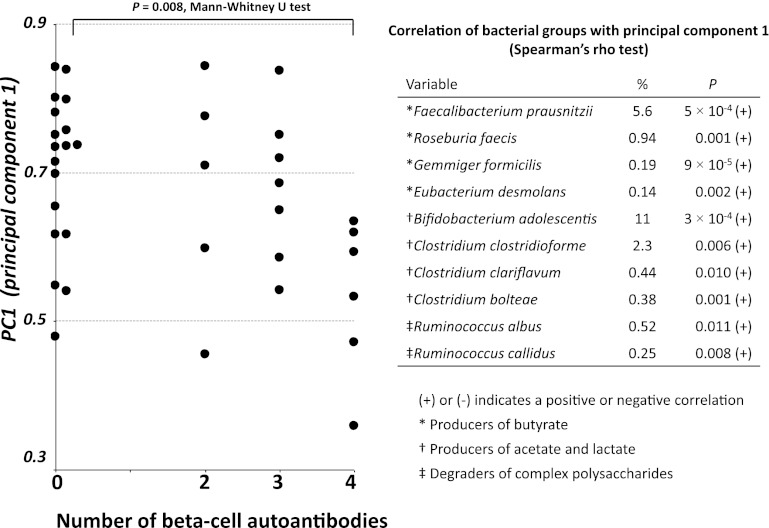
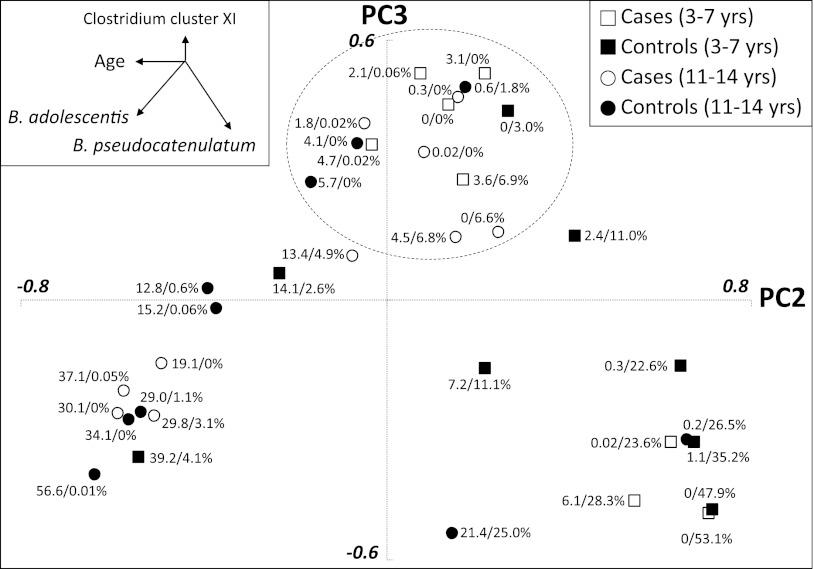
The role of the intestinal microbiota as a regulator of autoimmune diabetes in animal models is well-established, but data on human type 1 diabetes are tentative and based on studies including only a few study subjects. To exclude secondary effects of diabetes and HLA risk genotype on gut microbiota, we compared the intestinal microbiota composition in children with at least two diabetes-associated autoantibodies (n = 18) with autoantibody-negative children matched for age, sex, early feeding history, and HLA risk genotype using pyrosequencing. Principal component analysis indicated that a low abundance of lactate-producing and butyrate-producing species was associated with β-cell autoimmunity. In addition, a dearth of the two most dominant Bifidobacterium species, Bifidobacterium adolescentis and Bifidobacterium pseudocatenulatum, and an increased abundance of the Bacteroides genus were observed in the children with β-cell autoimmunity. We did not find increased fecal calprotectin or IgA as marker of inflammation in children with β-cell autoimmunity. Functional studies related to the observed alterations in the gut microbiome are warranted because the low abundance of bifidobacteria and butyrate-producing species could adversely affect the intestinal epithelial barrier function and inflammation, whereas the apparent importance of the Bacteroides genus in development of type 1 diabetes is insufficiently understood.
Trial registration: ClinicalTrials.gov NCT00570102 NCT01055080.
Figures
Comment in
-
Paediatrics: differences in the faecal microbiota of children with β-cell autoimmunity.Nat Rev Endocrinol. 2013 Mar;9(3):134. doi: 10.1038/nrendo.2013.12. Epub 2013 Jan 29. Nat Rev Endocrinol. 2013. PMID: 23358360 No abstract available.
References
-
- Eisenbarth GS. Type I diabetes mellitus. A chronic autoimmune disease. N Engl J Med 1986;314:1360–1368 - PubMed
-
- Knip M, Siljander H. Autoimmune mechanisms in type 1 diabetes. Autoimmun Rev 2008;7:550–557 - PubMed
-
- Norris JM, Barriga K, Klingensmith G, et al. Timing of initial cereal exposure in infancy and risk of islet autoimmunity. JAMA 2003;290:1713–1720 - PubMed
-
- Vaarala O, Knip M, Paronen J, et al. Cow’s milk formula feeding induces primary immunization to insulin in infants at genetic risk for type 1 diabetes. Diabetes 1999;48:1389–1394 - PubMed
Publication types
MeSH terms
Substances
Associated data
LinkOut - more resources
Full Text Sources
Other Literature Sources
Medical
Research Materials
Miscellaneous
