


Interpreting tacrolimus concentrations during pregnancy and postpartum
- PMID: 23274970
- PMCID: PMC3637974
- DOI: 10.1097/TP.0b013e318278d367
Interpreting tacrolimus concentrations during pregnancy and postpartum
Abstract
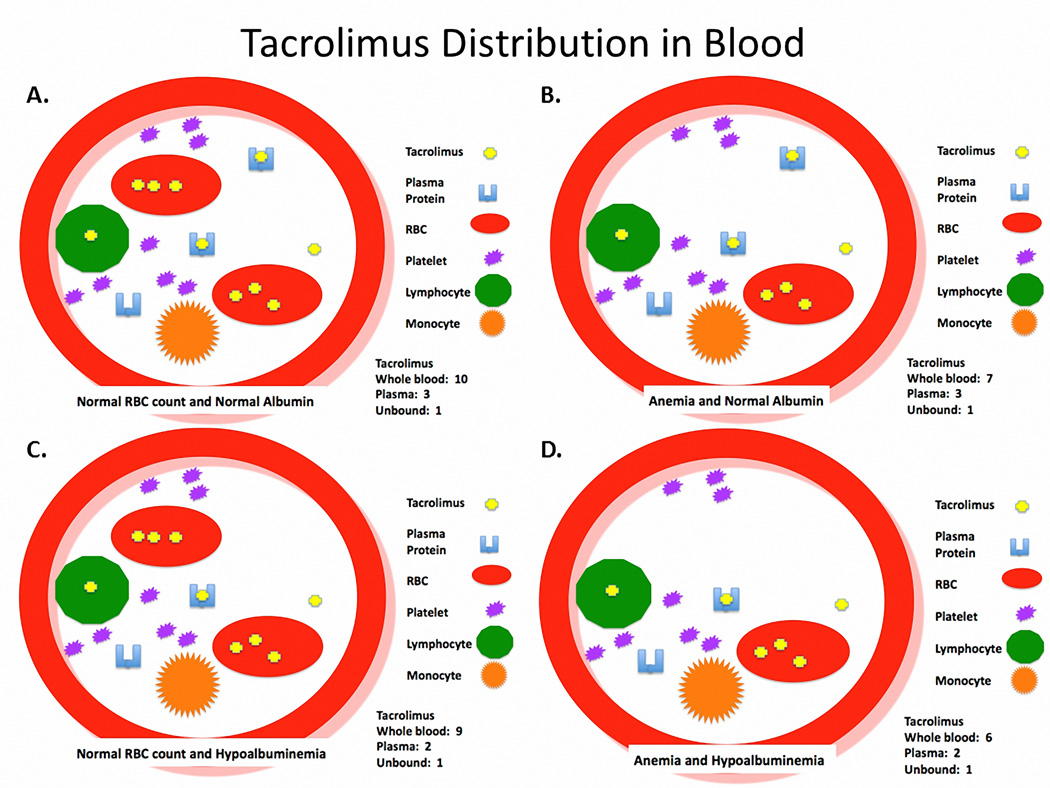
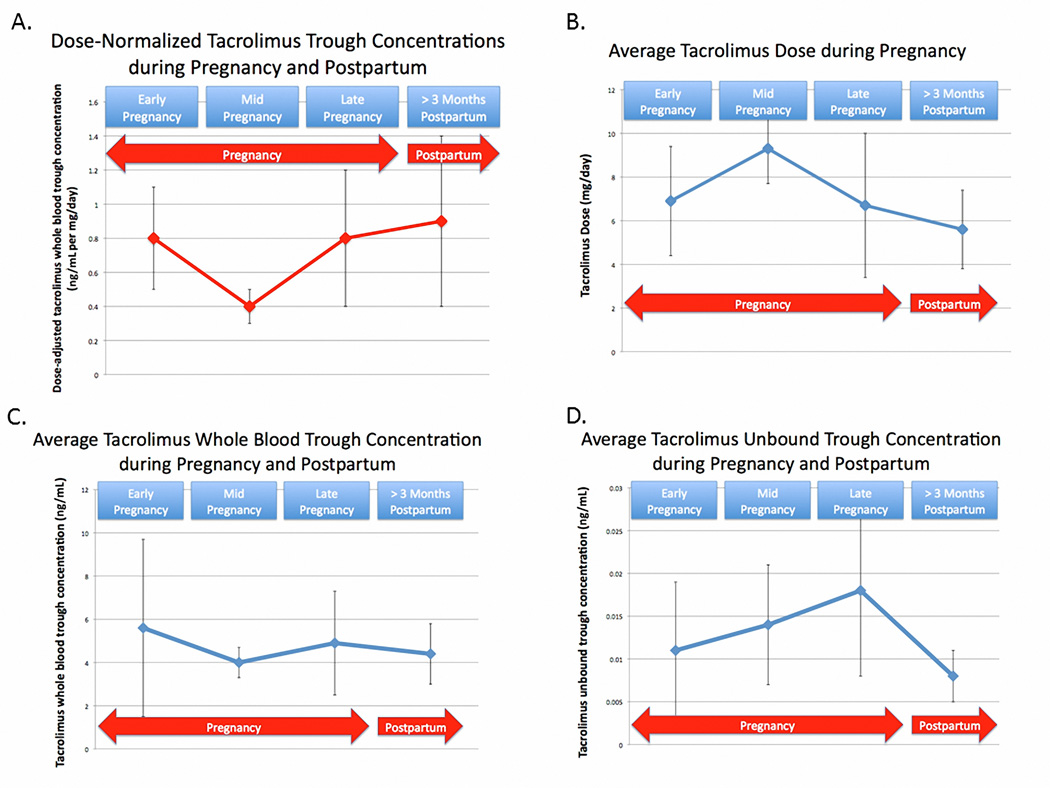
Pregnancy after solid organ transplantation, although considered high risk for maternal, fetal, and neonatal complications, has been quite successful. Tacrolimus pharmacokinetic changes during pregnancy make interpretation of whole blood trough concentrations particularly challenging. There are multiple factors that can increase the fraction of unbound tacrolimus, including but not limited to low albumin concentration and low red blood cell count. The clinical titration of dosage to maintain whole blood tacrolimus trough concentrations in the usual therapeutic range can lead to elevated unbound concentrations and possibly toxicity in pregnant women with anemia and hypoalbuminemia. Measurement of plasma or unbound tacrolimus concentrations for pregnant women might better reflect the active form of the drug, although these are technically challenging and often unavailable in usual clinical practice. Tacrolimus crosses the placenta with in utero exposure being approximately 71% of maternal blood concentrations. The lower fetal blood concentrations are likely due to active efflux transport of tacrolimus from the fetus toward the mother by placental P-glycoprotein. To date, tacrolimus has not been linked to congenital malformations but can cause reversible nephrotoxicity and hyperkalemia in the newborn. In contrast, very small amounts of tacrolimus are excreted in the breast milk and are unlikely to elicit adverse effects in the nursing infant.
Conflict of interest statement
Conflicts of interest:
No conflict of interest
Figures
References
-
- Kainz A, Harabacz I, Cowlrick IS, Gadgil SD, Hagiwara D. Review of the course and outcome of 100 pregnancies in 84 women treated with tacrolimus. Transplantation. 2000;70(12):1718. - PubMed
-
- Jain AB, Shapiro R, Scantlebury VP, et al. Pregnancy after kidney and kidney-pancreas transplantation under tacrolimus: a single center's experience. Transplantation. 2004;77(6):897. - PubMed
-
- Gutierrez MJ, Acebedo-Ribo M, Garcia-Donaire JA, et al. Pregnancy in renal transplant recipients. Transplant Proc. 2005;37(9):3721. - PubMed
-
- Coscia LA, Constantinescu S, Moritz MJ, et al. Report from the National Transplantation Pregnancy Registry (NTPR): outcomes of pregnancy after transplantation. Clin Transpl. 2010:65. - PubMed
Publication types
MeSH terms
Substances
Grants and funding
- U10HD047890/HD/NICHD NIH HHS/United States
- U10HD047891/HD/NICHD NIH HHS/United States
- UL1 RR031975/RR/NCRR NIH HHS/United States
- UL1 TR000101/TR/NCATS NIH HHS/United States
- U10HD047892/HD/NICHD NIH HHS/United States
- UL1RR031975/RR/NCRR NIH HHS/United States
- U10 HD047890/HD/NICHD NIH HHS/United States
- UL1 RR025014/RR/NCRR NIH HHS/United States
- U10 HD047891/HD/NICHD NIH HHS/United States
- UL1RR025014/RR/NCRR NIH HHS/United States
- R01 GM068871/GM/NIGMS NIH HHS/United States
- U10 HD047892/HD/NICHD NIH HHS/United States
LinkOut - more resources
Full Text Sources
Other Literature Sources
Medical
