Inflammasomes: sensors of metabolic stresses for vascular inflammation
- PMID: 23276949
- PMCID: PMC3590813
- DOI: 10.2741/4127
Inflammasomes: sensors of metabolic stresses for vascular inflammation
Abstract
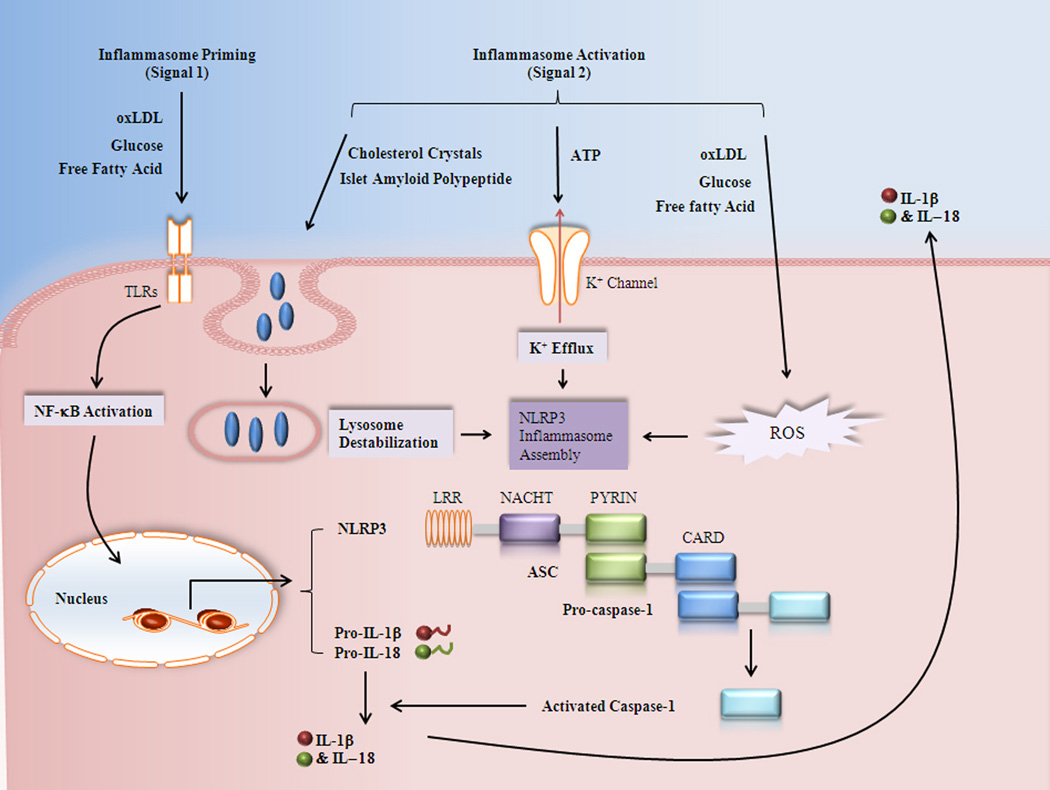
Metabolic syndrome is a major health issue in the western world. An elevated pro-inflammatory state is often found in patients with metabolic diseases such as type 2 diabetes and obesity. Atherosclerosis is one such clinical manifestation of pro-inflammatory state associated with the vasculature. The exact mechanism by which metabolic stress induces this pro-inflammatory status and promotes atherogenesis remained elusive until the discovery of the inflammasome protein complex. This complex is composed of pro-caspase-1 and pathogen sensors. Activation of inflammasome requires the transcriptional upregulation of inflammasome components and the post-translational assembly. Three models of inflammasome assembly have been proposed: 1) the ion channel model; 2) the reactive oxygen species (ROS) model; and 3) the lysosome model. In either case, inflammasome activation triggers the auto-activation of pro-caspase-1 into its mature form. Caspase-1, which was first discovered as the IL-1β converting enzyme, is known to be a major player in inflammatory and cell death pathways. Many endogenous metabolic ligands have been experimentally shown to activate inflammasome, and thus initiate the subsequent inflammation process. Further understanding of the distinct molecular mechanism by which metabolic ligands activates inflammasome could lead to developing novel therapeutic interventions for atherosclerosis and other clinical problems related to metabolic diseases.
Figures
References
-
- Ford ES, Giles WH, Mokdad AH. Increasing prevalence of the metabolic syndrome among u.s. Adults. Diabetes Care. 2004;27:2444–2449. - PubMed
-
- Masters SL, Latz E, O'Neill LA. The inflammasome in atherosclerosis and type 2 diabetes. Sci Transl Med. 2011;3:81ps17. - PubMed
-
- Zhou R, Tardivel A, Thorens B, Choi I, Tschopp J. Thioredoxin-interacting protein links oxidative stress to inflammasome activation. Nat Immunol. 2010;11:136–140. - PubMed
Publication types
MeSH terms
Substances
Grants and funding
LinkOut - more resources
Full Text Sources
Other Literature Sources