


Hemorrhagic transformation of ischemic stroke in diabetics on sulfonylureas
- PMID: 23280795
- PMCID: PMC3539226
- DOI: 10.1002/ana.23680
Hemorrhagic transformation of ischemic stroke in diabetics on sulfonylureas
Abstract
Objective: Disability or death occurs more frequently in patients with hemorrhagic transformation (HT) after ischemic stroke. In rat models of stroke, sulfonylurea (SU) drugs such as glibenclamide (adopted US name, glyburide) confer protection against swelling and HT through actions on the novel SUR1-regulated NC(Ca-ATP) channel. Here, we sought to determine whether the use of SU drugs in patients with diabetes mellitus (DM) presenting with acute ischemic stroke might influence the incidence of HT.
Methods: We retrospectively analyzed data on 220 patients with DM who presented with acute ischemic stroke, 43 of whom were managed with and continued to receive SU drugs, and 177 of whom were managed without (controls).
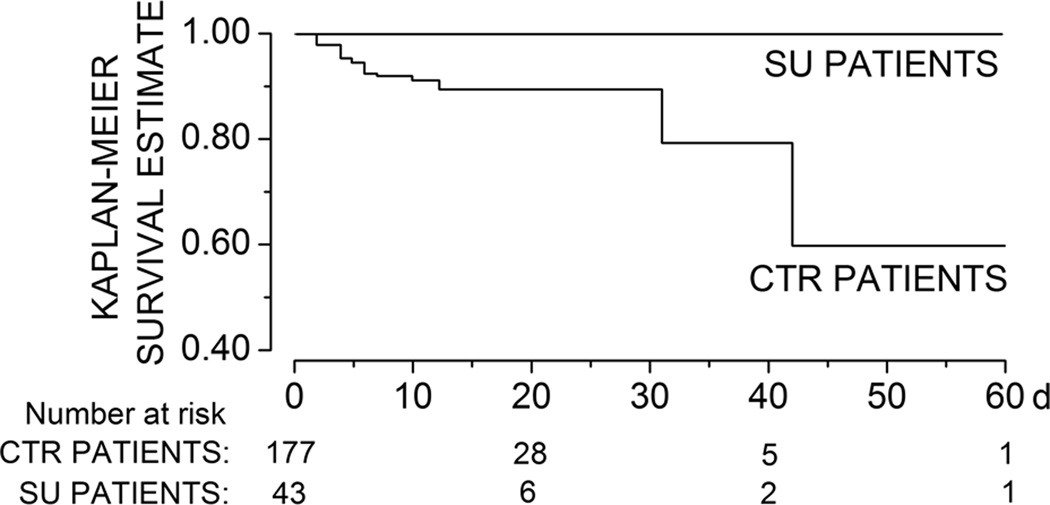
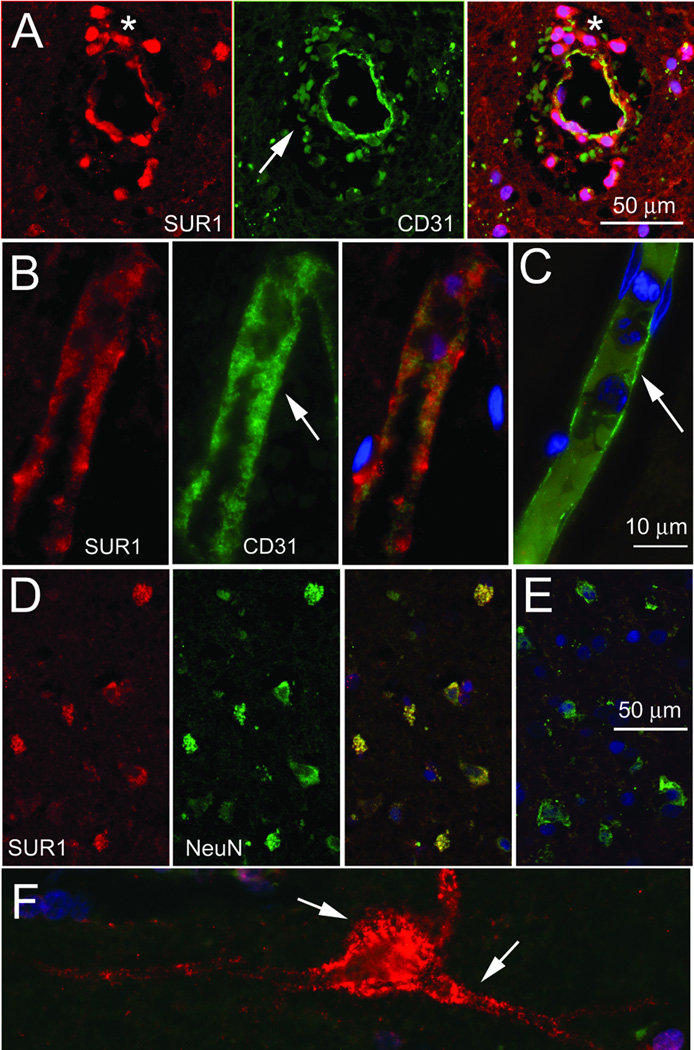
Results: During a median length of stay in hospital of 11 days, 20 control patients (11%) experienced symptomatic HT (sHT), whereas no patient in the SU group experienced sHT (p = 0.016). No patient in the SU group died, compared to 18 (10%) in the control group (p = 0.027). Similarly favorable outcomes were observed after matching for baseline imbalances and excluding outliers. In support of the proposed mechanism, we present a case of sHT in which an analysis of brain tissues obtained intraoperatively showed prominent upregulation of SUR1, the target of SU drugs, in microvessels and neurons.
Interpretation: We conclude that, in diabetic patients with acute ischemic stroke, prior and continued use of SU drugs is associated with reduced sHT compared to those whose treatment regimen does not include SU drugs.
Copyright © 2012 American Neurological Association.
Conflict of interest statement
Figures
References
-
- Khatri P, Wechsler LR, Broderick JP. Intracranial hemorrhage associated with revascularization therapies. Stroke. 2007;38:431–440. - PubMed
-
- Lindley RI, Wardlaw JM, Sandercock PA, et al. Frequency and risk factors for spontaneous hemorrhagic transformation of cerebral infarction. J Stroke Cerebrovasc Dis. 2004;13:235–246. - PubMed
-
- Kerenyi L, Kardos L, Szasz J, et al. Factors influencing hemorrhagic transformation in ischemic stroke: a clinicopathological comparison. Eur J Neurol. 2006;13:1251–1255. - PubMed
-
- Paciaroni M, Agnelli G, Corea F, et al. Early hemorrhagic transformation of brain infarction: rate, predictive factors, and influence on clinical outcome: results of a prospective multicenter study. Stroke. 2008;39:2249–2256. - PubMed
-
- Tissue plasminogen activator for acute ischemic stroke. The National Institute of Neurological Disorders and Stroke rt-PA Stroke Study Group. N Engl J Med. 1995;333:1581–1587. - PubMed
Publication types
MeSH terms
Substances
Grants and funding
LinkOut - more resources
Full Text Sources
Other Literature Sources
Medical
