


Feasibility of using 454 pyrosequencing for studying quasispecies of the whole dengue viral genome
- PMID: 23281804
- PMCID: PMC3521222
- DOI: 10.1186/1471-2164-13-S7-S7
Feasibility of using 454 pyrosequencing for studying quasispecies of the whole dengue viral genome
Abstract
Background: Dengue is the world's most common mosquito-borne viral disease. Poor proofreading by RNA polymerase during its replication results in the accumulation of mutations in its genome. This leads to a diversity of genotypes in the viral population termed quasispecies. Quasispecies play an important role in disease severity. The study of quasispecies in dengue has been hindered because of the requirement for large amounts of cloning and sequencing, which could be overcome by 454 pyrosequencing. In this study, we attempted to demonstrate the feasibility of using 454 pyrosequencing to study genome diversity of dengue virus quasispecies by sequencing a pool of known dengue viral strains.
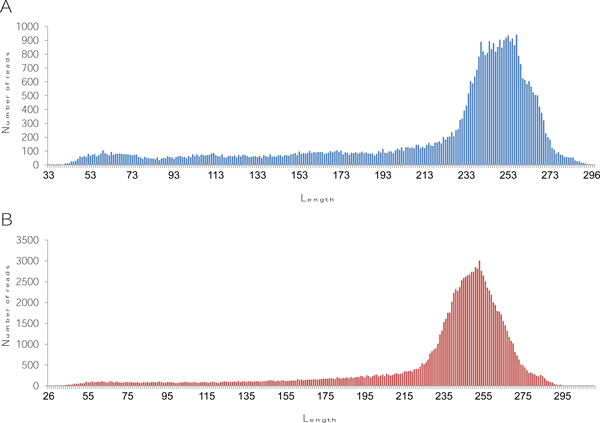
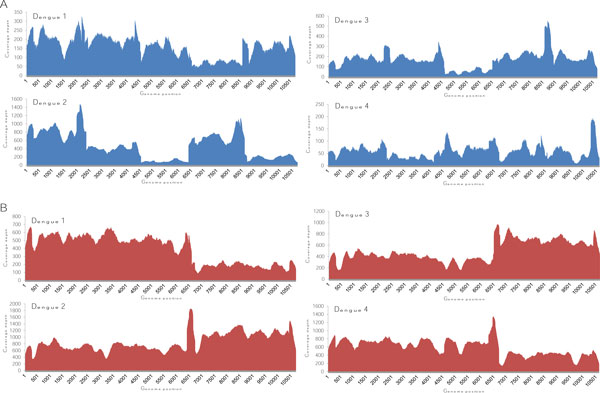
Results: Two sets of dengue DNA templates were sequenced by 454/Roche GS FLX. The total number of reads for data 1 and data 2 were 54,440 and 134,441, with average lengths of 221 and 232 bp, respectively. Reads containing ambiguous base Ns were excluded (6.00% in data 1, 7.05% in data 2). More than 99% of reads could be aligned back to the correct serotypes by BLAST. The reads covered the whole genome without any gaps, and the minimum coverage depth was 50×. Frequencies of known strains detected from each data set were highly correlated with the input ratios. We also explored criteria for filtering error reads and artifacts from true variations.
Conclusions: This study showed that 454 pyrosequencing, coupled with our analysis procedure, could sequence the whole genome of dengue virus with good coverage. The ratio of detected variants in the sequencing data reflected the starting ratio, proving that the proposed technique could be used to study the frequencies of variants in quasispecies.
Figures
References
Publication types
MeSH terms
LinkOut - more resources
Full Text Sources
Research Materials
Miscellaneous
