


Lead exposure in bald eagles from big game hunting, the continental implications and successful mitigation efforts
- PMID: 23284837
- PMCID: PMC3526477
- DOI: 10.1371/journal.pone.0051978
Lead exposure in bald eagles from big game hunting, the continental implications and successful mitigation efforts
Abstract
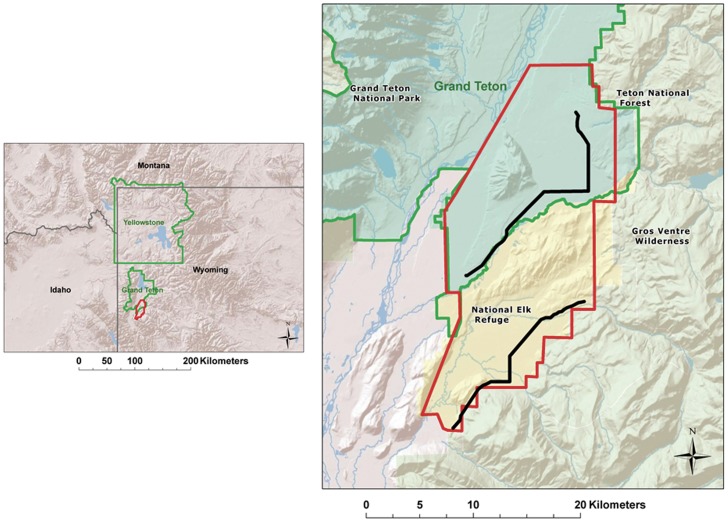
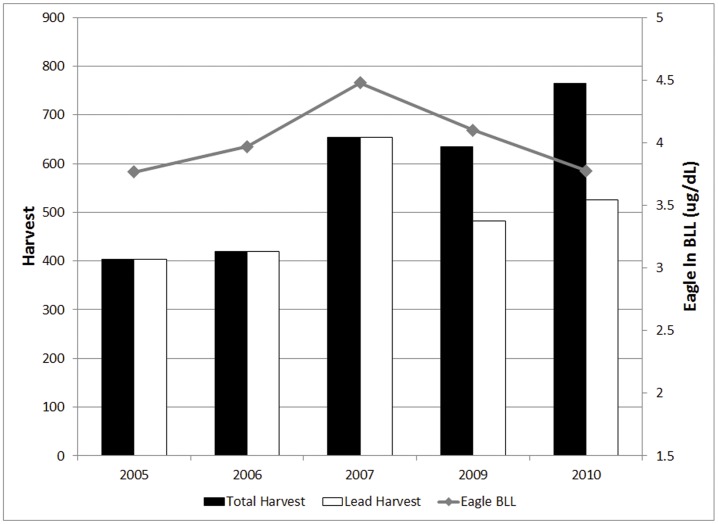
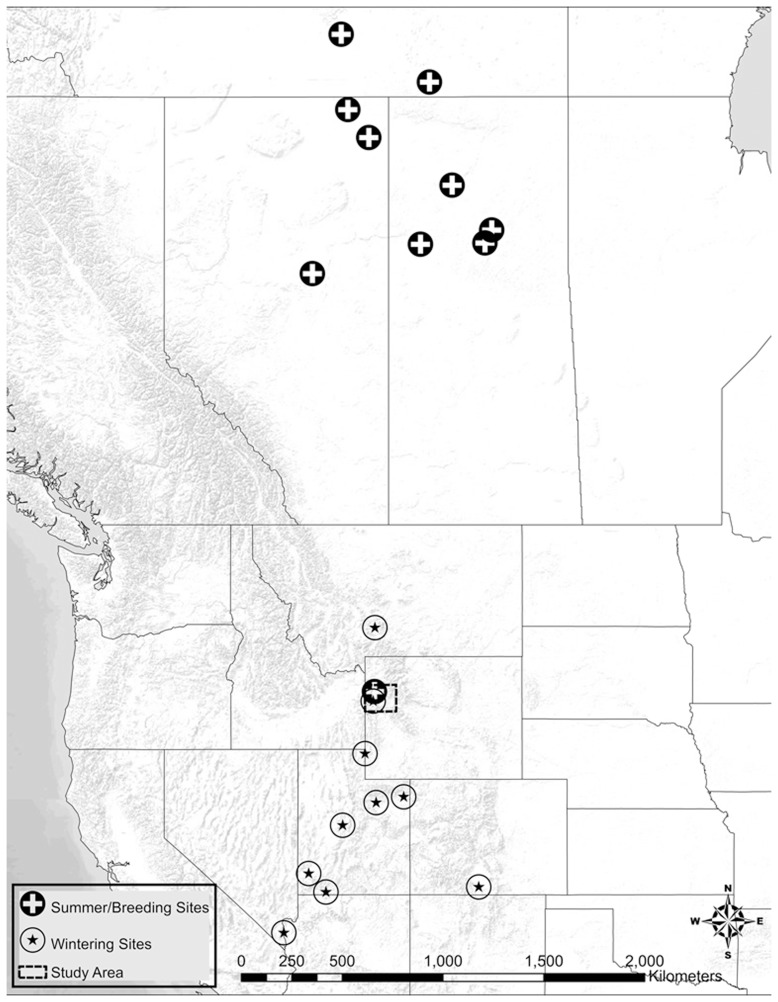
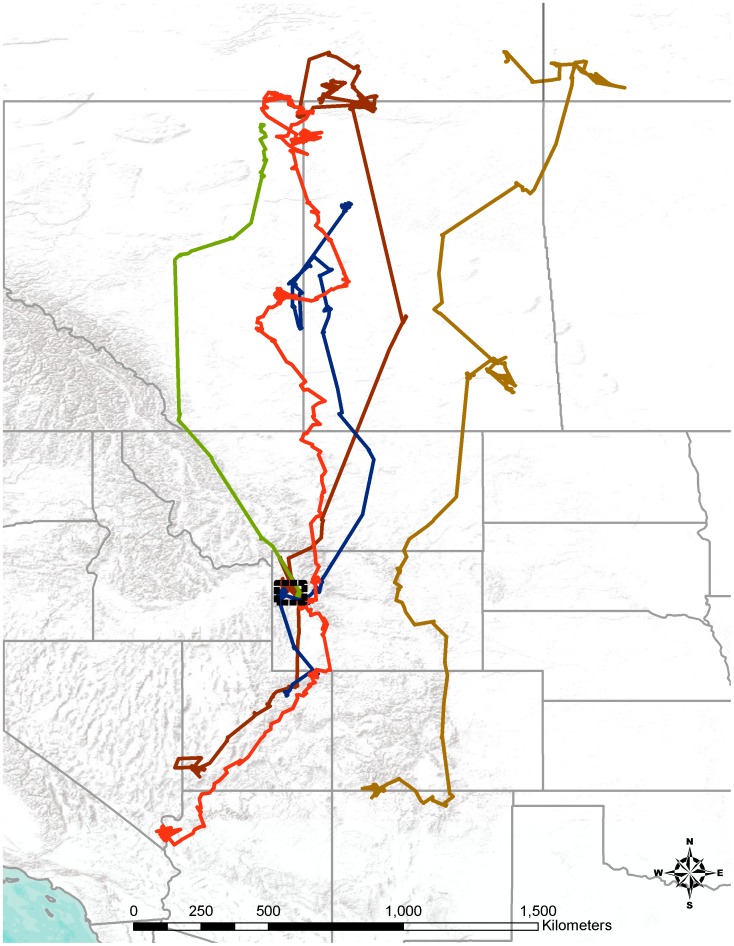
Studies suggest hunter discarded viscera of big game animals (i.e., offal) is a source of lead available to scavengers. We investigated the incidence of lead exposure in bald eagles in Wyoming during the big game hunting season, the influx of eagles into our study area during the hunt, the geographic origins of eagles exposed to lead, and the efficacy of using non-lead rifle ammunition to reduce lead in eagles. We tested 81 blood samples from bald eagles before, during and after the big game hunting seasons in 2005-2010, excluding 2008, and found eagles had significantly higher lead levels during the hunt. We found 24% of eagles tested had levels indicating at least clinical exposure (>60 ug/dL) during the hunt while no birds did during the non-hunting seasons. We performed driving surveys from 2009-2010 to measure eagle abundance and found evidence to suggest that eagles are attracted to the study area during the hunt. We fitted 10 eagles with satellite transmitters captured during the hunt and all migrated south after the cessation of the hunt. One returned to our study area while the remaining nine traveled north to summer/breed in Canada. The following fall, 80% returned to our study area for the hunting season, indicating that offal provides a seasonal attractant for eagles. We fitted three local breeding eagles with satellite transmitters and none left their breeding territories to feed on offal during the hunt, indicating that lead ingestion may be affecting migrants to a greater degree. During the 2009 and 2010 hunting seasons we provided non-lead rifle ammunition to local hunters and recorded that 24% and 31% of successful hunters used non-lead ammunition, respectively. We found the use of non-lead ammunition significantly reduced lead exposure in eagles, suggesting this is a viable solution to reduce lead exposure in eagles.
Conflict of interest statement
Figures
References
-
- Fisher IJ, Pain DJ, Thomas VG (2006) A review of lead poisoning from ammunition sources in terrestrial birds. Biological Conservation 131: 421–432.
-
- Tranel MA, Kimmel RO (2009) Impacts of lead ammunition on wildlife, the environment, and human health - A literature review and implications for Minnesota. Proceedings of the Ingestion of Spent Ammunition: Implications for Wildlife and Humans Conference Pgs 318–337.
-
- Knopper L, Mineau P, Scheuhammer A, Bond D, McKinnon D (2006) Carcasses of shot Richardson’s ground squirrels may pose lead hazards to scavenging hawks. J of Wildl Mangmt 70: 295–299.
-
- Pauli JN, Buskirk SW (2007) Recreational shooting of prairie dogs: a portal for lead entering wildlife food chains. J of Wildl Mangmt 71: 103–108.
-
- Hunt WG, Burnham W, Parish C, Burnham K, Mutch B, et al. (2005) Bullet fragments in deer remains: implications for lead exposure in avian scavengers. Wildl Society Bull 33: 167–170.
Publication types
MeSH terms
Substances
LinkOut - more resources
Full Text Sources
