


Neurotrophin gene therapy for sustained neural preservation after deafness
- PMID: 23284995
- PMCID: PMC3524079
- DOI: 10.1371/journal.pone.0052338
Neurotrophin gene therapy for sustained neural preservation after deafness
Abstract
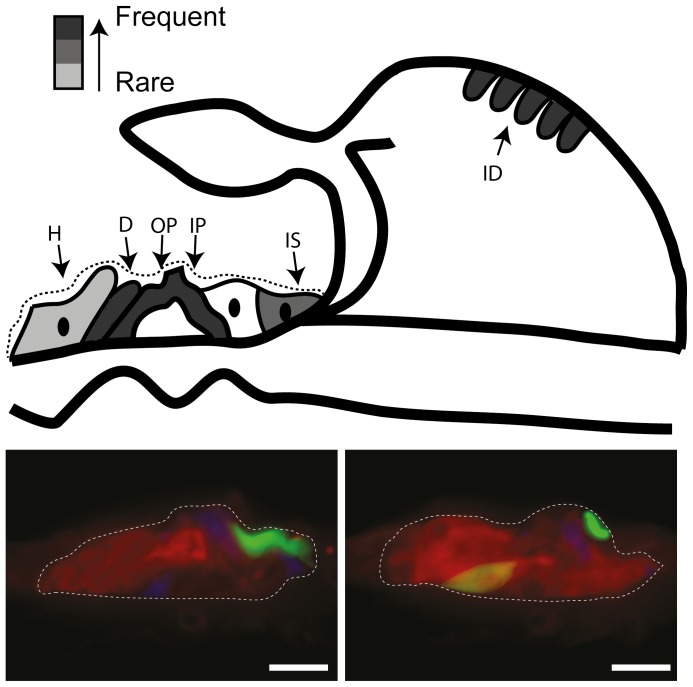
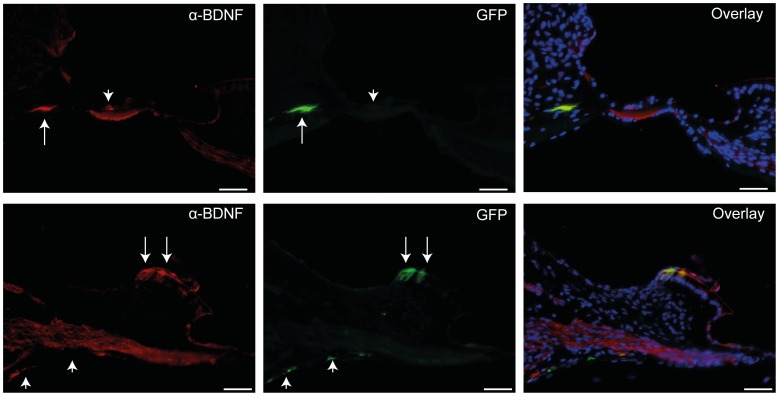
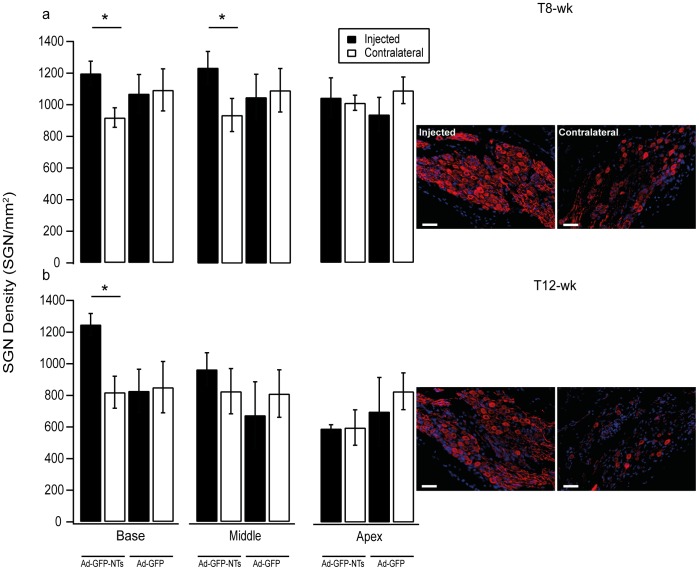
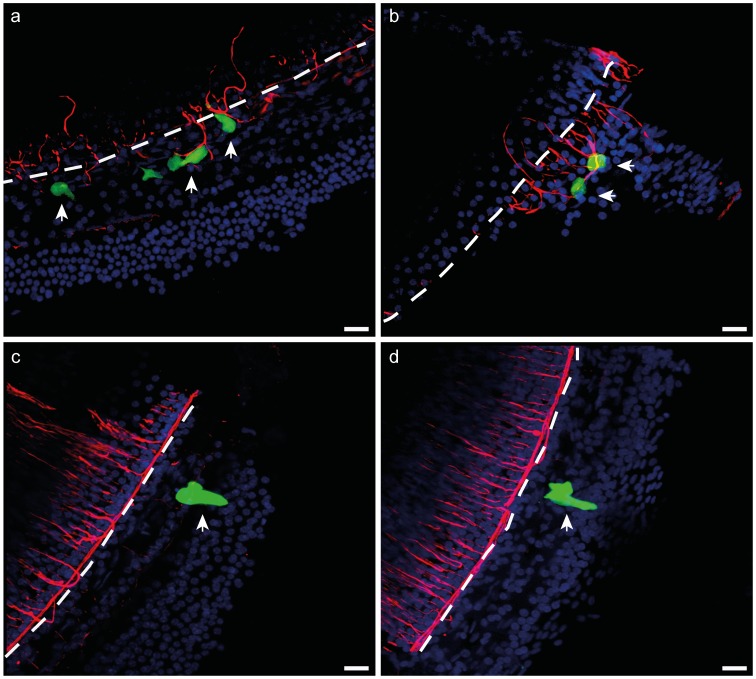
The cochlear implant provides auditory cues to profoundly deaf patients by electrically stimulating the residual spiral ganglion neurons. These neurons, however, undergo progressive degeneration after hearing loss, marked initially by peripheral fibre retraction and ultimately culminating in cell death. This research aims to use gene therapy techniques to both hold and reverse this degeneration by providing a sustained and localised source of neurotrophins to the deafened cochlea. Adenoviral vectors containing green fluorescent protein, with or without neurotrophin-3 and brain derived neurotrophic factor, were injected into the lower basal turn of scala media of guinea pigs ototoxically deafened one week prior to intervention. This single injection resulted in localised and sustained gene expression, principally in the supporting cells within the organ of Corti. Guinea pigs treated with adenoviral neurotrophin-gene therapy had greater neuronal survival compared to contralateral non-treated cochleae when examined at 7 and 11 weeks post injection. Moreover; there was evidence of directed peripheral fibre regrowth towards cells expressing neurotrophin genes after both treatment periods. These data suggest that neurotrophin-gene therapy can provide sustained protection of spiral ganglion neurons and peripheral fibres after hearing loss.
Conflict of interest statement
Figures


References
-
- Davis AC (1990) Epidemiological profile of hearing impairments: the scale and nature of the problem with special reference to the elderly. Acta Otolaryngol Suppl 476: 23–31. - PubMed
-
- Wilson D, Walsh P, Sanchez L, Davis A, Taylor A, et al. (1999) The epidemiology of hearing impairment in an Australian adult population. Int J Epidemiol 28: 247–252. - PubMed
-
- Clark GM (2003) Cochlear implants: fundamentals and applications Graeme Clark. New York: Springer.
-
- Bichler E, Spoendlin H, Rauchegger H (1983) Degeneration of cochlear neurons after amikacin intoxication in the rat. Arch Otorhinolaryngol 237: 201–208. - PubMed
-
- Dodson HC, Mohuiddin A (2000) Response of spiral ganglion neurones to cochlear hair cell destruction in the guinea pig. J Neurocytol 29: 525–537. - PubMed
Publication types
MeSH terms
Substances
Grants and funding
LinkOut - more resources
Full Text Sources
Medical
