


Centaurin-α₂ interacts with β-tubulin and stabilizes microtubules
- PMID: 23285209
- PMCID: PMC3527619
- DOI: 10.1371/journal.pone.0052867
Centaurin-α₂ interacts with β-tubulin and stabilizes microtubules
Abstract
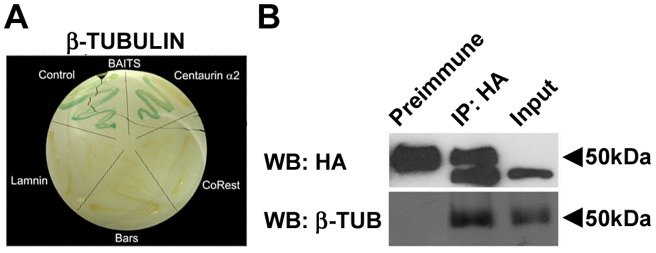
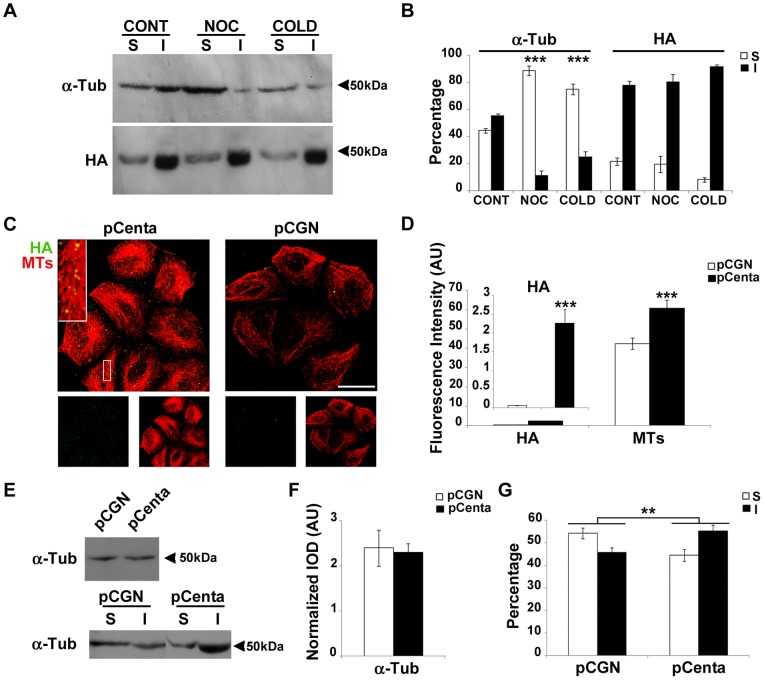
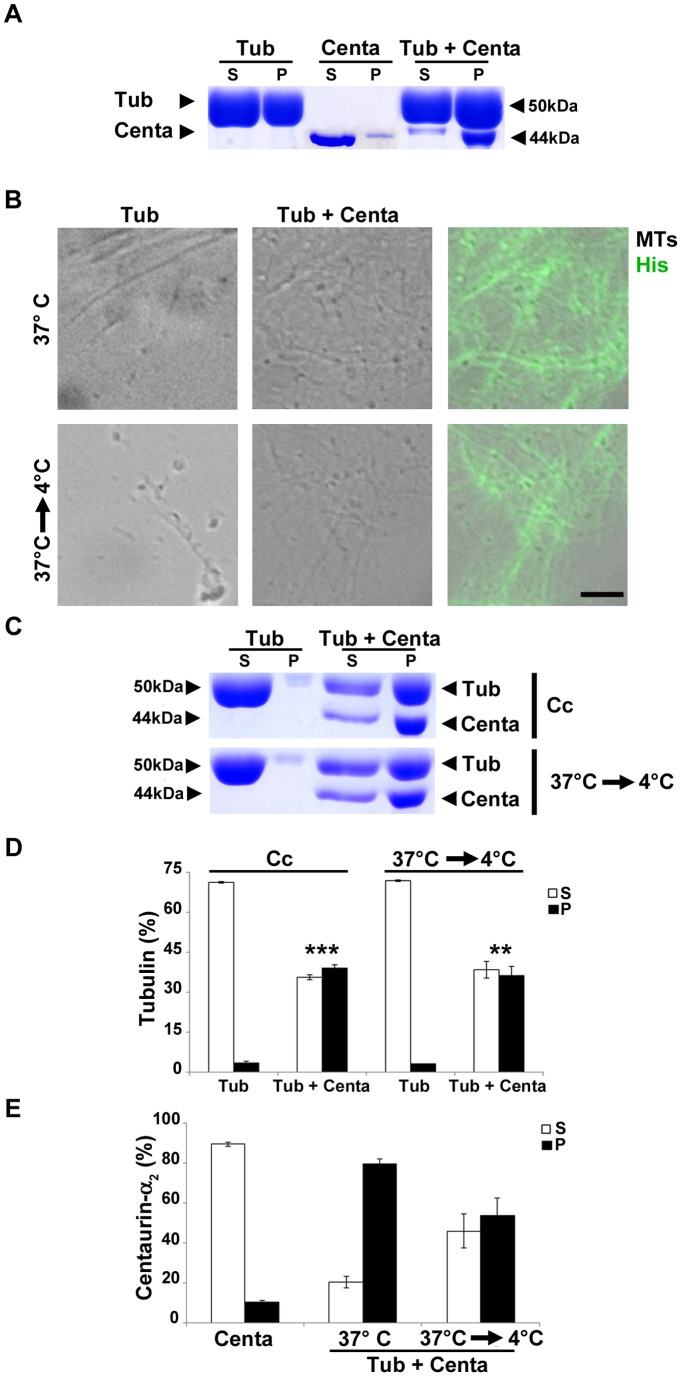
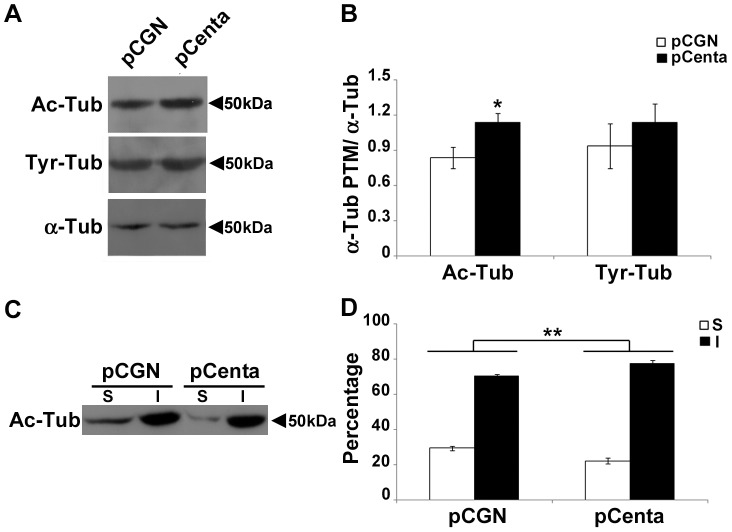
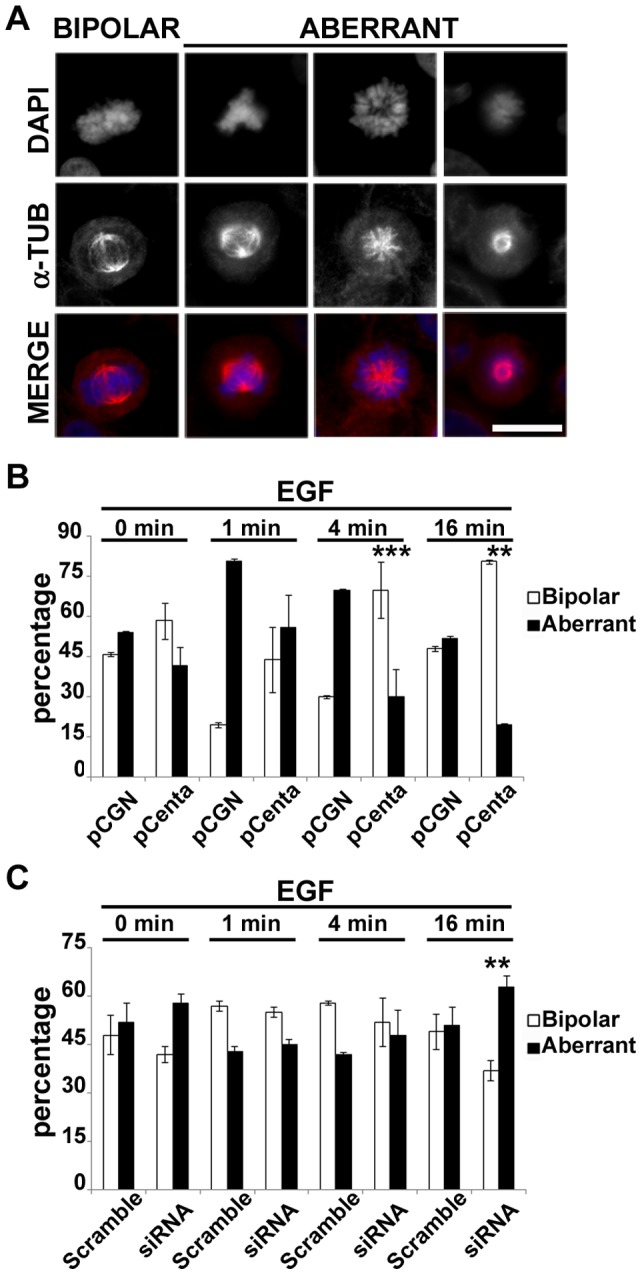
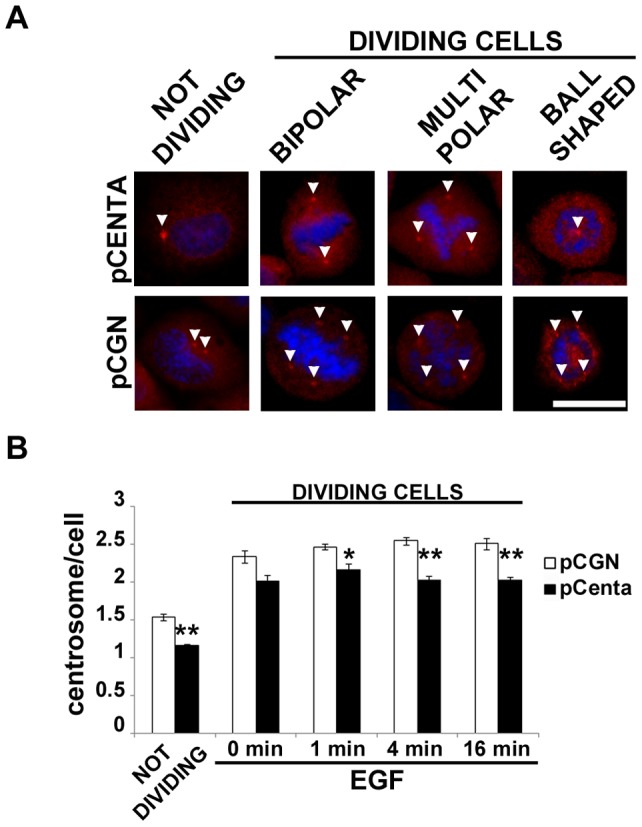
Centaurin-α₂ is a GTPase-activating protein for ARF (ARFGAP) showing a diffuse cytoplasmic localization capable to translocate to membrane, where it binds phosphatidylinositols. Taking into account that Centaurin-α₂ can localize in cytoplasm and that its cytoplasmatic function is not well defined, we searched for further interactors by yeast two-hybrid assay to investigate its biological function. We identified a further Centaurin-α₂ interacting protein, β-Tubulin, by yeast two-hybrid assay. The interaction, involving the C-terminal region of β-Tubulin, has been confirmed by coimmunoprecipitation experiments. After Centaurin-α₂ overexpression in HeLa cells and extraction of soluble (αβ dimers) and insoluble (microtubules) fractions of Tubulin, we observed that Centaurin-α₂ mainly interacts with the polymerized Tubulin fraction, besides colocalizing with microtubules (MTs) in cytoplasm accordingly. Even following the depolimerizing Tubulin treatments Centaurin-α₂ remains mainly associated to nocodazole- and cold-resistant MTs. We found an increase of MT stability in transfected HeLa cells, evaluating as marker of stability the level of MT acetylation. In vitro assays using purified Centaurin-α₂ and tubulin confirmed that Centaurin-α₂ promotes tubulin assembly and increases microtubule stability. The biological effect of Centaurin-α₂ overexpression, assessed through the detection of an increased number of mitotic HeLa cells with bipolar spindles and with the correct number of centrosomes in both dividing and not dividing cells, is consistent with the Centaurin-α₂ role on MT stabilization. Centaurin-α₂ interacts with β-Tubulin and it mainly associates to MTs, resistant to destabilizing agents, in vitro and in cell. We propose Centaurin-α₂ as a new microtubule-associated protein (MAP) increasing MT stability.
Conflict of interest statement
Figures
References
-
- Cukierman E, Huber I, Rotman M, Cassel D (1995) The ARF1 GTPase-activating protein: zinc finger motif and Golgi complex localization. Science 270: 1999–2002. - PubMed
-
- Hanck T, Stricker R, Sedehizade F, Reiser G (2004) Identification of gene structure and subcellular localization of human centaurin alpha 2, and p42IP4, a family of two highly homologous, Ins 1,3,4,5-P4-/PtdIns 3,4,5-P3-binding, adapter proteins. J Neurochem 88: 326–336. - PubMed
-
- Venkateswarlu K, Brandom KG, Yun H (2007) PI-3-kinase-dependent membrane recruitment of centaurin-alpha2 is essential for its effect on ARF6-mediated actin cytoskeleton reorganisation. J Cell Sci 120: 792–801. - PubMed
-
- Venturin M, Bentivegna A, Moroni R. Larizza L, Riva P (2005) Evidence by expression analysis of candidate genes for congenital heart defects in the NF1 microdeletion interval. Ann Hum Genet 69: 508–516. - PubMed
Publication types
MeSH terms
Substances
LinkOut - more resources
Full Text Sources
Molecular Biology Databases
