An estimate of the prevalence of epilepsy in Sub-Saharan Africa: A systematic analysis
- PMID: 23289080
- PMCID: PMC3529318
- DOI: 10.7189/jogh.02.020405
An estimate of the prevalence of epilepsy in Sub-Saharan Africa: A systematic analysis
Abstract
Background: Epilepsy is a leading serious neurological condition worldwide and has particularly significant physical, economic and social consequences in Sub-Saharan Africa. This paper aims to contribute to the understanding of epilepsy prevalence in this region and how this varies by age and sex so as to inform understanding of the disease characteristics as well as the development of infrastructure, services and policies.
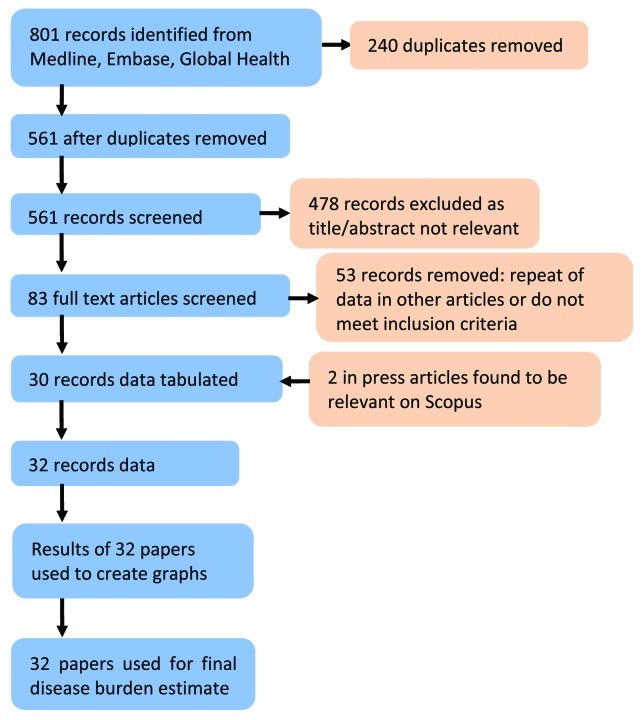
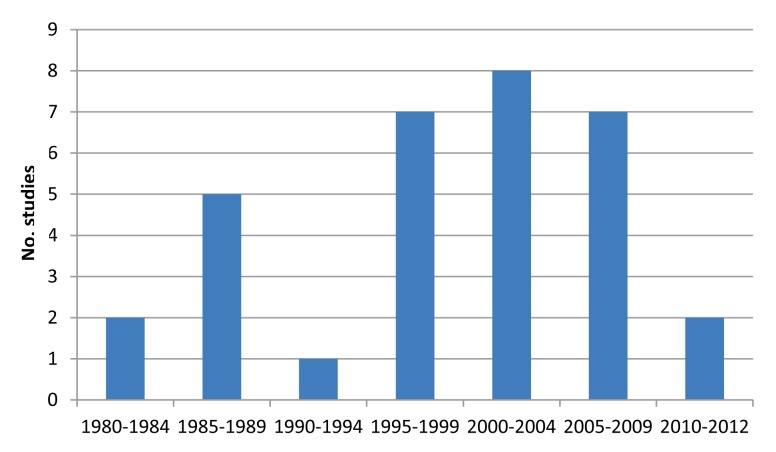
Methods: A parallel systematic analysis of Medline, Embase and Global Health returned 32 studies that satisfied pre-defined quality criteria. Relevant data was extracted, tabulated and analyzed. We modelled the available information and used the UN population figures for Africa to determine the age-specific and overall burden of epilepsy.
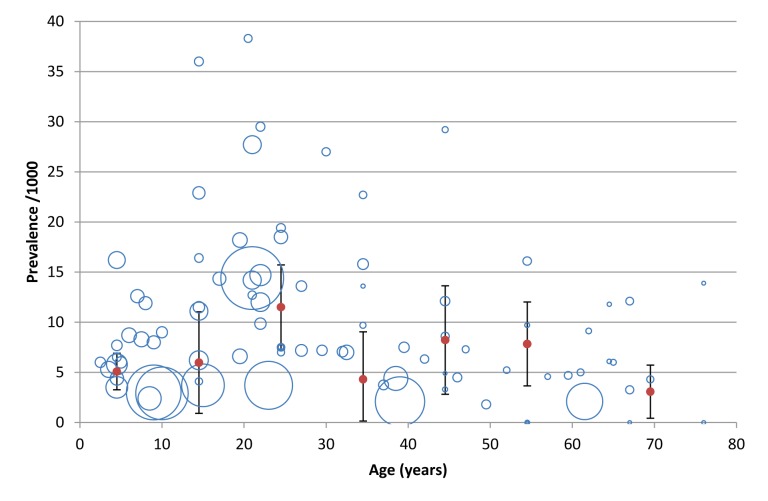
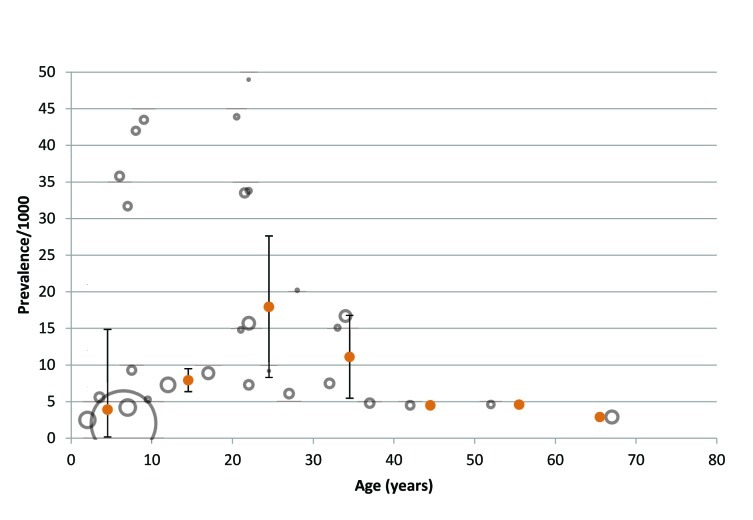
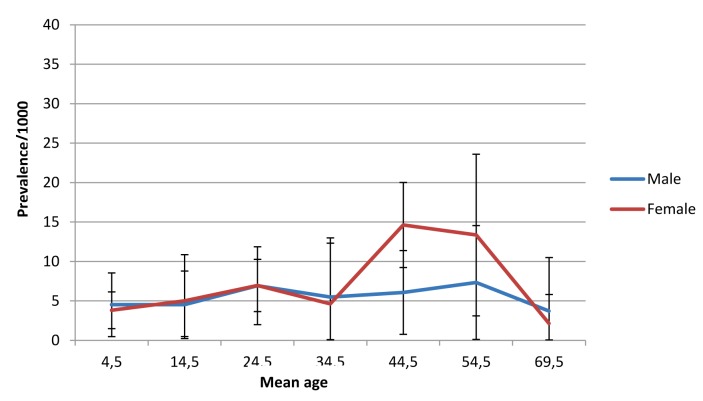
Results: Active epilepsy was estimated to affect 4.4 million people in Sub-Saharan Africa, whilst lifetime epilepsy was estimated to affect 5.4 million. The prevalence of active epilepsy peaks in the 20-29 age group at 11.5/1000 and again in the 40-49 age group at 8.2/1000. The lowest prevalence value of 3.1/1000 is seen in the 60+ age group. This binomial pattern is also seen in both men and women, with the second peak more pronounced in women at 14.6/1000.
Conclusion: The high prevalence of epilepsy, especially in young adults, has important consequences for both the workforce and community structures. An estimation of disease burden would be a beneficial outcome of further research, as would research into appropriate methods of improving health care for and tackling discrimination against people with epilepsy.
Figures


References
-
- World Health Organization. UN High-level Meeting on NCDs: Summary report of the discussions at the round tables. Geneva: WHO, 2011. Available at: http://www.who.int/nmh/events/moscow_ncds_2011/round_tables_summary.pdf Accessed: 8 February 2012.
-
- United Nations. Prevention and control of non-communicable diseases: Report of the Secretary-General- A/66/83. New York: UN, 2011. Available at: http://www.un.org/ga/search/view_doc.asp?symbol=A/66/83&referer=/english... Accessed: 08 February 2012.
LinkOut - more resources
Full Text Sources
Molecular Biology Databases