


Efficient and equitable HIV prevention: A case study of male circumcision in South Africa
- PMID: 23289923
- PMCID: PMC3561239
- DOI: 10.1186/1478-7547-11-1
Efficient and equitable HIV prevention: A case study of male circumcision in South Africa
Abstract
Background: We determine efficient, equitable and mixed efficient-equitable allocations of a male circumcision (MC) intervention reducing female to male HIV transmission in South Africa (SA), as a case study of an efficiency-equity framework for resource allocation in HIV prevention.
Methods: We present a mathematical model developed with epidemiological and cost data from the nine provinces of SA. The hypothetical one-year-long MC intervention with a budget of US$ 10 million targeted adult men 15-49 years of age in SA. The intervention was evaluated according to two criteria: an efficiency criterion, which focused on maximizing the number of HIV infections averted by the intervention, and an equity criterion (defined geographically), which focused on maximizing the chance that each male adult individual had access to the intervention regardless of his province.
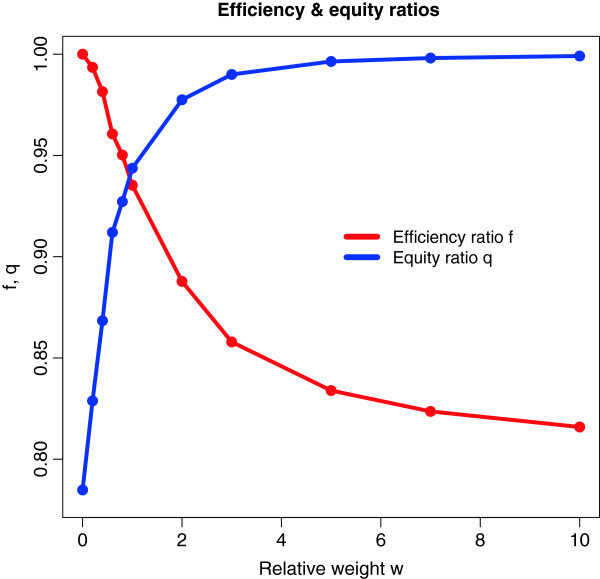
Results: A purely efficient intervention would prevent 4,008 HIV infections over a year. In the meantime, a purely equitable intervention would avert 3,198 infections, which represents a 20% reduction in infection outcome as compared to the purely efficient scenario. A half efficient-half equitable scenario would prevent 3,749 infections, that is, a 6% reduction in infection outcome as compared to the purely efficient scenario.
Conclusions: This paper provides a framework for resource allocation in the health sector which incorporates a simple equity metric in addition to efficiency. In the specific context of SA with a MC intervention for the prevention of HIV, incorporation of geographical equity only slightly reduces the overall efficiency of the intervention.
Figures
References
-
- UNAIDS. South Africa. Accessed December 26, 2012 at http://www.unaids.org/en/regionscountries/countries/southafrica/
-
- Hargrove JW. Migration, mines and mores: the HIV epidemic in Southern Africa. S Afr J Sci. 2008;104:53–61.
-
- Chigwedere P, Seage GR III, Gruskin S, Lee TH, Essex M. Estimating the lost benefits of antiretroviral drug use in South Africa. AIDS. 2008;49(4):410–415. - PubMed
LinkOut - more resources
Full Text Sources
Other Literature Sources
