


Obesity and diabetic kidney disease
- PMID: 23290730
- PMCID: PMC3539140
- DOI: 10.1016/j.mcna.2012.10.010
Obesity and diabetic kidney disease
Abstract
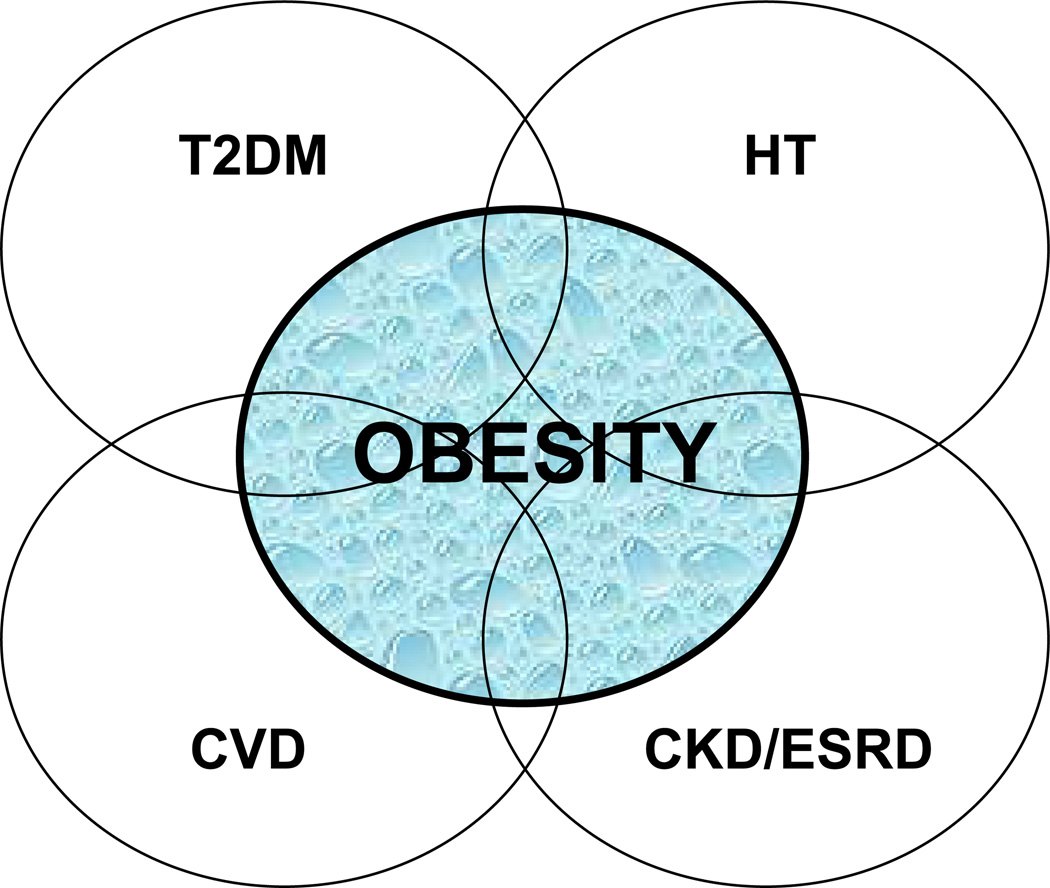
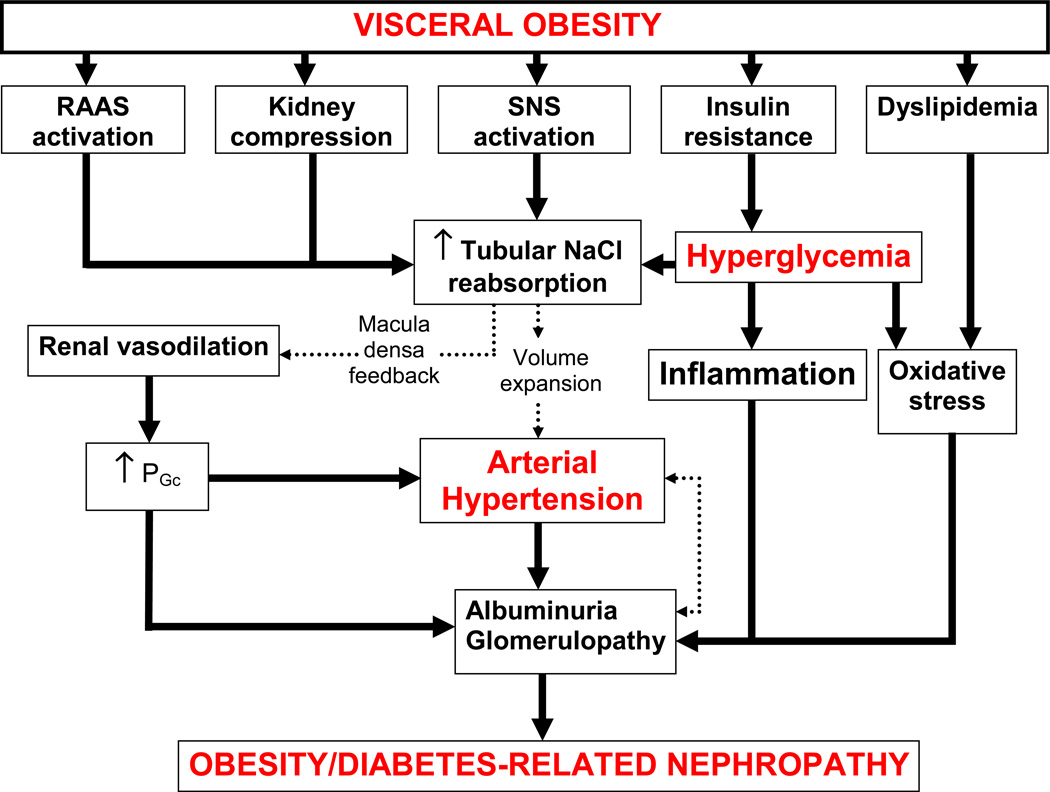
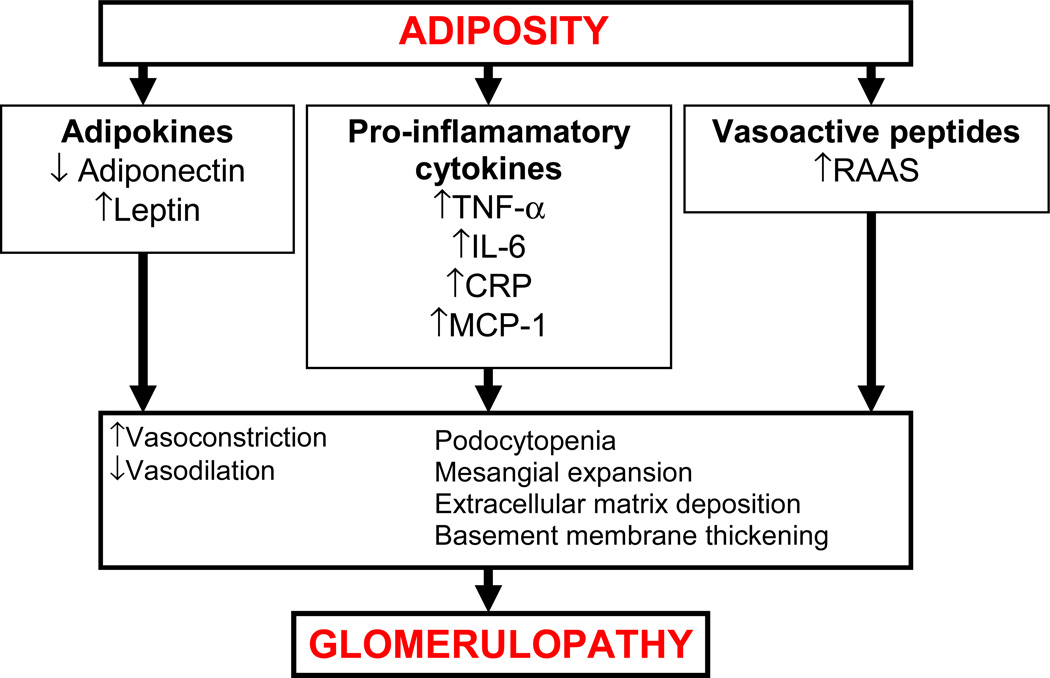
Obesity and diabetes are major causes of CKD and ESRD, and are thus enormous health concerns worldwide. Both obesity and diabetes, along with other elements of the metabolic syndrome including hypertension, are highly interrelated and contribute to the development and progression of renal disease. Studies show that multiple factors act in concert to initially cause renal vasodilation, glomerular hyperfiltration, and albuminuria, leading to the development of glomerulopathy. The coexistence of hypertension contributes to the disease progression, which, if not treated, may lead to ESRD. Although early intervention and management of body weight, hyperglycemia, and hypertension are imperative, novel therapeutic approaches are also necessary to reduce the high morbidity and mortality associated with both obesity-related and diabetes-related renal disease.
Copyright © 2013 Elsevier Inc. All rights reserved.
Figures
References
-
- Flegal KM, Carroll MD, Ogden CL, Curtin LR. Prevalence and trends in obesity among US adults, 1999–2008. JAMA. 2010 Jan 20;303(3):235–241. - PubMed
-
- Organization WH. Obesity and overweight fact sheet. 2012 http://www.who.int/mediacentre/factsheets/fs311/en/index.html.
-
- Kopelman P. Health risks associated with overweight and obesity. Obes Rev. 2007 Mar;8(Suppl 1):13–17. - PubMed
-
- Eknoyan G. Obesity, diabetes, and chronic kidney disease. Curr Diab Rep. 2007 Dec;7(6):449–453. - PubMed
Publication types
MeSH terms
Substances
Grants and funding
LinkOut - more resources
Full Text Sources
Other Literature Sources
Medical
