


The helminth product, ES-62, protects against airway inflammation by resetting the Th cell phenotype
- PMID: 23291461
- PMCID: PMC3584281
- DOI: 10.1016/j.ijpara.2012.12.001
The helminth product, ES-62, protects against airway inflammation by resetting the Th cell phenotype
Abstract
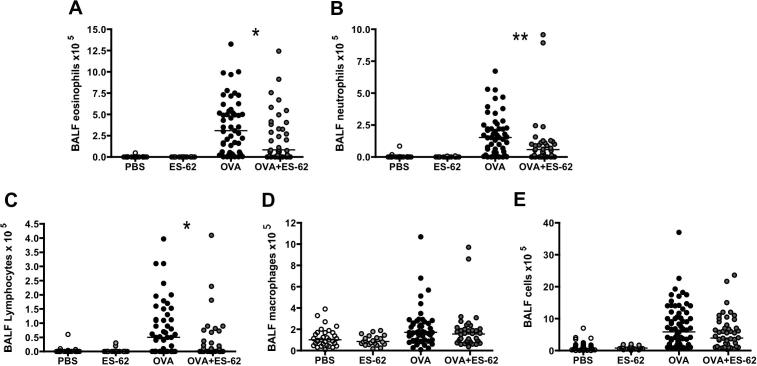
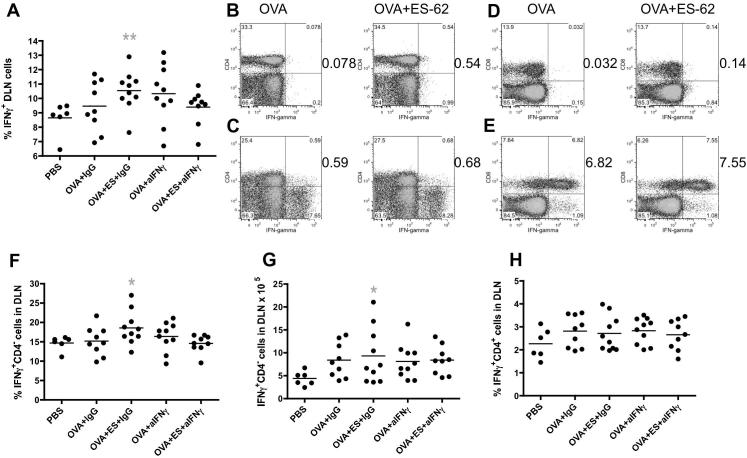
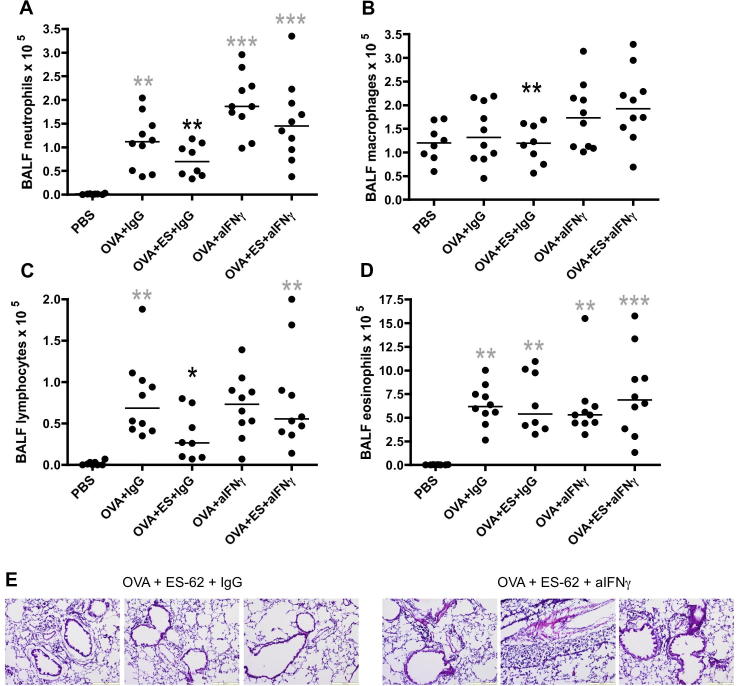
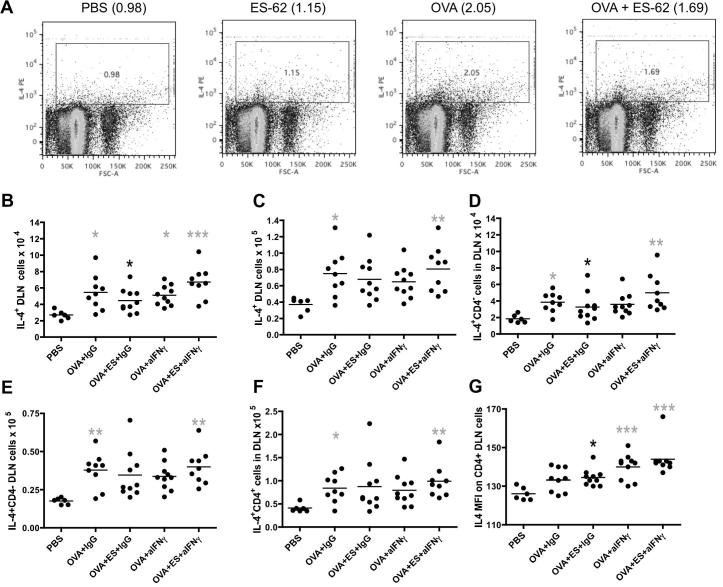
We previously demonstrated inhibition of ovalbumin-induced allergic airway hyper-responsiveness in the mouse using ES-62, a phosphorylcholine-containing glycoprotein secreted by the filarial nematode, Acanthocheilonema viteae. This inhibition correlated with ES-62-induced mast cell desensitisation, although the degree to which this reflected direct targeting of mast cells remained unclear as suppression of the Th2 phenotype of the inflammatory response, as measured by eosinophilia and IL-4 levels in the lungs, was also observed. We now show that inhibition of the lung Th2 phenotype is reflected in ex vivo analyses of draining lymph node recall cultures and accompanied by a decrease in the serum levels of total and ovalbumin-specific IgE. Moreover, ES-62 also suppresses the lung infiltration by neutrophils that is associated with severe asthma and is generally refractory to conventional anti-inflammatory therapies, including steroids. Protection against Th2-associated airway inflammation does not reflect induction of regulatory T cell responses (there is no increased IL-10 or Foxp3 expression) but rather a switch in polarisation towards increased Tbet expression and IFNγ production. This ES-62-driven switch in the Th1/Th2 balance is accompanied by decreased IL-17 responses, a finding in line with reports that IFNγ and IL-17 are counter-regulatory. Consistent with ES-62 mediating its effects via IFNγ-mediated suppression of pathogenic Th2/Th17 responses, we found that neutralising anti-IFNγ antibodies blocked protection against airway inflammation in terms of pro-inflammatory cell infiltration, particularly by neutrophils, and lung pathology. Collectively, these studies indicate that ES-62, or more likely small molecule analogues, could have therapeutic potential in asthma, in particular for those subtypes of patients (e.g. smokers, steroid-resistant) who are refractory to current treatments.
Copyright © 2013 Australian Society for Parasitology Inc. Published by Elsevier Ltd. All rights reserved.
Figures




References
-
- Adams C.L., Grierson A.M., Mowat A.M., Harnett M.M., Garside P. Differences in the kinetics, amplitude, and localization of ERK activation in anergy and priming revealed at the level of individual primary T cells by laser scanning cytometry. J. Immunol. 2004;173:1579–1586. - PubMed
-
- Anderson P.O., Manzo B.A., Sundstedt A., Minaee S., Symonds A., Khalid S., Rodriguez-Cabezas M.E., Nicolson K., Li S., Wraith D.C., Wang P. Persistent antigenic stimulation alters the transcription program in T cells, resulting in antigen-specific tolerance. Eur. J. Immunol. 2006;36:1374–1385. - PMC - PubMed
-
- Barczyk A., Pierzchala W., Sozanska E. Interleukin-17 in sputum correlates with airway hyperresponsiveness to methacholine. Respir. Med. 2003;97:726–733. - PubMed
-
- Bosse Y., Thompson C., Stankova J., Rola-Pleszczynski M. Fibroblast growth factor 2 and transforming growth factor beta1 synergism in human bronchial smooth muscle cell proliferation. Am. J. Respir. Cell Mol. Biol. 2006;34:746–753. - PubMed
Publication types
MeSH terms
Substances
Grants and funding
LinkOut - more resources
Full Text Sources
Other Literature Sources
