


Competence in Teaching Mindfulness-Based Courses: Concepts, Development and Assessment
- PMID: 23293683
- PMCID: PMC3395338
- DOI: 10.1007/s12671-011-0073-2
Competence in Teaching Mindfulness-Based Courses: Concepts, Development and Assessment
Abstract
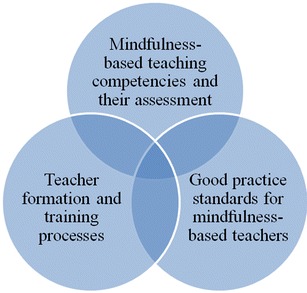
There has been a groundswell of interest in the UK in Mindfulness-Based Stress Reduction (MBSR) and its derivatives, particularly Mindfulness-Based Cognitive Therapy (MBCT). Many health, education and social work practitioners have sought ways to develop their competencies as mindfulness-based teachers, and increasing numbers of organisations are developing mindfulness-based training programmes. However, the rapid expansion of interest in mindfulness-based approaches has meant that those people offering training for MBSR and MBCT teachers have had to consider some quite fundamental questions about training processes, standards and competence. They also need to consider how to develop a robust professional context for the next generation of mindfulness-based teachers. The ways in which competencies are addressed in the secular mainstream contexts in which MBSR and MBCT are taught are examined to enable a consideration of the particularities of mindfulness-based teaching competence. A framework suggesting how competencies develop in trainees is presented. The current status of methodologies for assessing competencies used in mindfulness-based training and research programmes is reviewed. We argue that the time is ripe to continue to develop these dialogues across the international community of mindfulness-based trainers and teachers.
Figures
References
-
- Barber JP, Sharpless BA, Klostermann S, McCarthy KS. Assessing intervention competence and its relation to therapy outcome: a selected review derived from the outcome literature. Professional Psychology: Research and Practice. 2007;38(5):493–500. doi: 10.1037/0735-7028.38.5.493. - DOI
-
- Center for Mindfulness in Medicine, Health Care and Society. (2011). Teacher certification review. http://www.umassmed.edu/cfm/certification/index.aspx?linkidentifier=id&i.... Accessed 14 Jun 2011
-
- Chartered Institute of Personnel and Development. (2011). Competence and competency frameworks. http://www.cipd.co.uk/hr-resources/factsheets/competence-competency-fram.... Accessed 14 Jun 2011
Grants and funding
LinkOut - more resources
Full Text Sources