Design of peptide and peptidomimetic ligands with novel pharmacological activity profiles
- PMID: 23294313
- PMCID: PMC5079645
- DOI: 10.1146/annurev-pharmtox-010510-100456
Design of peptide and peptidomimetic ligands with novel pharmacological activity profiles
Abstract
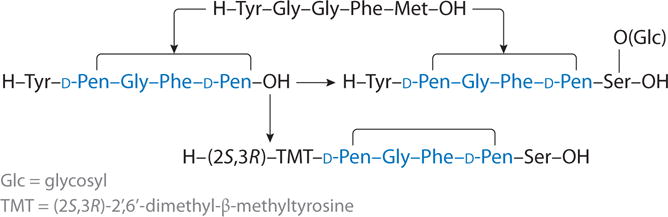
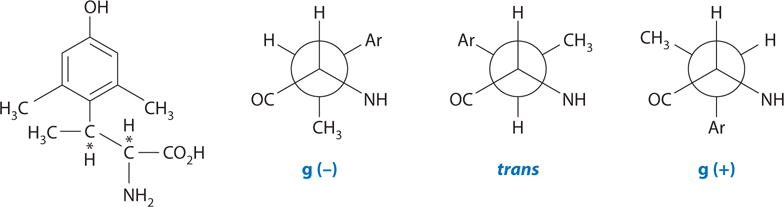
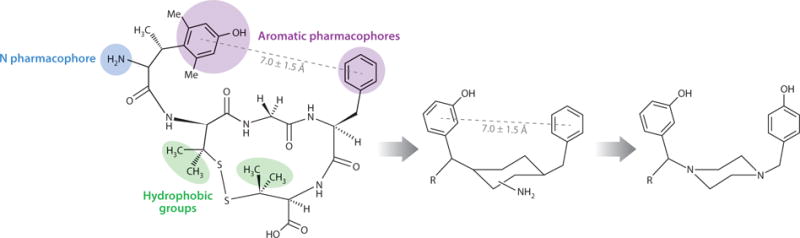
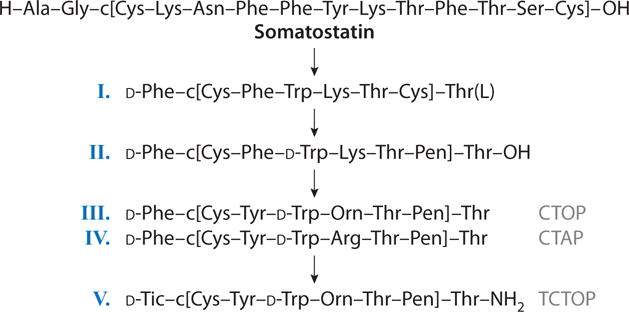
Peptide hormones and neurotransmitters are of central importance in most aspects of intercellular communication and are involved in virtually all degenerative diseases. In this review, we discuss physicochemical approaches to the design of novel peptide and peptidomimetic agonists, antagonists, inverse agonists, and related compounds that have unique biological activity profiles, reduced toxic side effects, and, if desired, the ability to cross the blood-brain barrier. Designing ligands for specific biological and medical needs is emphasized, as is the close collaboration of chemists and biologists to maximize the chances for success. Special emphasis is placed on the use of conformational (ϕ-ψ space) and topographical (χ space) considerations in design.
Figures

References
-
- Hruby VJ. Conformational restrictions of biologically active peptides via amino acid side chain groups. Life Sci. 1982;31:189–99. - PubMed
-
- Kessler H. Conformational and biological activity of cyclic peptides. Angew Chem Int Ed Engl. 1982;21:512–23.
-
- Ferrier BM, Jarvis D, du Vigneaud V. Deamino-oxytocin: its isolation by partition chromatography on Sephadex and crystallization from water, and its biological activities. J Biol Chem. 1965;240:4264–66. - PubMed
-
- Rudinger J. The design of peptide hormone analogs. In: Ariens EJ, editor. Drug Design. Vol. 2. New York: Academic; 1971. pp. 319–419.
Publication types
MeSH terms
Substances
Grants and funding
LinkOut - more resources
Full Text Sources
Other Literature Sources