


Clinical outcomes of an early intervention program for preschool children with Autism Spectrum Disorder in a community group setting
- PMID: 23294523
- PMCID: PMC3631131
- DOI: 10.1186/1471-2431-13-3
Clinical outcomes of an early intervention program for preschool children with Autism Spectrum Disorder in a community group setting
Abstract
Background: Available evidence indicates that early intervention programs, such as the Early Start Denver Model (ESDM), can positively affect key outcomes for children with Autism Spectrum Disorder (ASD). However, programs involving resource intensive one-to-one clinical intervention are not readily available or deliverable in the community, resulting in many children with ASD missing out on evidence-based intervention during their early and most critical preschool years. This study evaluated the effectiveness of the ESDM for preschool-aged children with ASD using a predominantly group-based intervention in a community child care setting.
Methods: Participants were 26 children (21 male) with ASD with a mean age of 49.6 months. The ESDM, a comprehensive early intervention program that integrates applied behaviour analysis with developmental and relationship-based approaches, was delivered by trained therapists during the child's attendance at a child care centre for preschool-aged children with ASD. Children received 15-20 hours of group-based, and one hour of one-to-one, ESDM intervention per week. The average intervention period was ten months. Outcome measures were administered pre- and post-intervention, and comprised a developmental assessment - the Mullen Scales of Early Learning (MSEL); and two parent-report questionnaires - the Social Communication Questionnaire (SCQ) and Vineland Adaptive Behaviours Scales-Second Edition (VABS-II).
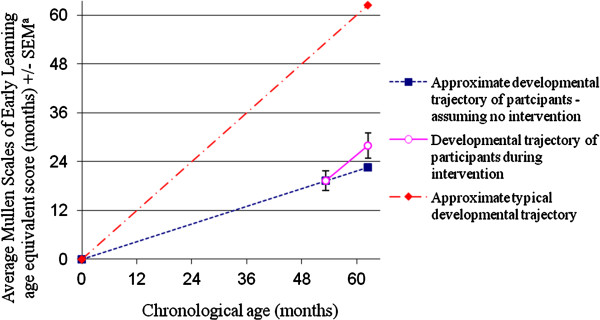
Results: Statistically significant post-intervention improvements were found in children's performance on the visual reception, receptive language and expressive language domains of the MSEL in addition to their overall intellectual functioning, as assessed by standardised developmental quotients. Parents reported significant increases in their child's receptive communication and motor skills on the VABS-II, and a significant decrease in autism-specific features on the SCQ. These effects were of around medium size, and appeared to be in excess of what may have been expected due to maturation. Nonetheless, these results need to be confirmed in a controlled study.
Conclusions: This study suggests community dissemination of the ESDM using predominantly group-based intervention may be an effective intervention. Making the ESDM accessible to the wider ASD community in child care settings has the potential for significant clinical and economic benefits. Further studies are indicated in this area, including those with younger children, and which incorporate a control group and standardised ASD assessments.
Trial registration: This trial is registered with the Australian New Zealand Clinical Trials Registry: Registry number ACTRN12612000461897.
Figures
References
-
- American Psychiatric Association. Diagnostic and statistical manual of mental disorders: DSM-IV-TR. 4. Washington, DC: Author; 2000.
-
- Centers for Disease Control and Prevention. Prevalence of autism spectrum disorders — autism and developmental disabilities monitoring network, 14 sites, United States, 2008. MMWR Surveillance Summaries. 2012;61(3):1–19. - PubMed
-
- Dawson G. Early behavioral intervention, brain plasticity, and the prevention of autism spectrum disorder. Dev Psychopathol. 2008;20(3):775–803. - PubMed
Publication types
MeSH terms
LinkOut - more resources
Full Text Sources
Other Literature Sources
