


Nutrigenetic response to omega-3 fatty acids in obese asthmatics (NOOA): rationale and methods
- PMID: 23298524
- PMCID: PMC3638234
- DOI: 10.1016/j.cct.2012.12.009
Nutrigenetic response to omega-3 fatty acids in obese asthmatics (NOOA): rationale and methods
Abstract
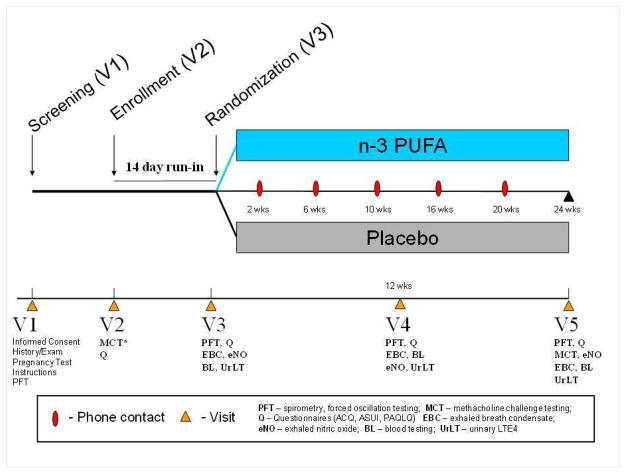
Uncontrolled asthma is a major cause of hospitalizations and emergency room visits. Factors including obesity, African ancestry and childhood are associated with increased asthma severity. Considering the high morbidity caused by asthma, relatively few classes of drugs exist to control this common disease. Therefore, new therapeutic strategies may be needed to reduce asthma's impact on public health. Data suggest that a high fat diet that is deficient in omega-3 fatty acids could promote both obesity and excessive inflammation, resulting in greater asthma severity. Small trials with supplemental omega-3 fatty acids have been conducted with encouraging but inconsistent results. The variability in response seen in past trials may be due to the past subjects' genetics (specifically ALOX5 rs59439148) or their particular asthma phenotypes. Therefore, the "Nutrigenetic response to Omega-3 Fatty acids in Obese Asthmatics (NOOA)" trial is currently underway and was designed as a randomized, double-blind, placebo controlled intervention study to determine if supplemental omega-3 fatty acids improves symptoms among obese adolescents and young adults with uncontrolled asthma. Here we report the design and rationale for the NOOA trial. Participants were given either 3.18 g daily of eicosapentaenoic acid and 822 mg daily docosahexaenoic acid, or matched control soy oil, for 24 weeks. Change in the asthma control questionnaire score was the primary outcome. Secondary outcomes included spirometry, impulse oscillometry, exacerbation rate, airway biomarkers, systemic inflammation, leukotriene biosynthesis and T-lymphocyte function. NOOA may lead to a new therapeutic treatment strategy and greater understanding of the mechanistic role of diet in the pathogenesis of asthma.
Copyright © 2013 Elsevier Inc. All rights reserved.
Conflict of interest statement
Dr. Lang has no conflicts of interest in the subject matter of this manuscript
Dr. Mougey has no conflicts of interest in the subject matter of this manuscript
Dr. Blake has no conflicts of interest in the subject matter of this manuscript
Dr. Yong as no conflicts of interest in the subject matter of this manuscript
Dr. Lockey has no conflicts of interest in the subject matter of this manuscript
Dr. Hossain has no conflicts of interest in the subject matter of this manuscript
Dr. Lima has no conflicts of interest in the subject matter of this manuscript
Figures
References
-
- Stream AR, Sutherland ER. Obesity and asthma disease phenotypes. Curr Opin Allergy Clin Immunol. 2012 Feb;12(1):76–81. - PubMed
-
- Wenzel SE. Asthma phenotypes: the evolution from clinical to molecular approaches. Nat Med. 2012 May;18(5):716–25. - PubMed
-
- Camargo CA, Jr, Weiss ST, Zhang S, Willett WC, Speizer FE. Prospective study of body mass index, weight change, and risk of adult-onset asthma in women. Arch Intern Med. 1999 Nov 22;159(21):2582–8. - PubMed
-
- Gold DR, Damokosh AI, Dockery DW, Berkey CS. Body-mass index as a predictor of incident asthma in a prospective cohort of children. Pediatr Pulmonol. 2003 Dec;36(6):514–21. - PubMed
Publication types
MeSH terms
Substances
Grants and funding
LinkOut - more resources
Full Text Sources
Other Literature Sources
Medical
Miscellaneous
