


An internet obesity prevention program for adolescents
- PMID: 23299003
- PMCID: PMC3608746
- DOI: 10.1016/j.jadohealth.2012.07.014
An internet obesity prevention program for adolescents
Abstract
Purpose: To compare the effectiveness of two school-based internet obesity prevention programs for diverse adolescents on body mass index (BMI), health behaviors, and self-efficacy, and to explore moderators of program efficacy. It was hypothesized that the addition of coping skills training to a health education and behavioral support program would further enhance health outcomes.
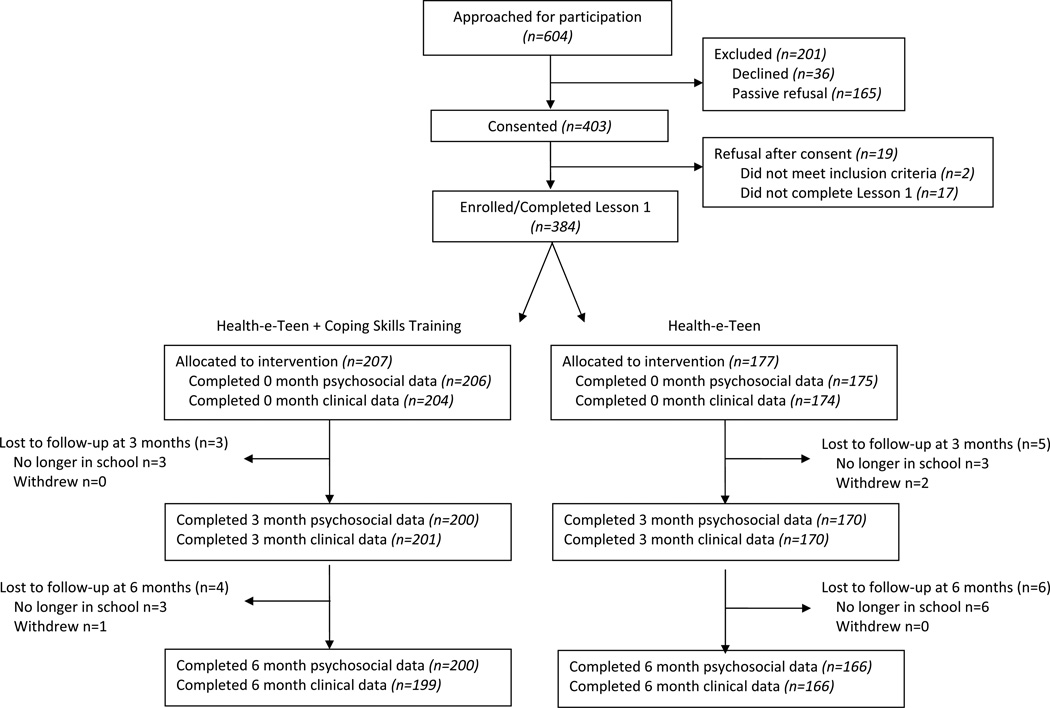
Methods: A randomized clinical trial with cluster randomization by class and repeated measures with follow-up at 3 and 6 months was conducted (n = 384). BMI was assessed by use of standard procedures. Sedentary behavior, physical activity, nutrition behavior, self-efficacy, and satisfaction were assessed with self-report measures. Data analysis consisted of mixed model analyses with autoregressive covariance structure for repeated data by use of intent-to-treat procedures.
Results: The mean age of students was 15.31 years (±0.69), with a mean BMI of 24.69 (±5.58). The majority were girls (62%) and of diverse race/ethnicity (65% non-white). There were no significant differences between groups on any outcomes and no change in BMI over time. There were significant improvements in health behaviors (sedentary behavior, moderate and vigorous physical activity, healthy eating, fruit and vegetable intake, sugar beverages, and junk food intake) and self-efficacy. Gender and lesson completion moderated select health outcomes. There was excellent participation and high satisfaction with the programs.
Conclusions: School-based internet obesity prevention programs are appealing to adolescents and improve health behaviors. The differential effect of coping skills training may require longer follow-up.
Trial registration: ClinicalTrials.gov NCT01560676.
Copyright © 2013 Society for Adolescent Health and Medicine. Published by Elsevier Inc. All rights reserved.
Conflict of interest statement
The authors have no conflicts of interest to disclose
References
-
- Ogden CL, Carroll MD, Curtin LR, Lamb MM, Flegal KM. Prevalence of high body mass index in US children and adolescents, 2007–2008. [Accessed 22 February 2012];J Am Med Assoc. 2010 303(3):242–249. - PubMed
-
- Flegal KM, Carroll MD, Ogden CL, Curtin LR. Prevalence and trends in obesity among US adults, 1999–2008. [Accessed 7 April 2012];J Am Med Assoc. 2010 303(3):235–241. - PubMed
-
- Casazza K, Ciccazzo M. The method of delivery of nutrition and physical activity information may play a role in eliciting behavior changes in adolescents. [Accessed 22 February 2012];Eating Behav. 2007 8(1):73–82. - PubMed
-
- Power TG, Bindler RC, Goetz S, Daratha KB. Obesity prevention in early adolescence: Student, parent, and teacher views. [Accessed 10 April 2012];J Sch Health. 2010 80(1):13–19. - PubMed
Publication types
MeSH terms
Associated data
Grants and funding
LinkOut - more resources
Full Text Sources
Other Literature Sources
Medical
