


Reducing sexual risk behavior in adolescent girls: results from a randomized controlled trial
- PMID: 23299011
- PMCID: PMC3580004
- DOI: 10.1016/j.jadohealth.2012.07.005
Reducing sexual risk behavior in adolescent girls: results from a randomized controlled trial
Abstract
Purpose: Teenage girls in low-income urban settings are at an elevated risk for HIV, sexually transmitted infections, and unintended pregnancies. The purpose of this study was to evaluate the efficacy of a sexual risk-reduction (SRR) intervention, supplemented with postintervention booster sessions, targeting low-income, urban, sexually active teenage girls.
Method: Randomized controlled trial in which sexually active urban adolescent girls (n = 738) recruited in a midsize northeastern U.S. city were randomized to a theory-based SRR intervention or to a structurally equivalent health promotion control group. Assessments and behavioral data were collected using audio computer-assisted self-interview at baseline, then at 3, 6, and 12 months postintervention. Both interventions included four small-group sessions and two booster sessions.
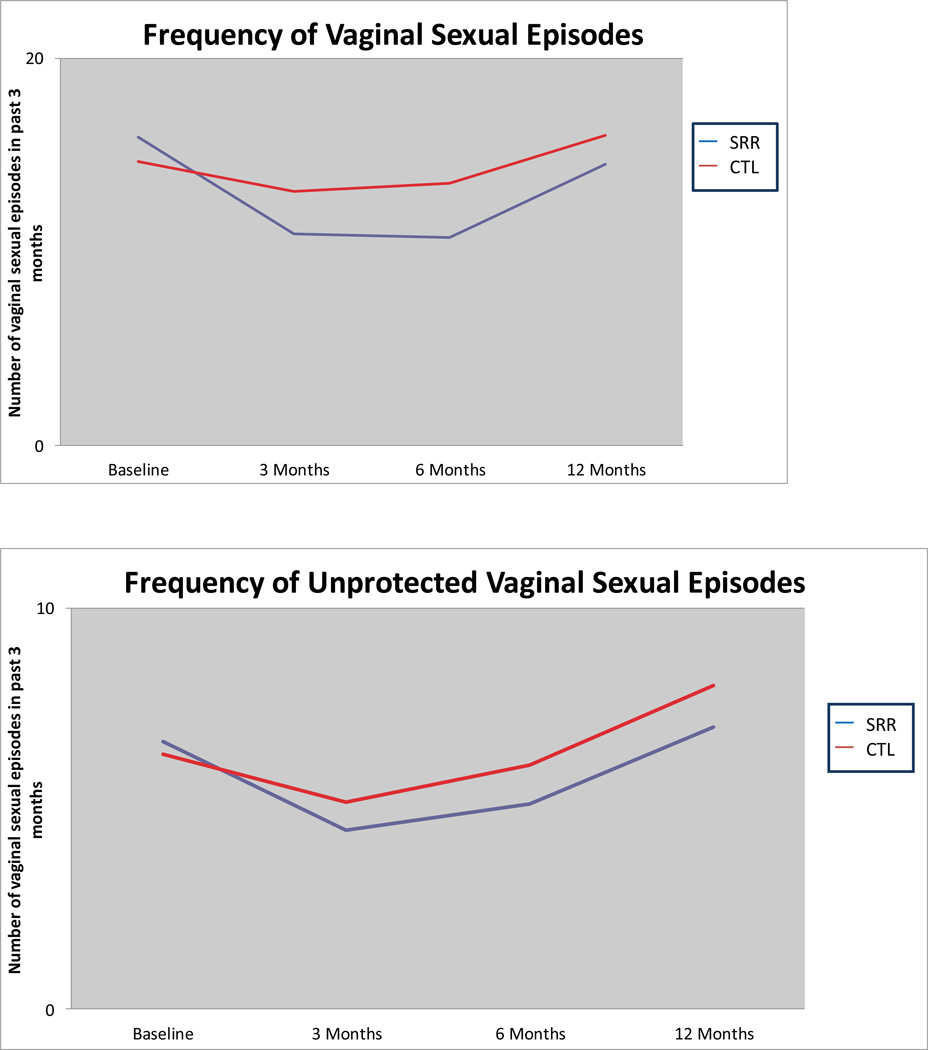
Results: Relative to girls in the control group, girls receiving the SRR intervention were more likely to be sexually abstinent; if sexually active, they showed decreases in (a) total episodes of vaginal sex at all follow-ups, (b) number of unprotected vaginal sex acts at 3 and 12 months, and (c) total number of sex partners at 6 months. Medical record audits for girls recruited from a clinical setting (n = 322) documented a 50% reduction in positive pregnancy tests at 12 months.
Conclusions: Theory-based behavioral interventions tailored to adolescent girls can help to reduce sexual risk and may also reduce unintended pregnancies. Although sexually active at enrollment, many of the girls receiving the intervention were more likely to practice secondary abstinence. Continued refinement of SRR interventions for girls is needed to ensure they are feasible, appealing, and effective.
Trial registration: ClinicalTrials.gov NCT00161343.
Copyright © 2013 Society for Adolescent Health and Medicine. Published by Elsevier Inc. All rights reserved.
Figures

References
-
- Eaton DK, Kann L, Kinchen S, et al. Youth Risk Behavior Surveillance - United States, 2009. Morbidity and Mortality Weekly Report. 2010 Jun 4;59(SS5):1–142. - PubMed
-
- Eaton DK, Kann L, Kinchen S, et al. Youth risk behavior surveillance - United States, 2009. MMWR Surveillance Summaries. 2010 Jun 4;59(5):1–142. - PubMed
-
- Rosenberg MD, Gurvey JE, Adler N, et al. Concurrent sex partners and risk for sexually transmitted diseases among adolescents. Sex Transm Dis. 1999 Apr;26(4):208–212. - PubMed
-
- Centers for Disease Control and Prevention. HIV/AIDS Surveillance Report, 2004. Atlanta, GA: US Department of Health and Human Services, Centers for Disease Control and Prevention; 2005.
-
- Centers for Disease Control and Prevention. HIV/AIDS surveillance in adolescents and young adults, slide 8. Atlanta, GA: US Department of Health and Human Services, Centers for Disease Control and Prevention; 2009.
Publication types
MeSH terms
Associated data
Grants and funding
LinkOut - more resources
Full Text Sources
Other Literature Sources
Medical
