


Higher levels of multiple ecosystem services are found in forests with more tree species
- PMID: 23299890
- PMCID: PMC3562447
- DOI: 10.1038/ncomms2328
Higher levels of multiple ecosystem services are found in forests with more tree species
Abstract
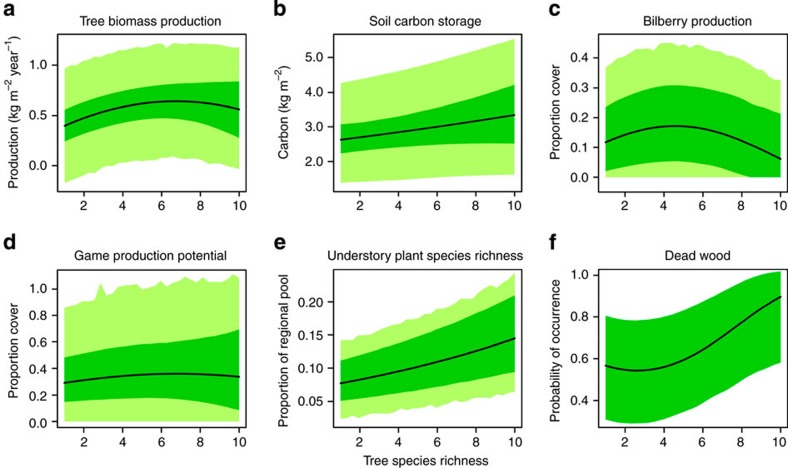
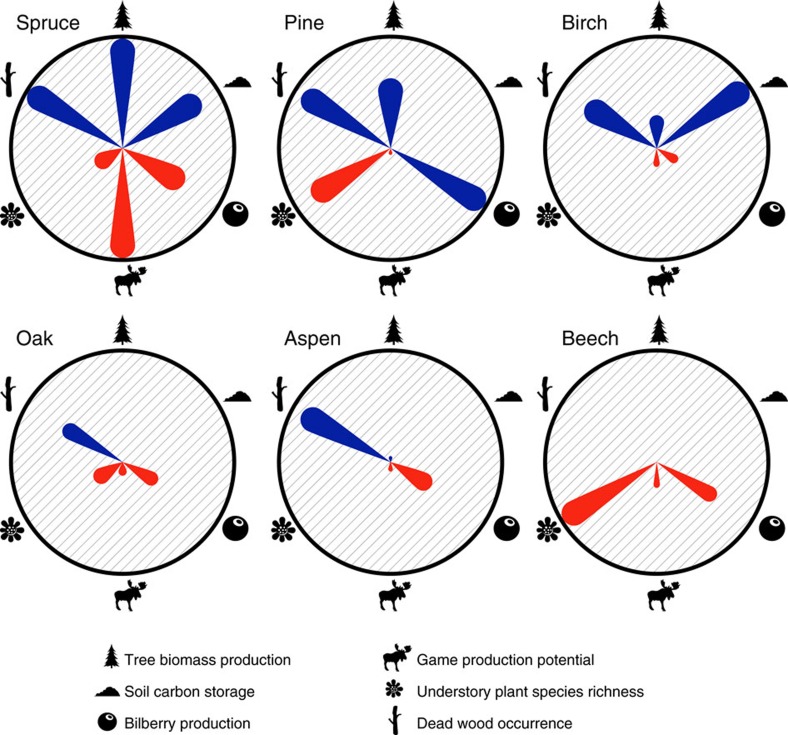
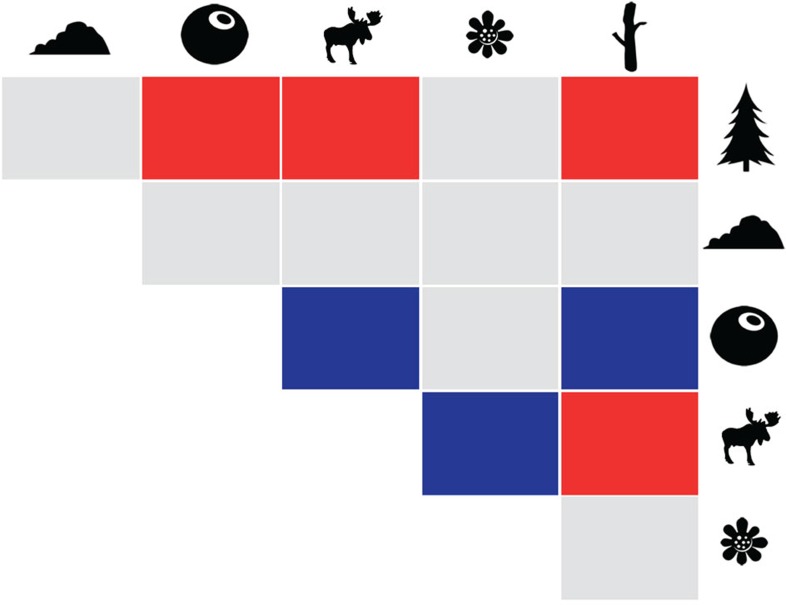
Forests are of major importance to human society, contributing several crucial ecosystem services. Biodiversity is suggested to positively influence multiple services but evidence from natural systems at scales relevant to management is scarce. Here, across a scale of 400,000 km(2), we report that tree species richness in production forests shows positive to positively hump-shaped relationships with multiple ecosystem services. These include production of tree biomass, soil carbon storage, berry production and game production potential. For example, biomass production was approximately 50% greater with five than with one tree species. In addition, we show positive relationships between tree species richness and proxies for other biodiversity components. Importantly, no single tree species was able to promote all services, and some services were negatively correlated to each other. Management of production forests will therefore benefit from considering multiple tree species to sustain the full range of benefits that the society obtains from forests.
Figures
References
-
- Millenium Ecosystem Assessment. Ecosystems and Human Well-Being: Biodiversity Synthesis World Resources Institute. 100 (Island Press (2005).
-
- Naeem S., Bunker D. E., Hector A., Loreau M., Perrings C. H. Biodiversity, Ecosystem Functioning, & Human Wellbeing, an Ecological and Economic Perspective Oxford University Press, (2009).
-
- Cardinale B. J. et al.. Biodiversity loss and its impact on humanity. Nature 486, 59–67 (2012). - PubMed
-
- Schmid B. et al. in Biodiversity, Ecosystem Functioning, & Human Wellbeing: An Ecological and Economic Perspective eds Naeem S. Oxford University Press (2009).
-
- Cardinale B. J. et al.. The functional role of producer diversity in ecosystems. Am. J. Bot. 98, 572–592 (2011). - PubMed
Publication types
MeSH terms
LinkOut - more resources
Full Text Sources
Other Literature Sources
