


Self-compassion and reactions to serious illness: the case of HIV
- PMID: 23300046
- PMCID: PMC4355940
- DOI: 10.1177/1359105312467391
Self-compassion and reactions to serious illness: the case of HIV
Abstract
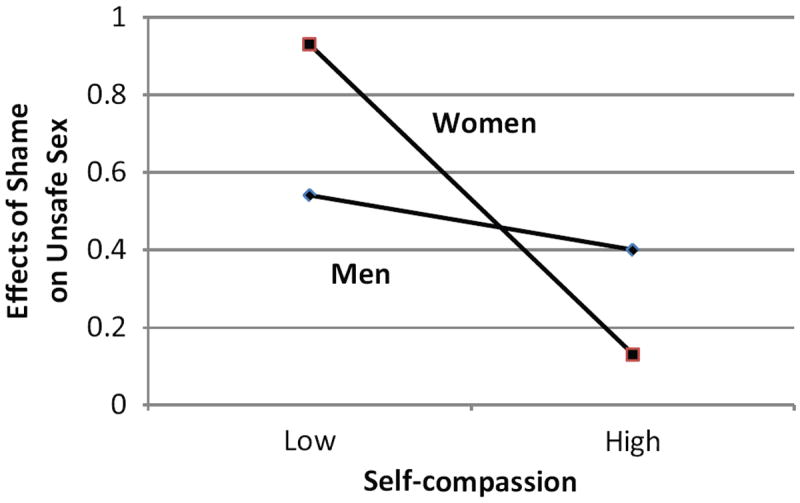
To test the hypothesis that self-compassion buffers people against the emotional impact of illness and is associated with medical adherence, 187 HIV-infected individuals completed a measure of self-compassion and answered questions about their emotional and behavioral reactions to living with HIV. Self-compassion was related to better adjustment, including lower stress, anxiety, and shame. Participants higher in self-compassion were more likely to disclose their HIV status to others and indicated that shame had less of an effect on their willingness to practice safe sex and seek medical care. In general, self-compassion was associated with notably more adaptive reactions to having HIV.
Keywords: HIV/AIDS; coping; illness; self-compassion; shame.
Figures
References
-
- Adams CE, Leary MR. Promoting self-compassionate attitudes toward eating among restrictive and guilty eaters. Journal of Social and Clinical Psychology. 2007;26:1120–1144.
-
- Brion JM, Menke EM. Perspectives regarding adherence to prescribed treatment in highly adherent HIV positive gay men. Journal of the Association of Nurses in AIDS Care. 2008;19:181–191. - PubMed
-
- Carvalho FT, Morais NA, Koller SH, et al. Protective factors and resiliencein people living with HIV/AIDS. Cadernos de Saúde Pública. 2007;23:2023–2033. - PubMed
-
- Carver CS, Pozo C, Harris SD, et al. How coping mediates the effect of optimism on distress: A study of women with early stage breast cancer. Journal of Personality and Social Psychology. 1993;65:375–390. - PubMed
Publication types
MeSH terms
Grants and funding
LinkOut - more resources
Full Text Sources
Other Literature Sources
Medical
