


Low rate of pandemic A/H1N1 2009 influenza infection and lack of severe complication of vaccination in pregnant women: a prospective cohort study
- PMID: 23300637
- PMCID: PMC3531481
- DOI: 10.1371/journal.pone.0052303
Low rate of pandemic A/H1N1 2009 influenza infection and lack of severe complication of vaccination in pregnant women: a prospective cohort study
Abstract
Background: In 2009, pregnant women were specifically targeted by a national vaccination campaign against pandemic A/H1N1 influenza virus. The objectives of the COFLUPREG study, initially set up to assess the incidence of serious forms of A/H1N1 influenza, were to assess the consequences of maternal vaccination on pregnancy outcomes and maternal seroprotection at delivery.
Methods: Pregnant women, between 12 and 35 weeks of gestation, non vaccinated against A/H1N1 2009 influenza were randomly selected to be included in a prospective cohort study conducted in three maternity centers in Paris (France) during pandemic period. Blood samples were planned to assess hemagglutination inhibition (HI) antibody against A/H1N1 2009 influenza at inclusion and at delivery.
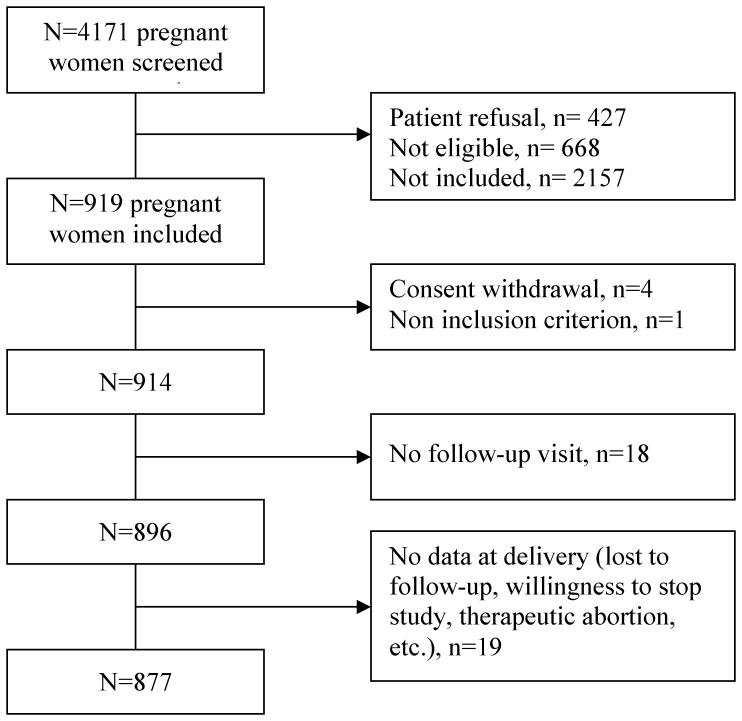
Results: Among the 877 pregnant women included in the study, 678 (77.3%) had serum samples both at inclusion and delivery, and 320 (36.5%) received pandemic A/H1N1 2009 influenza vaccine with a median interval between vaccination and delivery of 92 days (95% CI 48-134). At delivery, the proportion of women with seroprotection (HI antibodies titers against A/H1N1 2009 influenza of 1∶40 or greater) was 69.9% in vaccinated women. Of the 422 non-vaccinated women with serological data, 11 (2.6%; 95%CI: 1.3-4.6) had laboratory documented A/H1N1 2009 influenza (1 with positive PCR and 10 with serological seroconversion). None of the 877 study's women was hospitalized for flu. No difference on pregnancy outcomes was evidenced between vaccinated women, non-vaccinated women without seroconversion and non-vaccinated women with flu.
Conclusion: Despite low vaccine coverage, incidence of pandemic flu was low in this cohort of pregnant women.No effect on pregnancy and delivery outcomes was evidenced after vaccination.
Conflict of interest statement
Figures
References
-
- Mak TK, Mangtani P, Leese J, Watson JM, Pfeifer D (2008) Influenza vaccination in pregnancy: current evidence and selected national policies. Lancet Infect Dis 8: 44–52. - PubMed
-
- Cox S, Posner SF, McPheeters M, Jamieson DJ, Kourtis AP, et al. (2006) Hospitalizations with respiratory illness among pregnant women during influenza season. Obstet Gynecol 107: 1315–1322. - PubMed
-
- Neuzil KM, Reed GW, Mitchel EF, Simonsen L, Griffin MR (1998) Impact of influenza on acute cardiopulmonary hospitalizations in pregnant women. Am J Epidemiol 148: 1094–1102. - PubMed
-
- Englund JA (2003) Maternal immunization with inactivated influenza vaccine: rationale and experience. Vaccine 21: 3460–3464. - PubMed
-
- Zarocostas J (2009) World Health Organization declares A (H1N1) influenza pandemic. BMJ 338: b2425. - PubMed
Publication types
MeSH terms
LinkOut - more resources
Full Text Sources
Medical
