. 2012;7(12):e52841.
doi: 10.1371/journal.pone.0052841. Epub 2012 Dec 27.

Significance of the identification in the Horn of Africa of an exceptionally deep branching Mycobacterium tuberculosis clade

Affiliations

Significance of the identification in the Horn of Africa of an exceptionally deep branching Mycobacterium tuberculosis clade

Yann Blouin et al. PLoS One. 2012.

Abstract

Molecular and phylogeographic studies have led to the definition within the Mycobacterium tuberculosis complex (MTBC) of a number of geotypes and ecotypes showing a preferential geographic location or host preference. The MTBC is thought to have emerged in Africa, most likely the Horn of Africa, and to have spread worldwide with human migrations. Under this assumption, there is a possibility that unknown deep branching lineages are present in this region. We genotyped by spoligotyping and multiple locus variable number of tandem repeats (VNTR) analysis (MLVA) 435 MTBC isolates recovered from patients. Four hundred and eleven isolates were collected in the Republic of Djibouti over a 12 year period, with the other 24 isolates originating from neighbouring countries. All major M. tuberculosis lineages were identified, with only two M. africanum and one M. bovis isolates. Upon comparison with typing data of worldwide origin we observed that several isolates showed clustering characteristics compatible with new deep branching. Whole genome sequencing (WGS) of seven isolates and comparison with available WGS data from 38 genomes distributed in the different lineages confirms the identification of ancestral nodes for several clades and most importantly of one new lineage, here referred to as lineage 7. Investigation of specific deletions confirms the novelty of this lineage, and analysis of its precise phylogenetic position indicates that the other three superlineages constituting the MTBC emerged independently but within a relatively short timeframe from the Horn of Africa. The availability of such strains compared to the predominant lineages and sharing very ancient ancestry will open new avenues for identifying some of the genetic factors responsible for the success of the modern lineages. Additional deep branching lineages may be readily and efficiently identified by large-scale MLVA screening of isolates from sub-Saharan African countries followed by WGS analysis of a few selected isolates.


Conflict of interest statement

Competing Interests: The authors have declared that no competing interests exist.

Figures

Figure 1
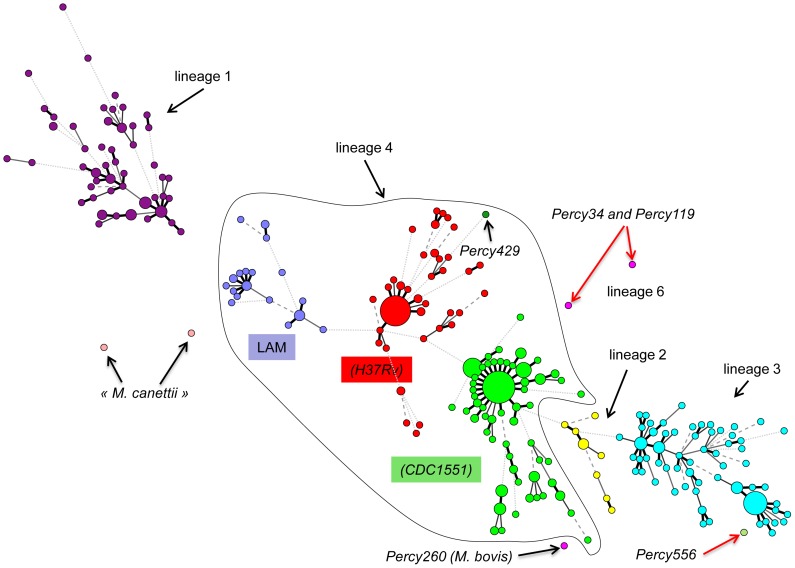
Figure 1. Minimum spanning tree representation of the clustering of 435 isolates from the Horn of Africa.
The color code reflects the main MLVA clusters. Lineages (1 to 6) and some sublineages (CDC1551, H37Rv, …) are indicated. The size of the circles reflects the number of isolates with an identical genotype. Branches longer than 10 are not drawn. The main outlier candidates are arrowed (red arrows: isolates selected for sequencing).
Figure 2
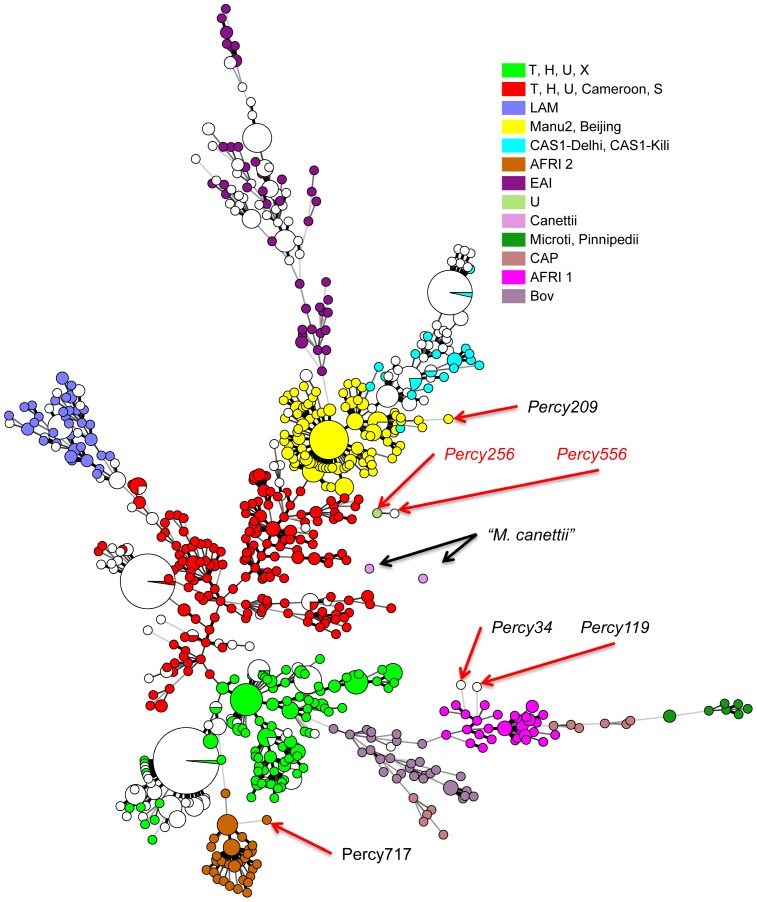
Figure 2. Minimum spanning tree representation of the Horn of Africa isolates with respect to 700 isolates of various origins.
The 435 isolates from the Horn of Africa are displayed in white, whereas the isolates of worldwide origins are colored according to lineage using the same color code as in Figure 1. Red arrows: isolates selected for sequencing. The minimum spanning tree analysis is based upon the 19 VNTR loci shared by the 24 loci MLVA assays used by and .
Figure 3
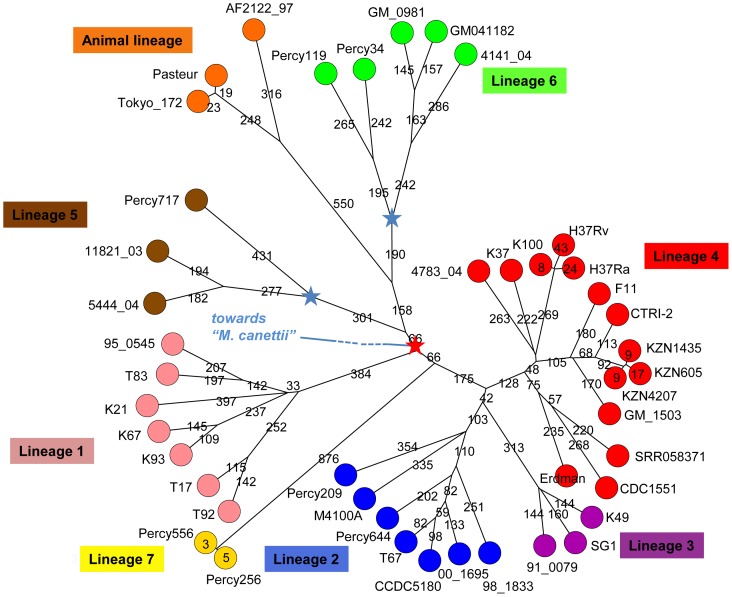
Figure 3. Minimum spanning tree based upon whole genome SNP analysis.
The tree is based upon 13382 SNPs. The tree size is 13463, i.e. it contains approximately 0.6% of homoplasia. The length of each branch expressed in SNP numbers is indicated. The red star marks the approximate branching point of the M. canettii lineage according to . The two blue stars indicate the positions of newly defined ancestral nodes within the two Africanum lineages 5 and 6.
Figure 4
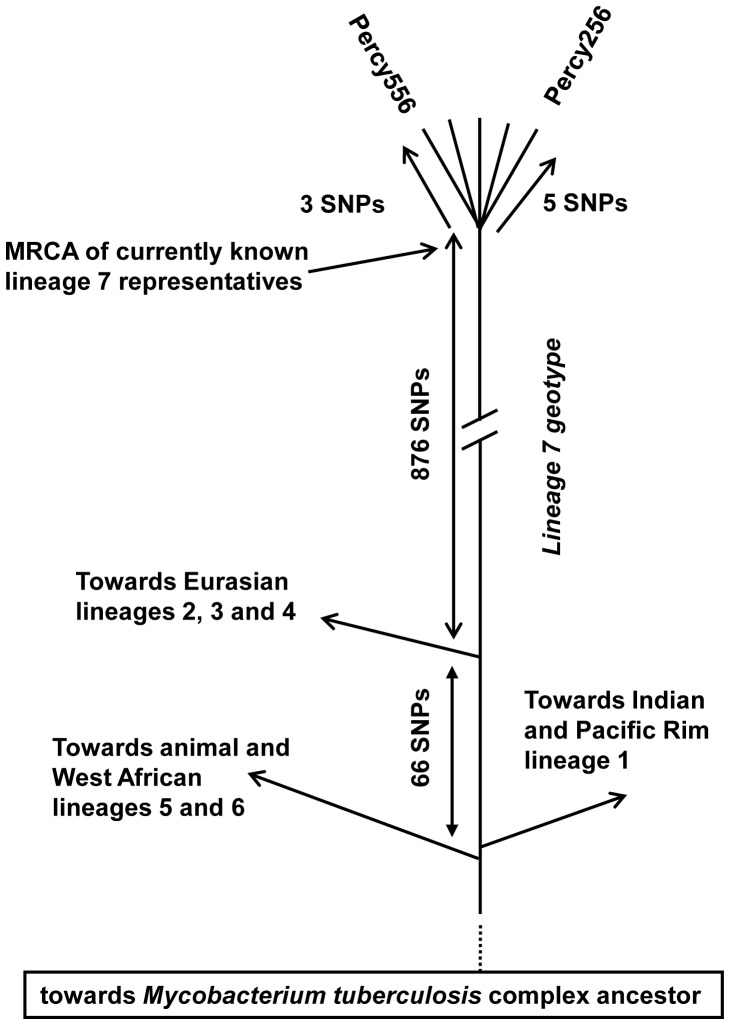
Figure 4. Schematic representation of the main historic events along the lineage 7 and Percy256-Percy556 associated geotype.
The evolution of lineage 7 is displayed in a linear fashion from the M. tuberculosis ancestor (the obligate human pathogen in contrast to its environmental unknown Mycobacteria progenitor) to the Percy256-Percy556 geotype representative. The relative timing of the different splits is indicated. The hypothetical temporal succession of the split of the two Ancestral superlineages indicated here is suggested by the slightly abnormal mutation pattern along branch (6,7). More precise rooting of the MTBC will be needed to test this hypothesis.
Figure 5
Figure 5. Genetic distances within an outbreak.
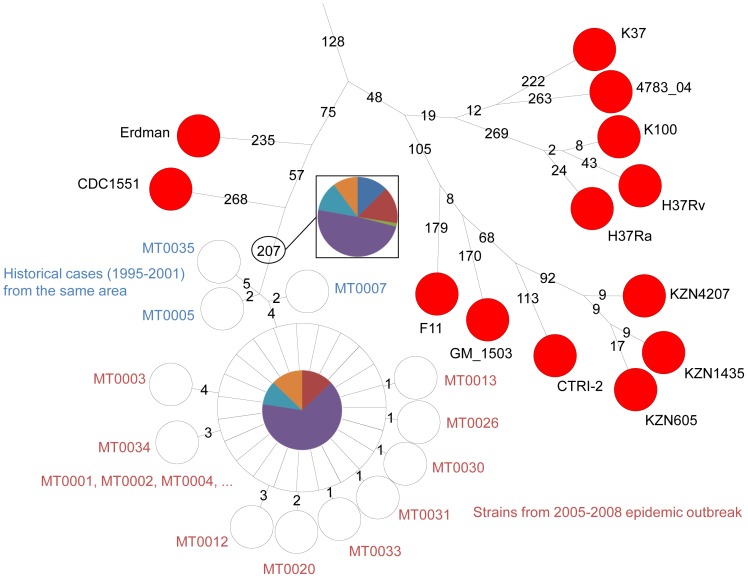
Investigation of 32 M. tuberculosis outbreak isolates sampled in 2005–2008 and 3 historical isolates sampled in 1995–2001 from the investigation by . The sequence reads were analysed together with the other genomes using the same SNP selection rules. The three historical samples collected a few years earlier in the same region are numbered in blue. Twenty-two outbreak samples corresponding to the central node show an identical genotype. Nine samples numbered in red are one to four SNPs away from the central node in a star like pattern. MT0001 the most likely index case belongs to the central node. Each branch length (number of SNPs) is indicated in black, logarithmic scaling is used. The proportion of the different mutations detected among historical and outbreak isolates is shown using the same color code as in Figure 7.
Figure 6
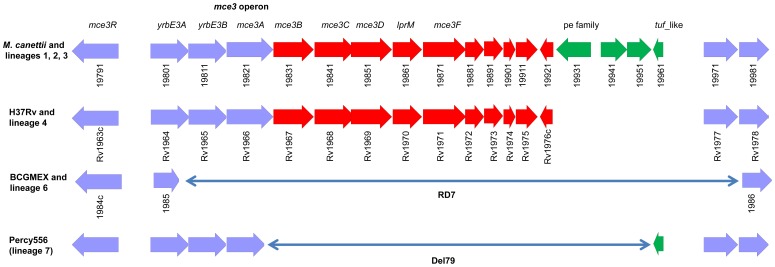
Figure 6. comparison of the Percy556 mce3 deletion 79 with the organisation of the operon in H37Rv, in “M. canettii” strain CIPT140010059, and in M. bovis BCG.
Four different organizations are observed. The most parsimonious explanation is that the M. canettii configuration represents the ancestral situation from which 3 different deletions are derived via at least 2 independent deletion events.
Figure 7
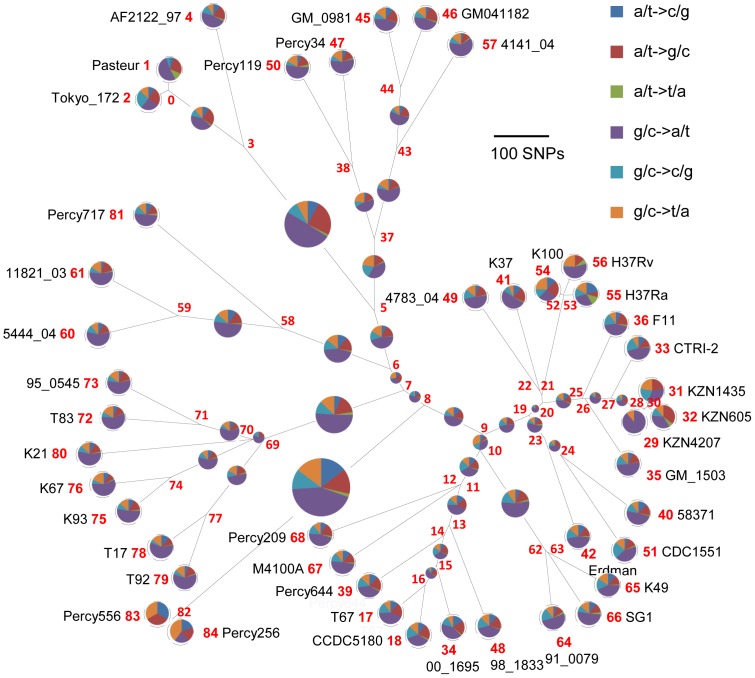
Figure 7. Mutation ratio along the MTBC complex.
The proportion of each mutation type on each branch of the Figure 3 minimum spanning tree was calculated. The disk size reflects the branch length except for terminal branches (leaves) for which identical size disks are used. The mutation direction is deduced by comparing the genotypes of the hypothetical nodes (numbered in red) and considering node 7 as the ancestral node. The color code and branch scale are indicated. The disk on branch (6,7) is slightly abnormal, suggesting that the MTBC MRCA is located somewhere along this branch rather than coincident with node 7.

References

    1. Rothschild BM, Martin LD, Lev G, Bercovier H, Bar-Gal GK, et al. (2001) Mycobacterium tuberculosis complex DNA from an extinct bison dated 17,000 years before the present. Clin Infect Dis 33: 305–311. - PubMed
    1. Hershkovitz I, Donoghue HD, Minnikin DE, Besra GS, Lee OY, et al. (2008) Detection and molecular characterization of 9,000-year-old Mycobacterium tuberculosis from a Neolithic settlement in the Eastern Mediterranean. PLoS One 3: e3426. - PMC - PubMed
    1. Crubezy E, Ludes B, Poveda JD, Clayton J, Crouau-Roy B, et al. (1998) Identification of Mycobacterium DNA in an Egyptian Pott's disease of 5,400 years old. C R Acad Sci III 321: 941–951. - PubMed
    1. Salo WL, Aufderheide AC, Buikstra J, Holcomb TA (1994) Identification of Mycobacterium tuberculosis DNA in a pre-Columbian Peruvian mummy. Proc Natl Acad Sci U S A 91: 2091–2094. - PMC - PubMed
    1. Zink AR, Sola C, Reischl U, Grabner W, Rastogi N, et al. (2003) Characterization of Mycobacterium tuberculosis complex DNAs from Egyptian mummies by spoligotyping. J Clin Microbiol 41: 359–367. - PMC - PubMed

Publication types