


Long-term upregulation of inflammation and suppression of cell proliferation in the brain of adult rats exposed to traumatic brain injury using the controlled cortical impact model
- PMID: 23301065
- PMCID: PMC3536766
- DOI: 10.1371/journal.pone.0053376
Long-term upregulation of inflammation and suppression of cell proliferation in the brain of adult rats exposed to traumatic brain injury using the controlled cortical impact model
Erratum in
- PLoS One. 2013;8(8). doi:10.1371/annotation/a04a7468-d105-42f3-ba47-263ea2864681. Diamond, David [corrected to Diamond, David M]
Abstract
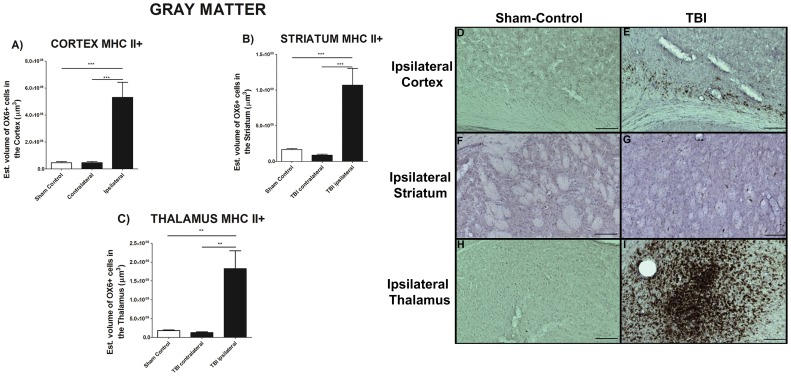
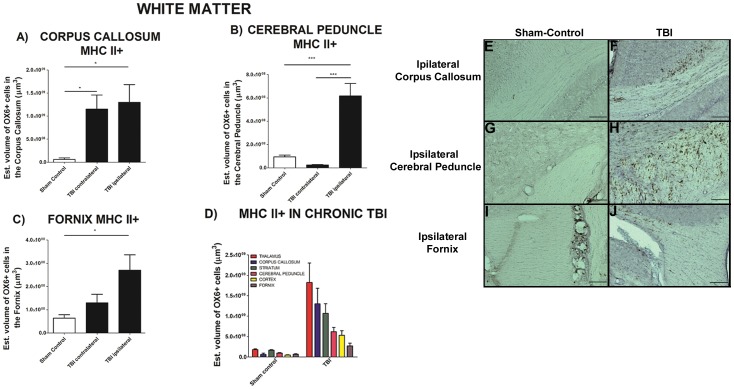
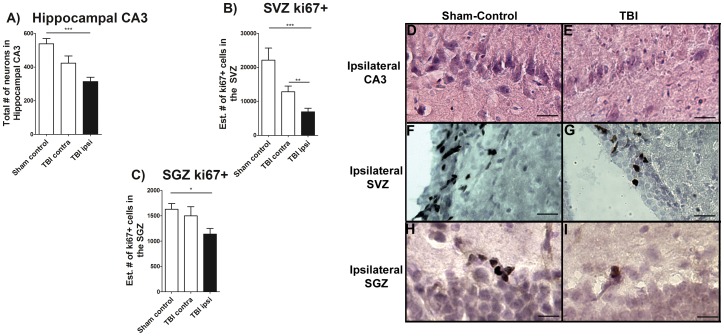
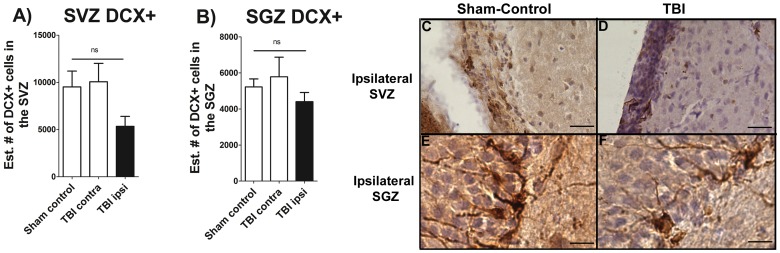
The long-term consequences of traumatic brain injury (TBI), specifically the detrimental effects of inflammation on the neurogenic niches, are not very well understood. In the present in vivo study, we examined the prolonged pathological outcomes of experimental TBI in different parts of the rat brain with special emphasis on inflammation and neurogenesis. Sixty days after moderate controlled cortical impact injury, adult Sprague-Dawley male rats were euthanized and brain tissues harvested. Antibodies against the activated microglial marker, OX6, the cell cycle-regulating protein marker, Ki67, and the immature neuronal marker, doublecortin, DCX, were used to estimate microglial activation, cell proliferation, and neuronal differentiation, respectively, in the subventricular zone (SVZ), subgranular zone (SGZ), striatum, thalamus, and cerebral peduncle. Stereology-based analyses revealed significant exacerbation of OX6-positive activated microglial cells in the striatum, thalamus, and cerebral peduncle. In parallel, significant decrements in Ki67-positive proliferating cells in SVZ and SGZ, but only trends of reduced DCX-positive immature neuronal cells in SVZ and SGZ were detected relative to sham control group. These results indicate a progressive deterioration of the TBI brain over time characterized by elevated inflammation and suppressed neurogenesis. Therapeutic intervention at the chronic stage of TBI may confer abrogation of these deleterious cell death processes.
Conflict of interest statement
Figures
References
-
- Faul M, Xu L, Wald MM, Coronado VG (2010) Traumatic Brain Injury in the United States: Emergency Department Visits, Hospitalizations and Deaths 2002–2006. Atlanta (GA): Centers for Disease Control and Prevention, National Center for Injury Prevention and Control.
-
- Mammis A, McIntosh TK, Maniker AH (2009) Erythropoietin as a neuroprotective agent in traumatic brain injury Review. Surg Neurol 71: 527–531; discussion 531. - PubMed
-
- Liu CY (2008) Combined therapies: National Institute of Neurological Disorders and Stroke funding opportunity in traumatic brain injury research. Neurosurgery 63: N12. - PubMed
-
- Yu S, Kaneko Y, Bae E, Stahl CE, Wang Y, et al. (2009) Severity of controlled cortical impact traumatic brain injury in rats and mice dictates degree of behavioral deficits. Brain Res 1287: 157–163. - PubMed
Publication types
MeSH terms
Substances
Grants and funding
LinkOut - more resources
Full Text Sources
Other Literature Sources
