


Functional capacity and assistance from the caregiver during daily activities in Brazilian children with cerebral palsy
- PMID: 23302576
- PMCID: PMC3599980
- DOI: 10.1186/1755-7682-6-1
Functional capacity and assistance from the caregiver during daily activities in Brazilian children with cerebral palsy
Abstract
Background: Cerebral Palsy (CP) presents changes in posture and movement as a core characteristic, which requires multiprofessional clinical treatments during children's habilitation or rehabilitation. Besides clinical treatment, it is fundamental that professionals use evaluation systems to quantify the difficulties presented to the individual and their families in their daily lives. We aimed to investigate the functional capacity of individuals with CP and the amount of assistance required by the caregiver in day-to-day activities.
Methods: Twenty patients with CP, six-year-old on average, were evaluated. The Pediatric Evaluation Inventory of Incapacities was used (PEDI - Pediatric Evaluation Disability Inventory), a system adapted for Brazil that evaluates child's dysfunction in three 3 dimensions: self-care, mobility and social function. To compare the three areas, repeated measures analysis of variance (ANOVA) were used.
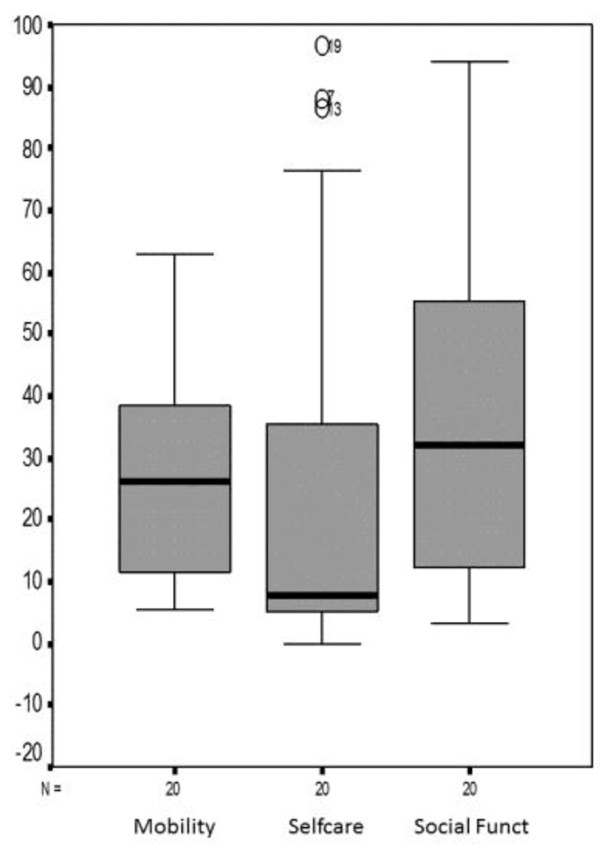
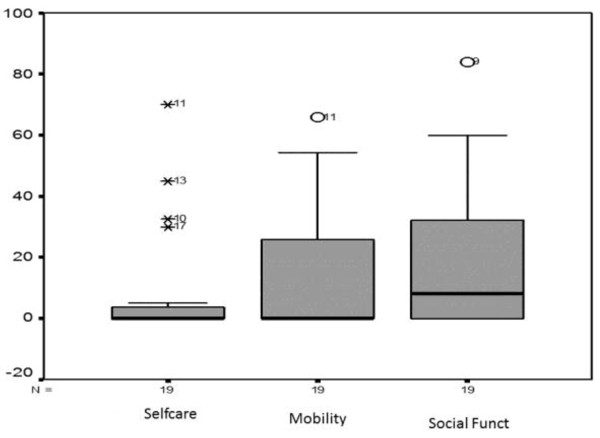
Results: We found the following results regarding the functional capacity of children: self-care, 27.4%, ±17.5; mobility, 25.8%, ±33.3 and social function, 36.3%, ±27.7. The results of the demand of aid from the caregiver according to each dimension were: self-care, 9.7%, ±19.9; mobility, 14.1%, ± 20.9 and social function, 19.8%, ±26.1.
Conclusion: We indicated that there was no difference between the performance of the subjects in areas of self-care, mobility and social function considering the functional skills and assistance required by the caregiver.
Figures
References
-
- Gorter JW. Rehabilitative therapies for the child with cerebral palsy: focus on Family, Function & Fitness. Minerva Pediatr. 2009;4:425–440. - PubMed
-
- Rosenbaum P, Paneth N, Leviton A, Goldstein M, Bax M. The definition and classification of cerebral palsy. Dev Med Child Neurol. 2007;49:8–14. - PubMed
LinkOut - more resources
Full Text Sources
Other Literature Sources
Miscellaneous