


Alarming features: birds use specific acoustic properties to identify heterospecific alarm calls
- PMID: 23303539
- PMCID: PMC3574322
- DOI: 10.1098/rspb.2012.2539
Alarming features: birds use specific acoustic properties to identify heterospecific alarm calls
Abstract
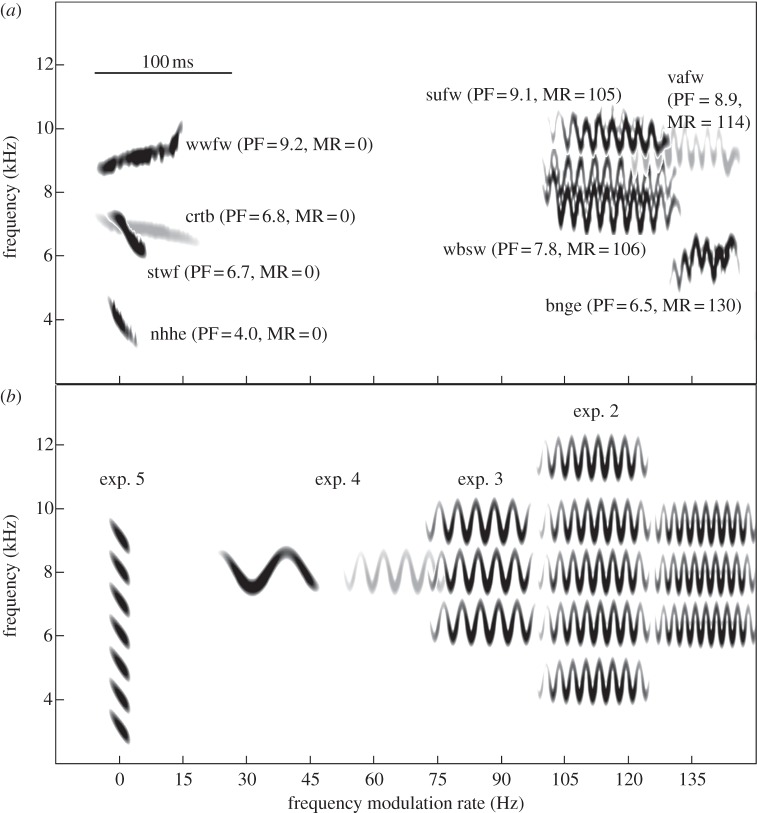
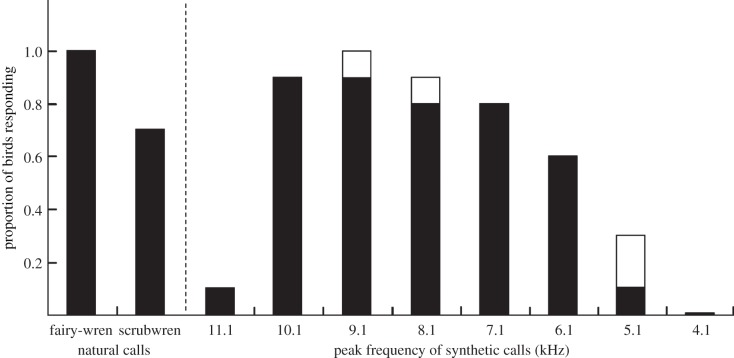
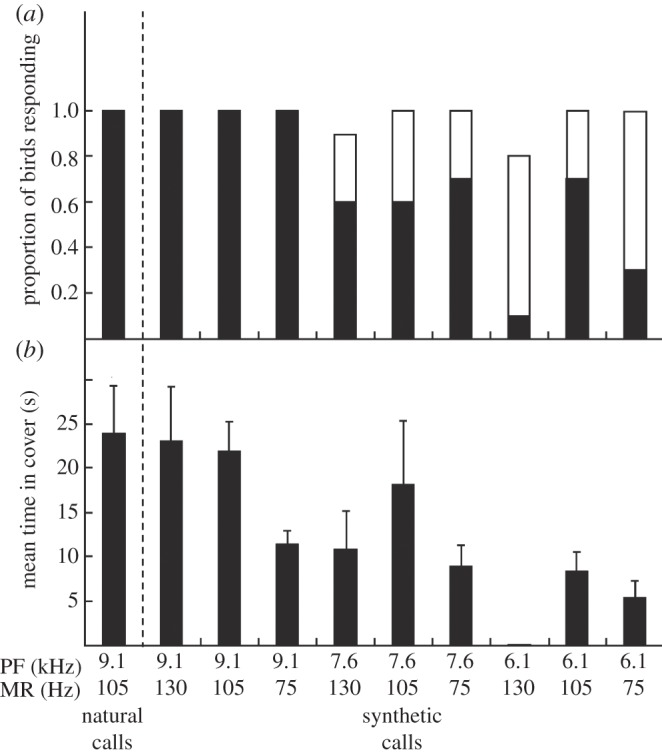
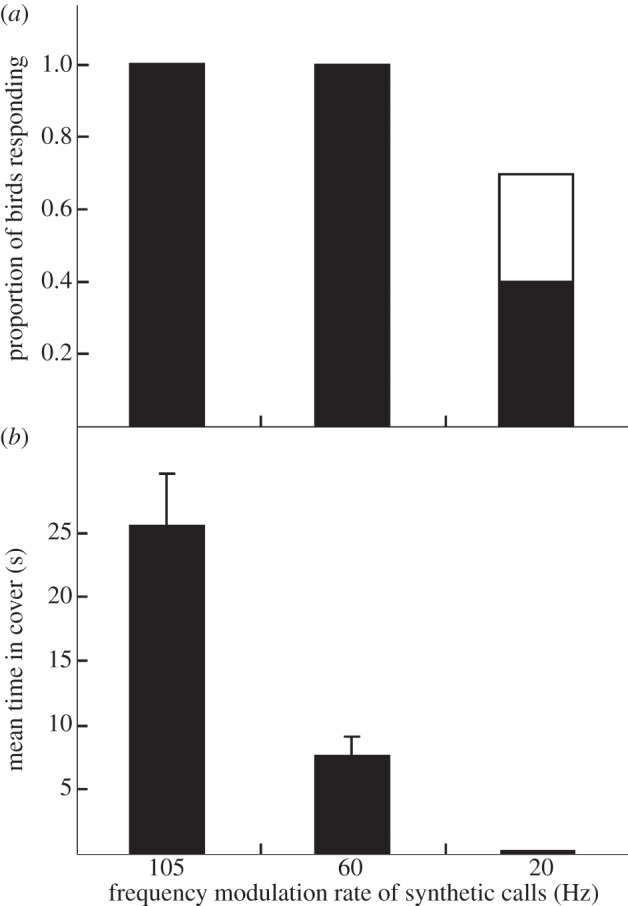
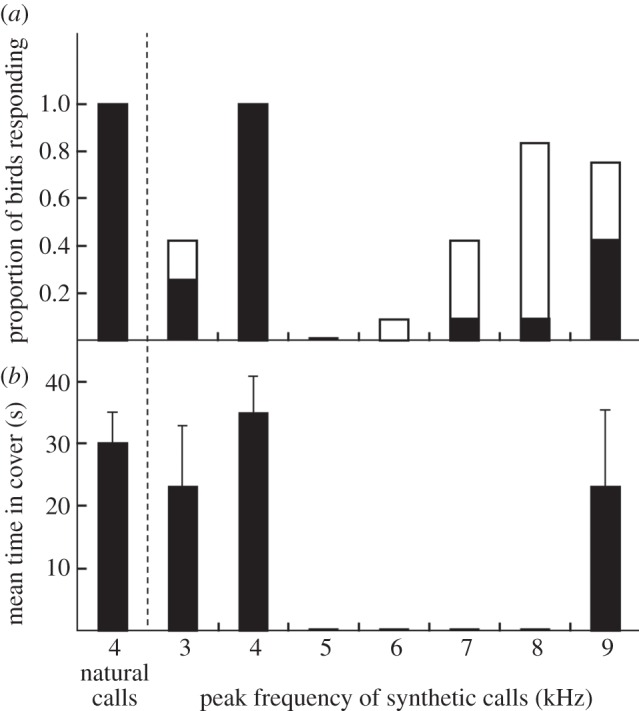
Vertebrates that eavesdrop on heterospecific alarm calls must distinguish alarms from sounds that can safely be ignored, but the mechanisms for identifying heterospecific alarm calls are poorly understood. While vertebrates learn to identify heterospecific alarms through experience, some can also respond to unfamiliar alarm calls that are acoustically similar to conspecific alarm calls. We used synthetic calls to test the role of specific acoustic properties in alarm call identification by superb fairy-wrens, Malurus cyaneus. Individuals fled more often in response to synthetic calls with peak frequencies closer to those of conspecific calls, even if other acoustic features were dissimilar to that of fairy-wren calls. Further, they then spent more time in cover following calls that had both peak frequencies and frequency modulation rates closer to natural fairy-wren means. Thus, fairy-wrens use similarity in specific acoustic properties to identify alarms and adjust a two-stage antipredator response. Our study reveals how birds respond to heterospecific alarm calls without experience, and, together with previous work using playback of natural calls, shows that both acoustic similarity and learning are important for interspecific eavesdropping. More generally, this study reconciles contrasting views on the importance of alarm signal structure and learning in recognition of heterospecific alarms.
Figures
References
-
- Vitousek MN, Adelman JS, Gregory NC, St Clair JJH. 2007. Heterospecific alarm call recognition in a non-vocal reptile. Biol. Lett. 3, 632–634 10.1098/rsbl.2007.0443 (doi:10.1098/rsbl.2007.0443) - DOI - PMC - PubMed
-
- Ito R, Mori A. 2010. Vigilance against predators induced by eavesdropping on heterospecific alarm calls in a non-vocal lizard Oplurus cuvieri cuvieri (Reptilia: Iguania). Proc. R. Soc. B 277, 1275–1280 10.1098/rspb.2009.2047 (doi:10.1098/rspb.2009.2047) - DOI - PMC - PubMed
-
- Nuechterlein GL. 1981. ‘Information parasitism’ in mixed colonies of western grebes and Forster's terns. Anim. Behav. 29, 985–989 10.1016/S0003-3472(81)80051-6 (doi:10.1016/S0003-3472(81)80051-6) - DOI
-
- Magrath RD, Pitcher BJ, Gardner JL. 2007. A mutual understanding? Interspecific responses by birds to each other's aerial alarm calls. Behav. Ecol. 18, 944–951 10.1093/beheco/arm063 (doi:10.1093/beheco/arm063) - DOI
-
- Forsman JT, Monkkonen M. 2001. Responses by breeding birds to heterospecific song and mobbing call playbacks under varying predation risk. Anim. Behav. 62, 1067–1073 10.1006/anbe.2001.1856 (doi:10.1006/anbe.2001.1856) - DOI
Publication types
MeSH terms
LinkOut - more resources
Full Text Sources
Other Literature Sources
Miscellaneous
