


A qualitative analysis of EHR clinical document synthesis by clinicians
- PMID: 23304398
- PMCID: PMC3540510
A qualitative analysis of EHR clinical document synthesis by clinicians
Abstract
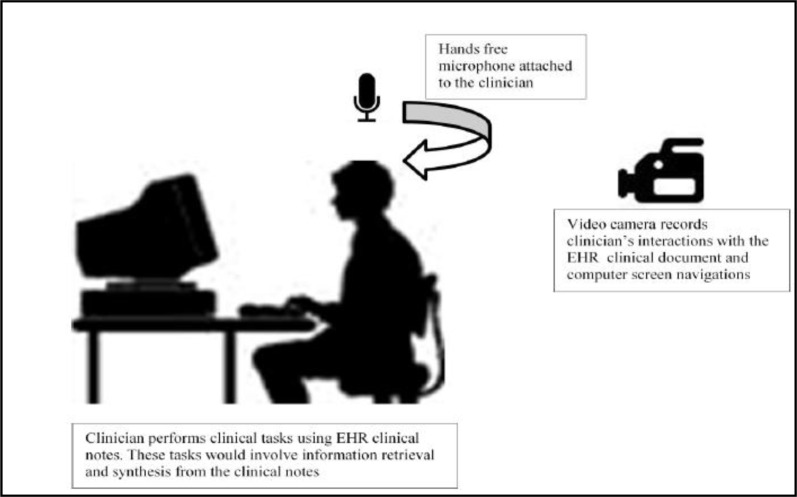
Clinicians utilize electronic health record (EHR) systems during time-constrained patient encounters where large amounts of clinical text must be synthesized at the point of care. Qualitative methods may be an effective approach for uncovering cognitive processes associated with the synthesis of clinical documents within EHR systems. We utilized a think-aloud protocol and content analysis with the goal of understanding cognitive processes and barriers involved as medical interns synthesized patient clinical documents in an EHR system to accomplish routine clinical tasks. Overall, interns established correlations of significance and meaning between problem, symptom and treatment concepts to inform hypotheses generation and clinical decision-making. Barriers identified with synthesizing EHR documents include difficulty searching for patient data, poor readability, redundancy, and unfamiliar specialized terms. Our study can inform recommendations for future designs of EHR clinical document user interfaces to aid clinicians in providing improved patient care.
Figures


References
-
- Arocha J, Wang D, Patel V. Identifying reasoning strategies in medical decision making: A methodological guide. J Biomed Inform. 2005;38(2):154–171. - PubMed
-
- Saitwal H, Feng X, Walji M, Patel V, Zhang J. Assessing performance of an Electronic Health Record (EHR) using Cognitive Task Analysis. Int J Med Inf. 2010;79(7):501–506. 7. - PubMed
-
- Bui AAT, Aberle DR, Kangarloo Hooshang. TimeLine: Visualizing Integrated Patient Records. Information Technology in Biomedicine, IEEE Transactions. 2007;11(4):462–473. - PubMed
Publication types
MeSH terms
Grants and funding
LinkOut - more resources
Full Text Sources