


Why do parents prefer to know the fetal sex as part of invasive prenatal testing?
- PMID: 23304540
- PMCID: PMC3530785
- DOI: 10.5402/2012/524537
Why do parents prefer to know the fetal sex as part of invasive prenatal testing?
Abstract
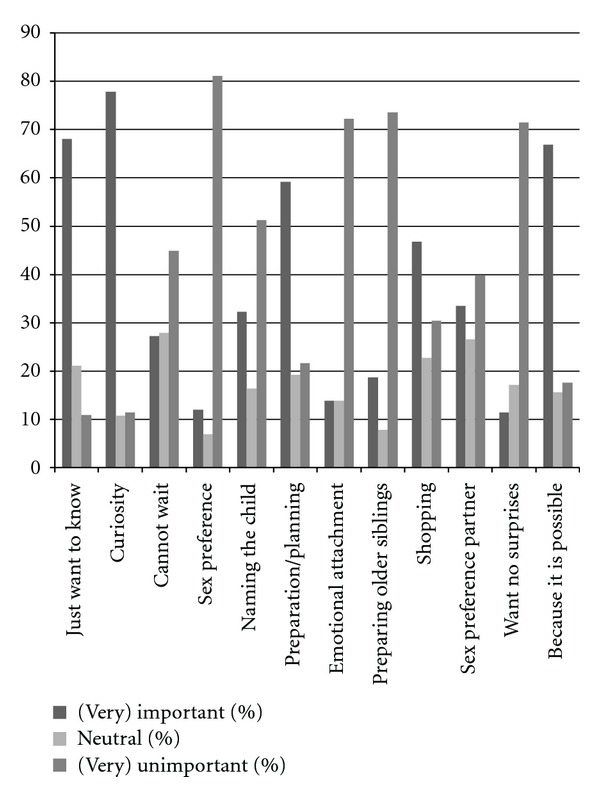
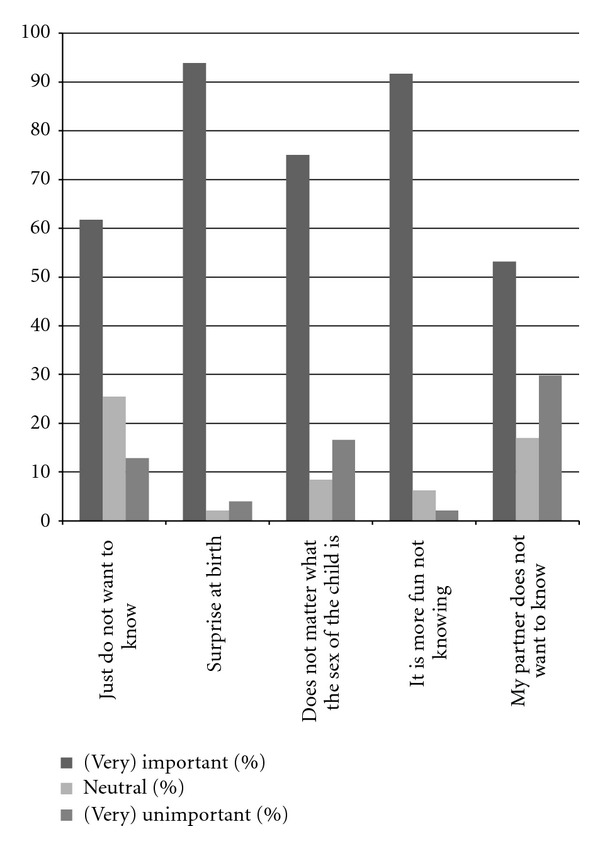
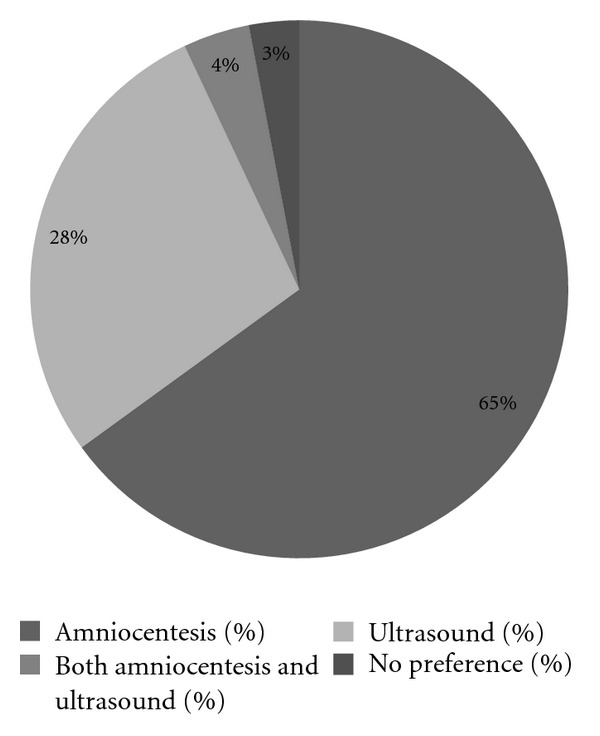
Objectives. The aim of this study was to determine whether prospective parents, primarily referred for prenatal diagnosis to exclude Down syndrome, prefer to know the fetal sex as part of invasive testing. Methods. In this prospective study 400 pregnant women undergoing amniocentesis were invited to answer a questionnaire, including information about demographic factors, current pregnancy, and previous children. In two open-ended questions they were asked why they wanted to know the fetal sex after amniocentesis or ultrasound investigation. Scores were given for reasons that could have played a role in the wish whether or not to know the sex of their unborn child. Results. A total of 210 (52.5%) questionnaires were completed. Overall, 69.0% was interested to know the fetal sex as part of the diagnostic test result. The most important reasons were curiosity (77.8%), "just want to know" (68.0%), and "because it is possible" (66.8%). The overall knowledge of sex chromosomal disorders appeared low and did not seem to affect the parent's wish to know the fetal sex. Almost all women (96.6%) planned to have a 20-week ultrasound scan and 96.2% thought the scan to be reliable in detecting the fetal sex. A minority (28%) was willing to learn the fetal sex by ultrasound examination, whereas 65% preferred to learn the fetal sex only after the amniocentesis. Conclusion. Personal values affect the parental desire to know or not to know the fetal sex. This does not appear to be affected by invasive prenatal testing and/or genetic knowledge of sex chromosomal disorders.
Figures
References
-
- Chiu RWK, Lo YMD. Application of fetal DNA in maternal plasma for noninvasive prenatal diagnosis. Expert Review of Molecular Diagnostics. 2002;2(1):32–40. - PubMed
-
- Rijnders RJP, Christiaens GCML, Bossers B, van der Smagt JJ, van der Schoot CE, De Haas M. Clinical applications of cell-free fetal DNA from maternal plasma. Obstetrics and Gynecology. 2004;103(1):157–164. - PubMed
-
- Rijnders RJ, van der Schoot CE, Bossers B, de Vroede MA, Christiaens GC. Fetal sex determination from maternal plasma in pregnancies at risk for Congenital Adrenal Hyperplasia. Obstetrics & Gynecology. 2001;98(3):374–378. - PubMed
-
- Linden MG, Bender BG. Genetic counseling for sex chromosome abnormalities. American Journal of Medical Genetics. 2002;110(1):3–10. - PubMed
-
- García E, Timmermans DRM, van Leeuwen E. Rethinking autonomy in the context of prenatal screening decision-making. Prenatal Diagnosis. 2008;28(2):115–120. - PubMed
LinkOut - more resources
Full Text Sources
