


Twin gestation in a septate bicornuate uterus
- PMID: 23304585
- PMCID: PMC3529443
- DOI: 10.1155/2012/563085
Twin gestation in a septate bicornuate uterus
Abstract
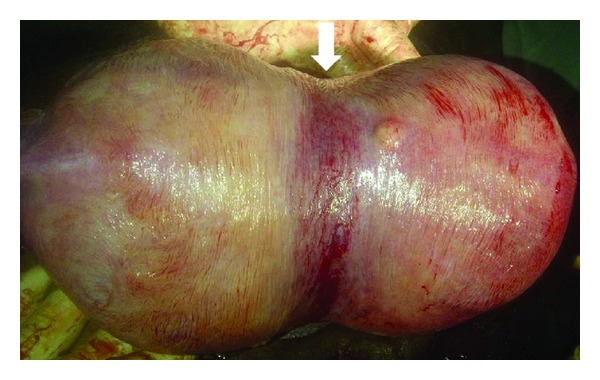
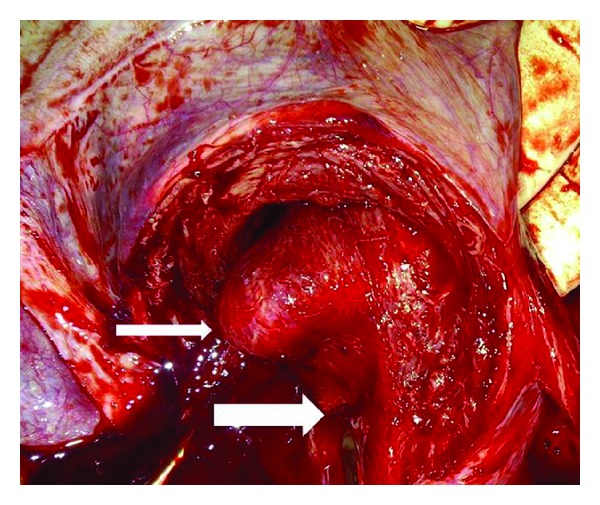
Bicornuate and septate uteri are among the commonest Mullerian anomalies. They are sporadic and fairly distinguished, but hybrid deformities can occur. This combination creates aetiological and clinical difficulties. The alternative theory of concurrent fusion and septal resorption of the Mullerian duct is seen as the basis of the altered foetal embryology, while the favourable outlook of a bicornuate uterus may be offset by the suboptimal implantation across the avascular septum. Obstetric care is based on empirical interventions deduced from case series, with varied and inconsistent outcomes. We present a 32-year-old primipara with a dizygotic twin gestation in separate compartments of a septate bicornuate uterus. She had an elective bilateral caesarean delivery at term with an accidental septal resection for morbidly adherent placenta. Although a summation of obstetric risks is a possibility, an excellent outcome was observed.
Figures
References
-
- Hua M, Odibo AO, Longman RE, MacOnes GA, Roehl KA, Cahill AG. Congenital uterine anomalies and adverse pregnancy outcomes. American Journal of Obstetrics and Gynecology. 2011;205(6):558.e1–558.e5. - PubMed
-
- Saravelos SH, Cocksedge KA, Li TC. Prevalence and diagnosis of congenital uterine anomalies in women with reproductive failure: a critical appraisal. Human Reproduction Update. 2008;14(5):415–429. - PubMed
-
- Lin PC, Bhatnagar KP, Nettleton GS, Nakajima ST. Female genital anomalies affecting reproduction. Fertility and Sterility. 2002;78(5):899–915. - PubMed
-
- Vallerie AM, Breech LL. Update in Mullerian anomalies: diagnosis, management, and outcomes. Current Opinion in Obstetrics and Gynecology. 2010;22(5):381–387. - PubMed
LinkOut - more resources
Full Text Sources
