


Anti-angiogenic and anti-tumor effects of TAK-593, a potent and selective inhibitor of vascular endothelial growth factor and platelet-derived growth factor receptor tyrosine kinase
- PMID: 23305239
- PMCID: PMC7657107
- DOI: 10.1111/cas.12101
Anti-angiogenic and anti-tumor effects of TAK-593, a potent and selective inhibitor of vascular endothelial growth factor and platelet-derived growth factor receptor tyrosine kinase
Abstract
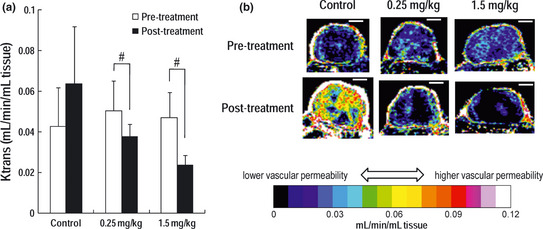
We recently reported that TAK-593, a novel imidazo[1,2-b]pyridazine derivative, is a highly potent and selective inhibitor of the vascular endothelial growth factor (VEGF) and platelet derived growth factor (PDGF) receptor tyrosine kinase families. Moreover, TAK-593 exhibits a uniquely long-acting inhibitory profile towards VEGF receptor 2 (VEGFR2) and PDGF receptor β (PDGFRβ). In this study, we demonstrated that TAK-593 potently inhibits VEGF- and PDGF-stimulated cellular phosphorylation and proliferation of human umbilical vein endothelial cells and human coronary artery smooth muscle cells. TAK-593 also potently inhibits VEGF-induced tube formation of endothelial cells co-cultured with fibroblasts. Oral administration of TAK-593 exhibited strong anti-tumor effects against various human cancer xenografts along with good tolerability despite a low level of plasma exposure. Even after the blood and tissue concentrations of TAK-593 decreased below the detectable limit, a pharmacodynamic marker (phospho VEGFR2) was almost completely suppressed, indicating that its long duration of enzyme inhibition might contribute to the potent activity of TAK-593. Immunohistochemical staining indicated that TAK-593 showed anti-proliferative and pro-apoptotic effects on tumors along with a decrease of vessel density and inhibition of pericyte recruitment to microvessels in vivo. Furthermore, dynamic contrast-enhanced magnetic resonance imaging revealed that TAK-593 reduced tumor vessel permeability prior to the onset of anti-tumor activity. In conclusion, TAK-593 is an extremely potent VEGFR/PDGFR kinase inhibitor whose potent anti-angiogenic activity suggests therapeutic potential for the treatment of solid tumors.
© 2013 Japanese Cancer Association.
Figures


References
-
- Folkman J. What is the evidence that tumors are angiogenesis dependent? J Natl Cancer Inst 1990; 82: 4–6. - PubMed
-
- Klagsbrun M, Moses MA. Molecular angiogenesis. Chem Biol 1999; 6: R217–24. - PubMed
-
- Shweiki D, Itin A, Soffer D, Keshet E. Vascular endothelial growth factor induced by hypoxia may mediate hypoxia‐initiated angiogenesis. Nature 1992; 359: 843–5. - PubMed
-
- Keck PJ, Hauser SD, Krivi G et al Vascular permeability factor, an endothelial cell mitogen related to PDGF. Science 1989; 246: 1309–12. - PubMed
MeSH terms
Substances
LinkOut - more resources
Full Text Sources
Other Literature Sources
Research Materials
Miscellaneous
