


Calcium signaling in cardiac mitochondria
- PMID: 23306007
- PMCID: PMC3627826
- DOI: 10.1016/j.yjmcc.2012.12.021
Calcium signaling in cardiac mitochondria
Abstract
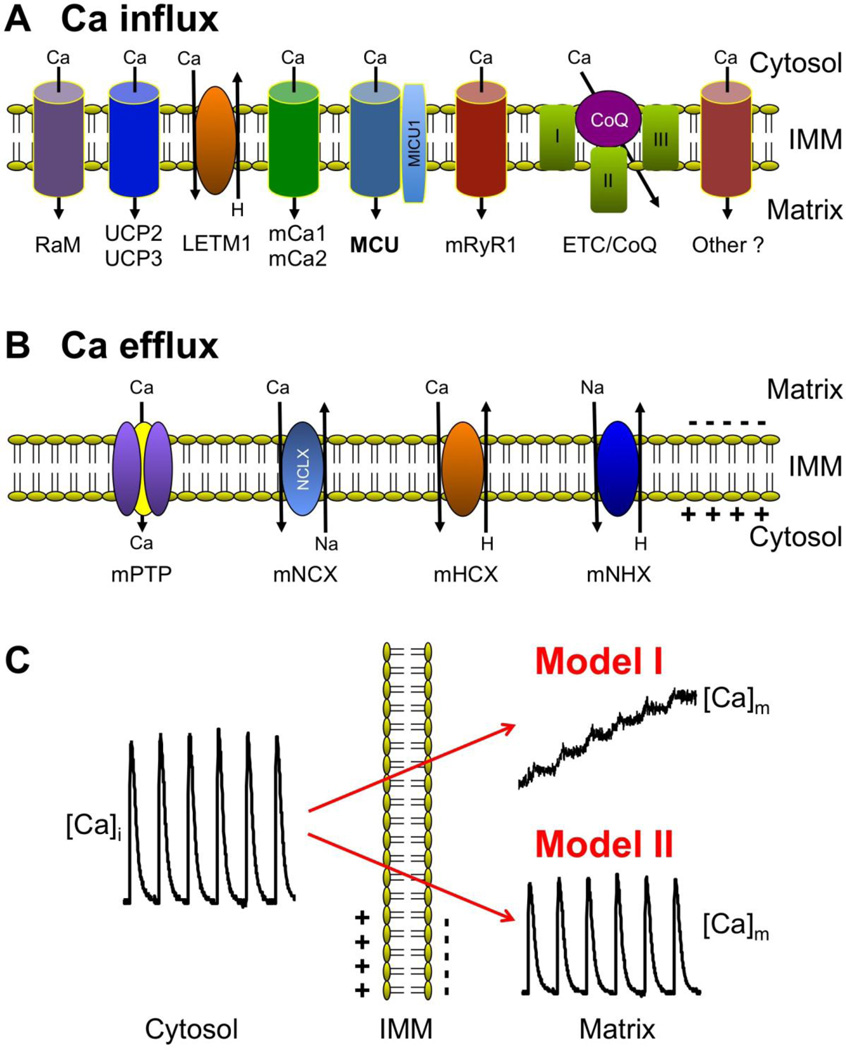
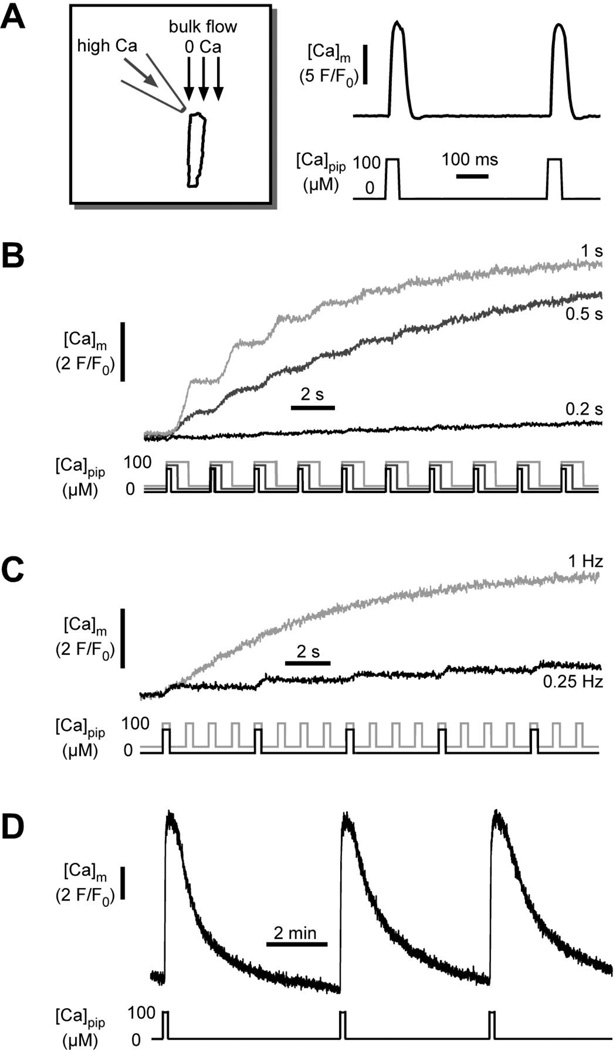
Mitochondrial Ca signaling contributes to the regulation of cellular energy metabolism, and mitochondria participate in cardiac excitation-contraction coupling (ECC) through their ability to store Ca, shape the cytosolic Ca signals and generate ATP required for contraction. The mitochondrial inner membrane is equipped with an elaborate system of channels and transporters for Ca uptake and extrusion that allows for the decoding of cytosolic Ca signals, and the storage of Ca in the mitochondrial matrix compartment. Controversy, however remains whether the fast cytosolic Ca transients underlying ECC in the beating heart are transmitted rapidly into the matrix compartment or slowly integrated by the mitochondrial Ca transport machinery. This review summarizes established and novel findings on cardiac mitochondrial Ca transport and buffering, and discusses the evidence either supporting or arguing against the idea that Ca can be taken up rapidly by mitochondria during ECC.
Copyright © 2012 Elsevier Ltd. All rights reserved.
Figures
References
-
- Bers DM. Cardiac excitation-contraction coupling. Nature. 2002;415:198–205. - PubMed
-
- Huser J, Blatter LA, Sheu SS. Mitochondrial calcium in heart cells: beat-to- beat oscillations or slow integration of cytosolic transients? J Bioenerg Biomembr. 2000;32:27–33. - PubMed
-
- Dedkova EN, Blatter LA. Mitochondrial Ca(2+) and the heart. Cell Calcium. 2008;44:77–91. - PubMed
Publication types
MeSH terms
Substances
Grants and funding
LinkOut - more resources
Full Text Sources
Other Literature Sources
