Translating the Dietary Approaches to Stop Hypertension (DASH) diet for use in underresourced, urban African American communities, 2010
- PMID: 23306077
- PMCID: PMC3545703
- DOI: 10.5888/pcd10.120088
Translating the Dietary Approaches to Stop Hypertension (DASH) diet for use in underresourced, urban African American communities, 2010
Abstract
Introduction: Randomized trials have demonstrated the effectiveness of the Dietary Approaches to Stop Hypertension (DASH) program for lowering blood pressure; however, program participation has been limited in some populations. The objective of this pilot study was to test the feasibility of using a culturally modified version of DASH among African Americans in an underresourced community.
Methods: This randomized controlled pilot study recruited African Americans in 2 North Carolina neighborhoods who had high blood pressure and used fewer than 3 antihypertension medications. We offered 2 individual and 9 group DASH sessions to intervention participants and 1 individual session and printed DASH educational materials to control participants. We collected data at baseline (March 2010) and 12 weeks (June 2010).
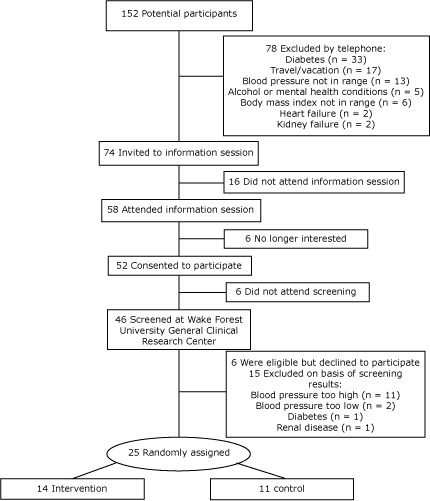
Results: Of 152 potential participants, 25 were randomly assigned to either the intervention (n = 14) or the control (n = 11) group; 22 were women, and 21 were educated beyond high school. At baseline, mean blood pressure was 130/78 mm Hg; 19 participants used antihypertension medications, and mean body mass index was 35.9 kg/m(2). Intervention participants attended 7 of 9 group sessions on average. After 12 weeks, we observed significant increases in fruit and vegetable consumption and increases in participants' confidence in their ability to reduce salt and fat consumption and eat healthier snacks in intervention compared with control participants. We found no significant decreases in blood pressure.
Conclusion: Implementation of a culturally modified, community-based DASH intervention was feasible in our small sample of African Americans, which included people being treated for high blood pressure. Future studies should evaluate the long-term effect of this program in a larger sample.
Figures
References
-
- Rosamond W, Flegal K, Friday G, Furie K, Go A, Greenlund K, et al. Heart disease and stroke statistics — 2007 update: a report from the American Heart Association Statistics Committee and Stroke Statistics Subcommittee. Circulation 2007;115(5):e69–171. 10.1161/CIRCULATIONAHA.106.179918 - DOI - PubMed
-
- Health, United States, 2010: with special feature on death and dying. Hyattsville (MD): National Center for Health Statistics; 2011. - PubMed
Publication types
MeSH terms
Grants and funding
LinkOut - more resources
Full Text Sources
Other Literature Sources
Medical