


Synthesis, structure-activity relationships (SAR) and in silico studies of coumarin derivatives with antifungal activity
- PMID: 23306152
- PMCID: PMC3565321
- DOI: 10.3390/ijms14011293
Synthesis, structure-activity relationships (SAR) and in silico studies of coumarin derivatives with antifungal activity
Abstract
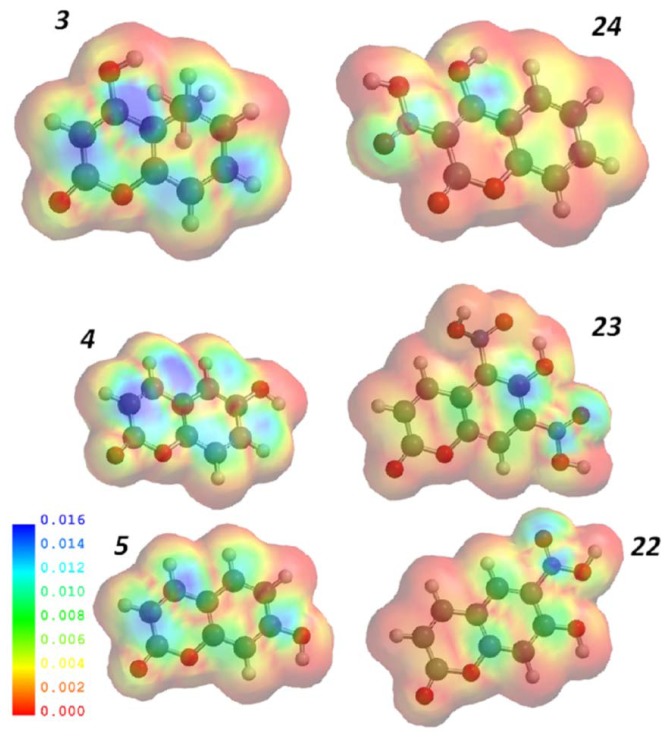
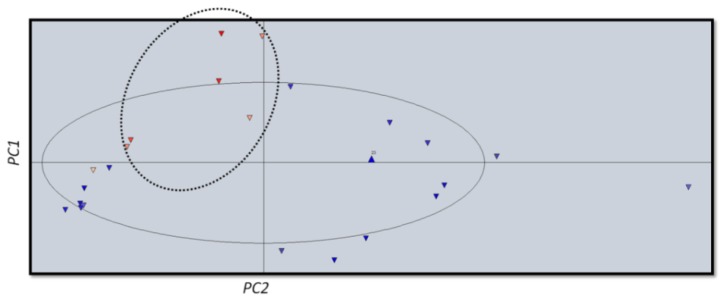
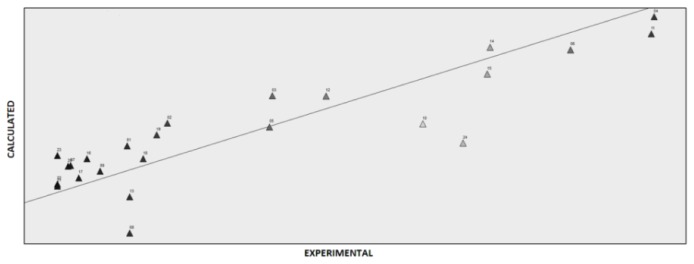
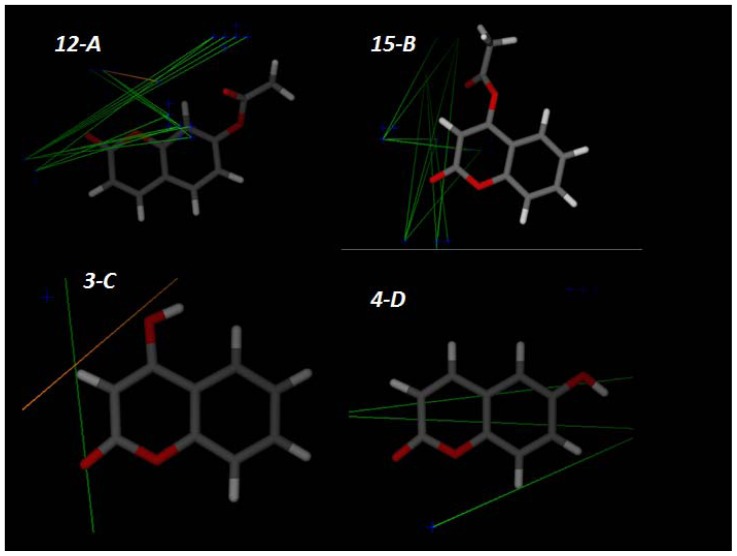
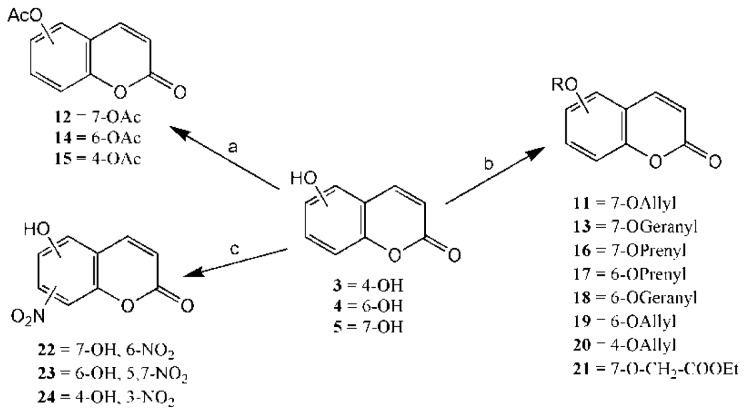
The increased incidence of opportunistic fungal infections, associated with greater resistance to the antifungal drugs currently in use has highlighted the need for new solutions. In this study twenty four coumarin derivatives were screened in vitro for antifungal activity against strains of Aspergillus. Some of the compounds exhibited significant antifungal activity with MICs values ranging between 16 and 32 µg/mL. The structure-activity relationships (SAR) study demonstrated that O-substitutions are essential for antifungal activity. It also showed that the presence of a short aliphatic chain and/or electron withdrawing groups (NO(2) and/or acetate) favor activity. These findings were confirmed using density functional theory (DFT), when calculating the LUMO density. In Principal Component Analysis (PCA), two significant principal components (PCs) explained more than 60% of the total variance. The best Partial Least Squares Regression (PLS) model showed an r2 of 0.86 and q2(cv) of 0.64 corroborating the SAR observations as well as demonstrating a greater probe N1 interaction for active compounds. Descriptors generated by TIP correlogram demonstrated the importance of the molecular shape for antifungal activity.
Figures
References
-
- Mendonça F.J.B., Junior, Lima-Neto R.G., Oliveira T.B., Lima M.C.A., Pitta I.R., Galdino S.L., Cruz R.M.D., Araújo R.S.A., Neves R.P. Synthesis and evaluation of the antifungal activity of 2-(substituted-amino)-4,5-dialkyl-thiophene-3-carbonitrile derivatives. Lat. Am. J. Pharm. 2011;30:1492–1499.
-
- Krappmann S. Tools to study molecular mechanisms of Aspergillus pathogenicity. Trends Microbiol. 2006;14:356–364. - PubMed
-
- Hedayati M.T., Pasqualotto A.C., Warn P.A., Bowyer P., Denning D.W. Aspergillus flavus: Human pathogen, aleergen and mycotoxin producer. Microbiology. 2007;153:1677–1692. - PubMed
-
- Maggi F., Barboni L., Caprioli G., Papa F., Ricciutelli M., Sagratini G., Vittori S. HPLC quantification of coumarin in bastard balm (Melittis melissophyllum L., Lamiaceae) Fitoterapia. 2011;82:1215–1221. - PubMed
Publication types
MeSH terms
Substances
LinkOut - more resources
Full Text Sources
Other Literature Sources
Miscellaneous
