. 2013;8(1):e53043.
doi: 10.1371/journal.pone.0053043. Epub 2013 Jan 7.

Inhibitory influence of Enterococcus faecium on the propagation of swine influenza A virus in vitro

Affiliations

Inhibitory influence of Enterococcus faecium on the propagation of swine influenza A virus in vitro

Zhenya Wang et al. PLoS One. 2013.

Abstract

The control of infectious diseases such as swine influenza viruses (SwIV) plays an important role in food production both from the animal health and from the public health point of view. Probiotic microorganisms and other health improving food supplements have been given increasing attention in recent years, but, no information on the effects of probiotics on swine influenza virus is available. Here we address this question by assessing the inhibitory potential of the probiotic Enterococcus faecium NCIMB 10415 (E. faecium) on the replication of two porcine strains of influenza virus (H1N1 and H3N2 strain) in a continuous porcine macrophage cell line (3D4/21) and in MDBK cells. Cell cultures were treated with E. faecium at the non-toxic concentration of 1×10(6) CFU/ml in growth medium for 60 to 90 min before, during and after SwIV infection. After further incubation of cultures in probiotic-free growth medium, cell viability and virus propagation were determined at 48 h or 96 h post infection. The results obtained reveal an almost complete recovery of viability of SwIV infected cells and an inhibition of virus multiplication by up to four log units in the E. faecium treated cells. In both 3D4/21- and MDBK-cells a 60 min treatment with E. faecium stimulated nitric oxide (NO) release which is in line with published evidence for an antiviral function of NO. Furthermore, E. faecium caused a modified cellular expression of selected mediators of defence in 3D4-cells: while the expression of TNF-α, TLR-3 and IL-6 were decreased in the SwIV-infected and probiotic treated cells, IL-10 was found to be increased. Since we obtained experimental evidence for the direct adsorptive trapping of SwIV through E. faecium, this probiotic microorganism inhibits influenza viruses by at least two mechanisms, direct physical interaction and strengthening of innate defence at the cellular level.


Conflict of interest statement

Competing Interests: The authors have declared that no competing interests exist.

Figures

Figure 1
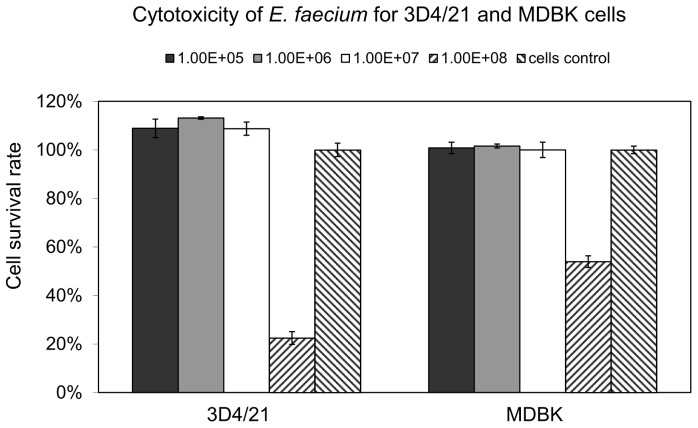
Figure 1. Cytotoxicity of E. faecium for 3D4/21 and MDBK cells.
Different concentrations of E. faecium (1.00E+05, 1.00E+06, 1.00E+07, 1.00E+08 CFU/ml) were added to subconfluent 3D4/21 and MDBK cell monolayers and cell viability was assessed by an MTT assay after a 72 h exposure. Cell survival rates are given as relative values taking non-treated cells as 100%. The means ± standard deviations from three independent experiments are shown.
Figure 2
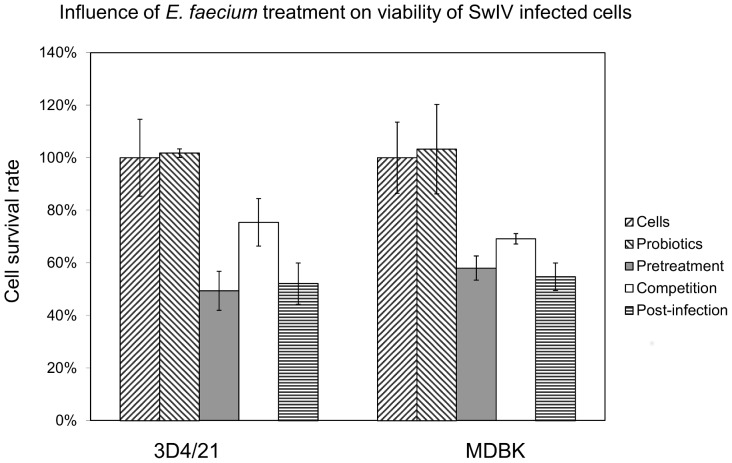
Figure 2. Cell viability of 3D4/21- and MDBK-cells treatment with E. faecium.
Results are expressed as percent cell survival rates where non-treated and non-infected cells (first bar) served as controls (set at 100% survival rate) and SwIV-infected cells without E. faecium treatment as the complete damage marker (set at 0% survival rate). Virus infected cells with E. faecium treatment according to the modalities described in Fig. 6 are shown in last three columns of each group. Results represent means ± standard deviations from three independent experiments.
Figure 3
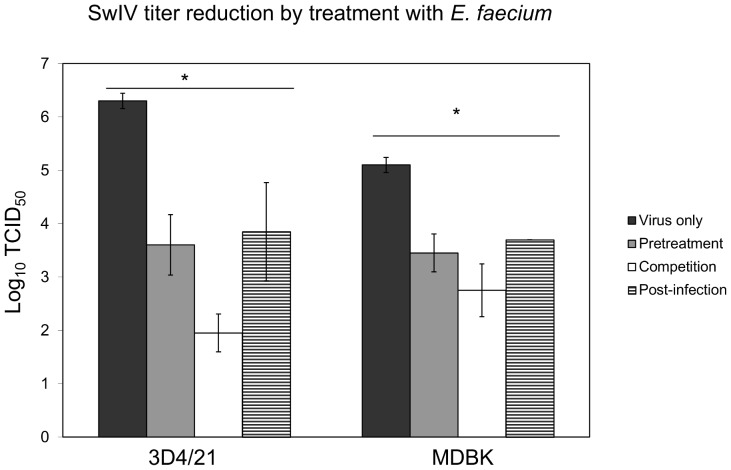
Figure 3. Influence of E. faecium on virus production in SwIV infected cells.
106 CFU/ml E. faecium were added for 60 or 90 min to cells in 96-well plates according to the experimental design described in Fig. 6. Infection with SwIV was done at a MOI of 0.01. At 48 or 96 hpi, the supernatants were collected and virus titers determined by TCID50. Results are means ± standard deviations from three independent experiments. *P<0.05.
Figure 4
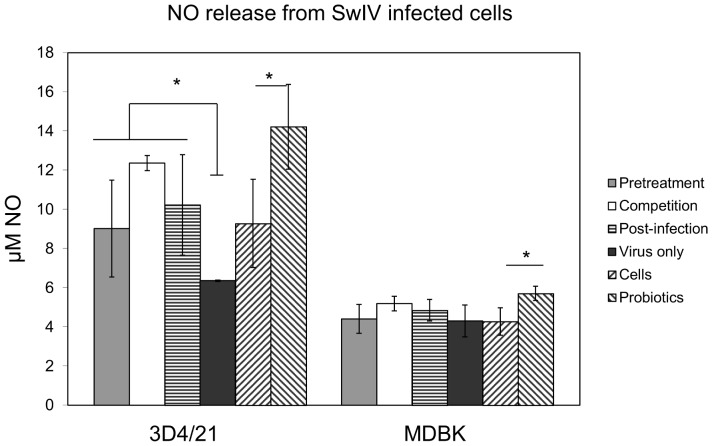
Figure 4. Effect of E. faecium on the nitric oxide (NO) release from 3D4/21 and MDBK cells.
Released NO in the supernatant was measured by Griess assay according to the modalities described in Fig. 6. Cells only and cells treated with E. faecium are shown in last two columns of each group. Results are means ± standard deviations from three independent experiments. *P<0.05.
Figure 5
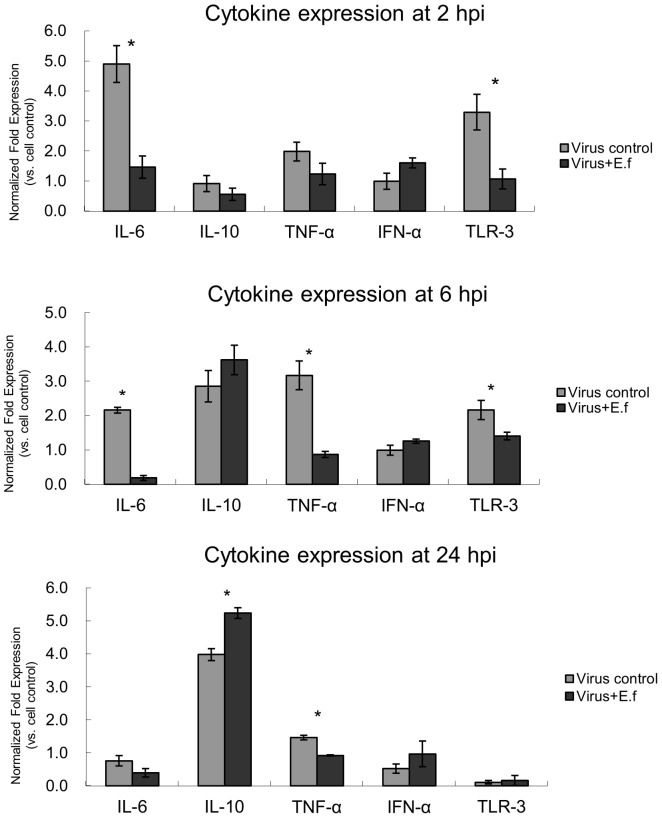
Figure 5. Cytokine expression at 2 h, 6 h and 24 h.
Cytokine response of 3D4/21 cells to SwIV challenge was determined after a 1 h treatment with 106 CFU/ml E. faecium during the infection period (Competition assay, see Fig. 6). Selected cytokines (IL-6, IL-10, TNF-a, IFN- α and TLR-3) were measured at 2, 6 and 24 hpi. Results are means ± standard deviations from three independent experiments. *P<0.05.
Figure 6
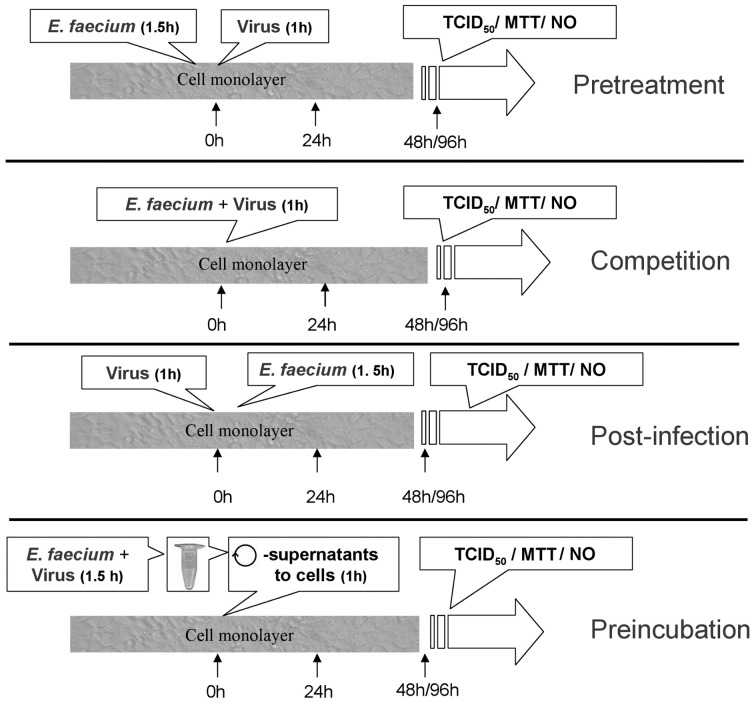
Figure 6. Experimental design of dose response study of probiotic effect on SwIV.
(1) Pretreatment of cell monolayers with probiotics for 1.5 h before SwIV infection (Pretreatment). (2) Probiotics and virus were added together to the cells (Competition). (3) Treatment of cell monolayer with probiotics 1 h after SwIV infection (Post-infection). (4) After preincubation of SwIV with probiotic bacteria, the mixed samples were centrifuged and the supernatants were added to the cells (Preincubation).

References

    1. Fineberg HV (2008) Preparing for avian influenza: lessons from the “swine flu affair”. J Infect Dis 197 (Suppl 1) S14–18. - PubMed
    1. Ducatez MF, Webster RG, Webby RJ (2008) Animal influenza epidemiology. Vaccine 26 (Suppl 4) D67–69. - PMC - PubMed
    1. Hatakka K, Savilahti E, Ponka A, Meurman JH, Poussa T, et al. (2001) Effect of long term consumption of probiotic milk on infections in children attending day care centres: double blind, randomised trial. BMJ 322: 1327. - PMC - PubMed
    1. Yasui H, Shida K, Matsuzaki T, Yokokura T (1999) Immunomodulatory function of lactic acid bacteria. Antonie Van Leeuwenhoek 76: 383–389. - PubMed
    1. Clancy R (2003) Immunobiotics and the probiotic evolution. FEMS Immunol Med Microbiol 38: 9–12. - PubMed

Publication types

MeSH terms