


Fast silencing reveals a lost role for reciprocal inhibition in locomotion
- PMID: 23312521
- PMCID: PMC3542422
- DOI: 10.1016/j.neuron.2012.10.040
Fast silencing reveals a lost role for reciprocal inhibition in locomotion
Abstract
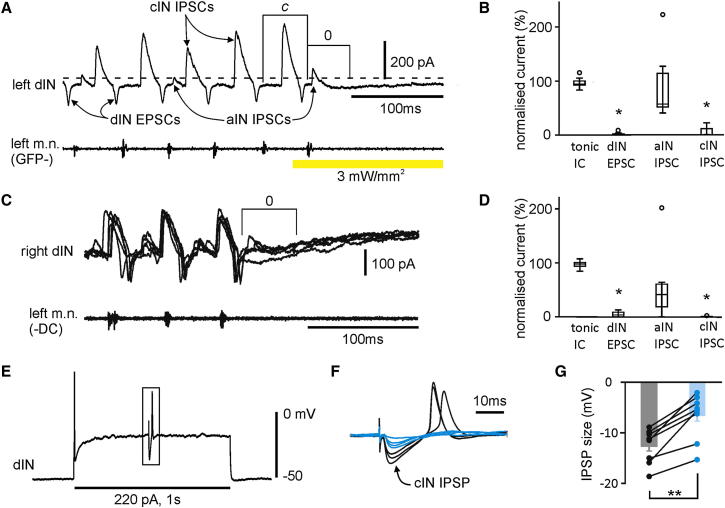
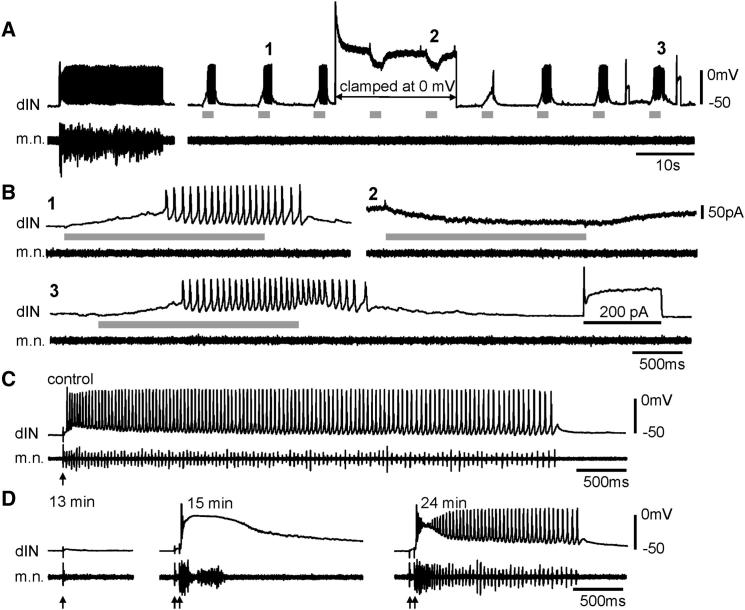
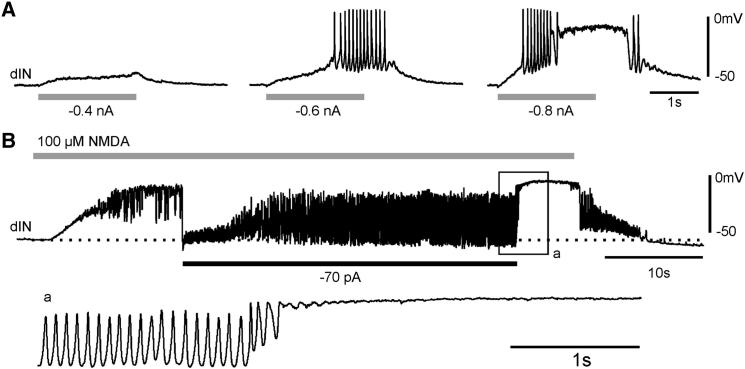
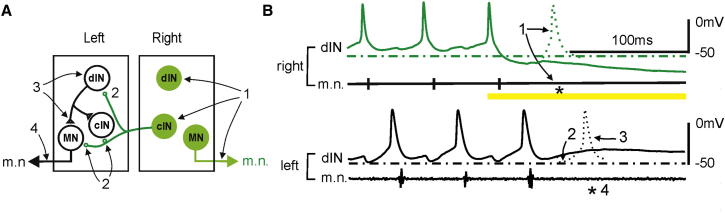
Alternating contractions of antagonistic muscle groups during locomotion are generated by spinal "half-center" networks coupled in antiphase by reciprocal inhibition. It is widely thought that reciprocal inhibition only coordinates the activity of these muscles. We have devised two methods to rapidly and selectively silence neurons on just one side of Xenopus tadpole spinal cord and hindbrain, which generate swimming rhythms. Silencing activity on one side led to rapid cessation of activity on the other side. Analyses reveal that this resulted from the depression of reciprocal inhibition connecting the two sides. Although critical neurons in intact tadpoles are capable of pacemaker firing individually, an effect that could support motor rhythms without inhibition, the swimming network itself requires ~23 min to regain rhythmic activity after blocking inhibition pharmacologically, implying some homeostatic changes. We conclude therefore that reciprocal inhibition is critical for the generation of normal locomotor rhythm.
Copyright © 2013 Elsevier Inc. All rights reserved.
Figures
References
-
- Arshavsky Yu.I., Orlovsky G.N., Panchin Yu.V., Roberts A., Soffe S.R. Neuronal control of swimming locomotion: analysis of the pteropod mollusc Clione and embryos of the amphibian Xenopus. Trends Neurosci. 1993;16:227–233. - PubMed
-
- Beato M., Nistri A. Interaction between disinhibited bursting and fictive locomotor patterns in the rat isolated spinal cord. J. Neurophysiol. 1999;82:2029–2038. - PubMed
-
- Brown T.G. The intrinsic factors in the act of progression in the mammal. Proc. R. Soc. Lond. B. 1911;84:308–319.
Publication types
MeSH terms
Grants and funding
LinkOut - more resources
Full Text Sources
Other Literature Sources
