


Neurobehavioral phenotype of C57BL/6J mice prenatally and neonatally exposed to cigarette smoke
- PMID: 23314114
- PMCID: PMC3593942
- DOI: 10.1016/j.ntt.2013.01.001
Neurobehavioral phenotype of C57BL/6J mice prenatally and neonatally exposed to cigarette smoke
Abstract
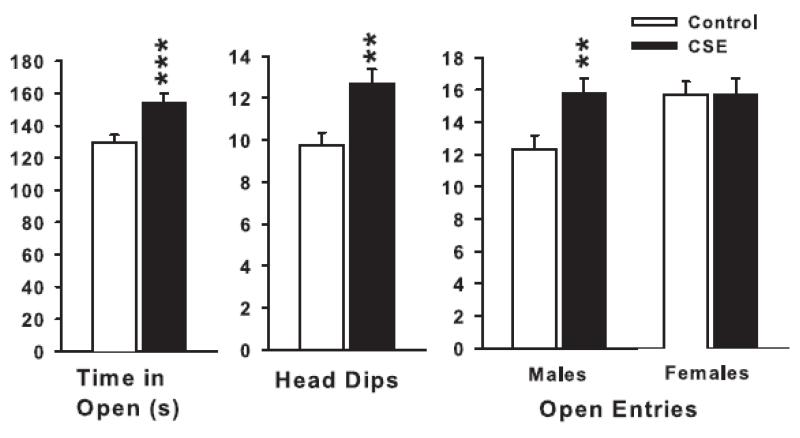
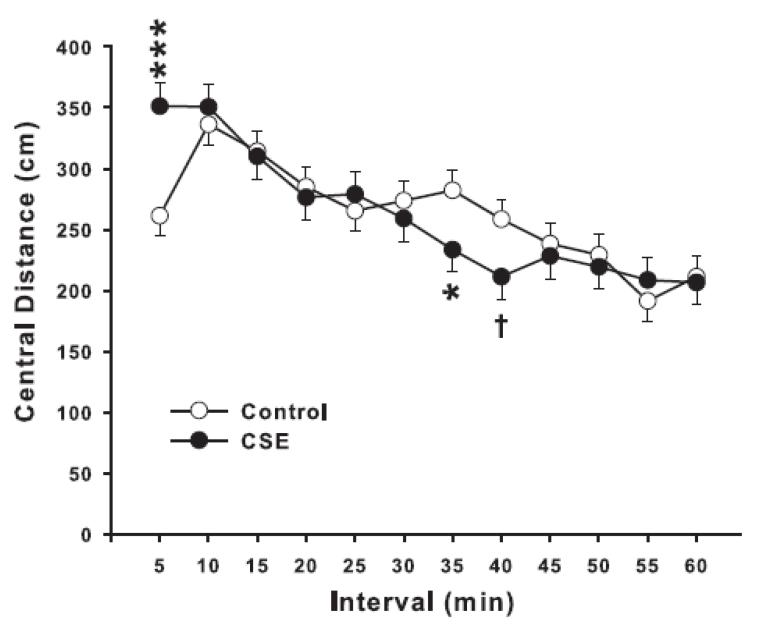
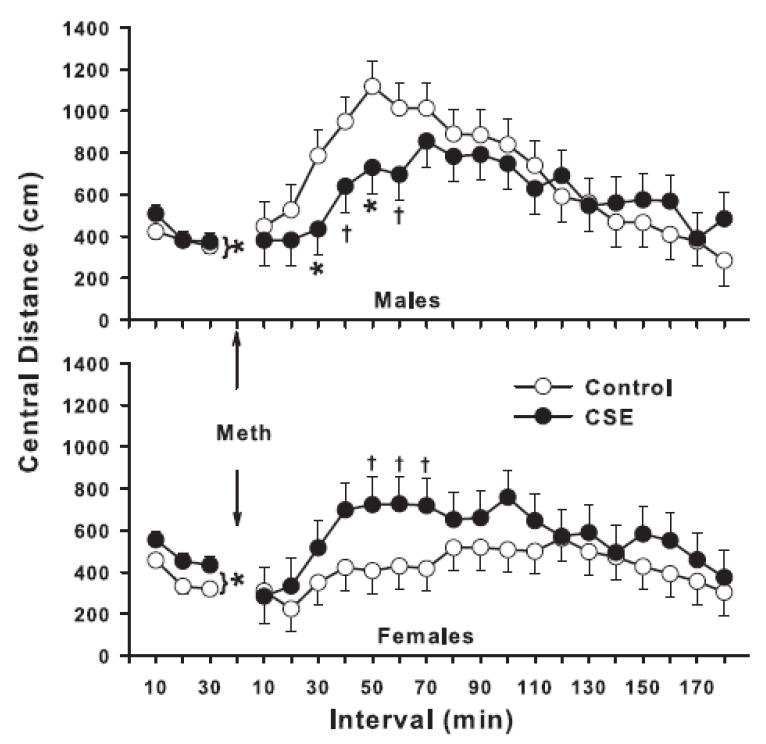
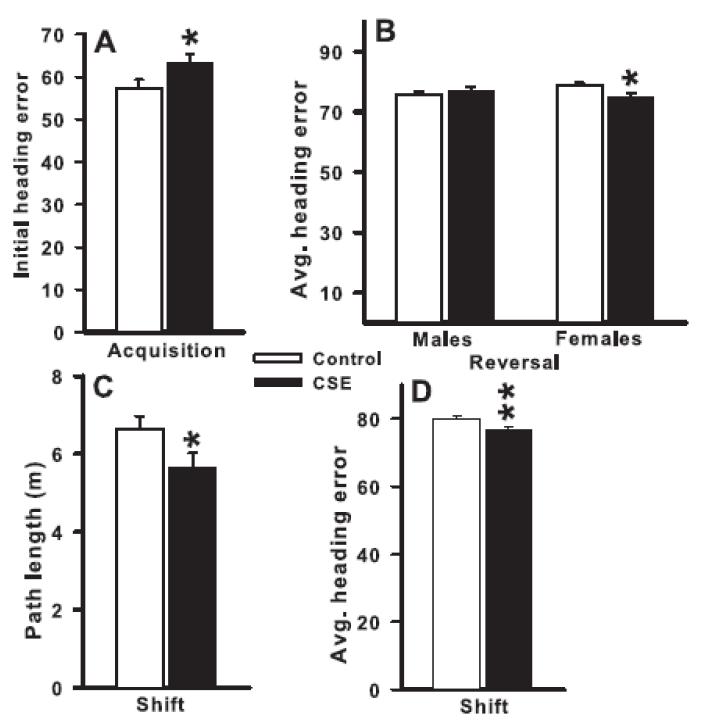
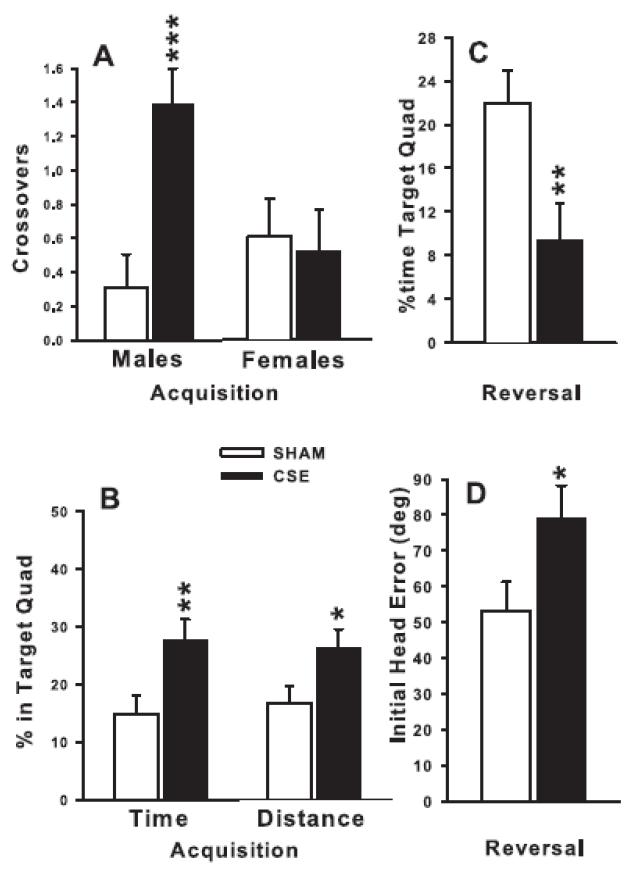
Although maternal cigarette smoking during pregnancy is a well-documented risk factor for a variety of adverse pregnancy outcomes, how prenatal cigarette smoke exposure affects postnatal neurobehavioral/cognitive development remains poorly defined. In order to investigate the cause of an altered behavioral phenotype, mice developmentally exposed to a paradigm of 'active' maternal cigarette smoke is needed. Accordingly, cigarette smoke exposed (CSE) and air-exposed C57BL/6J mice were treated for 6h per day in paired inhalation chambers throughout gestation and lactation and were tested for neurobehavioral effects while controlling for litter effects. CSE mice exhibited less than normal anxiety in the elevated zero maze, transient hypoactivity during a 1h locomotor activity test, had longer latencies on the last day of cued Morris water maze testing, impaired hidden platform learning in the Morris water maze during acquisition, reversal, and shift trials, and impaired retention for platform location on probe trials after reversal but not after acquisition or shift. CSE mice also showed a sexually dimorphic response in central zone locomotion to a methamphetamine challenge (males under-responded and females over-responded), and showed reduced anxiety in the light-dark test by spending more time on the light side. No differences on tests of marble burying, acoustic startle response with prepulse inhibition, Cincinnati water maze, matching-to-sample Morris water maze, conditioned fear, forced swim, or MK-801-induced locomotor activation were found. Collectively, the data indicate that developmental cigarette smoke exposure induces subnormal anxiety in a novel environment, impairs spatial learning and reference memory while sparing other behaviors (route-based learning, fear conditioning, and forced swim immobility). The findings add support to mounting evidence that developmental cigarette smoke exposure has long-term adverse effects on brain function.
Copyright © 2013 Elsevier Inc. All rights reserved.
Figures

References
-
- Abbott LC, Winzer-Serhan UH. Smoking during pregnancy: lessons learned from epidemiological studies and experimental studies using animal models. Crit Rev. Toxicol. 2012;42:279–303. - PubMed
-
- Abel EL. Smoking during pregnancy: a review of effects on growth and development of offspring. Hum. Biol. 1980;52:593–625. - PubMed
-
- Anderko L, Braun J, Auinger P. Contribution of tobacco smoke exposure to learning disabilities. J. Obstet. Gynecol. Neonatal Nurs. 2010;39:111–117. - PubMed
-
- Batstra L, Hadders-Algra M, Neeleman J. Effect of antenatal exposure to maternal smoking on behavioural problems and academic achievement in childhood: prospective evidence from a Dutch birth cohort. Early Hum. Dev. 2003;75:21–33. - PubMed
-
- Batty GD, Der G, Deary IJ. Effect of maternal smoking during pregnancy on offspring’s cognitive ability: empirical evidence for complete confounding in the US national longitudinal survey of youth. Pediatrics. 2006;118:943–950. - PubMed
Publication types
MeSH terms
Grants and funding
LinkOut - more resources
Full Text Sources
Other Literature Sources
Medical
